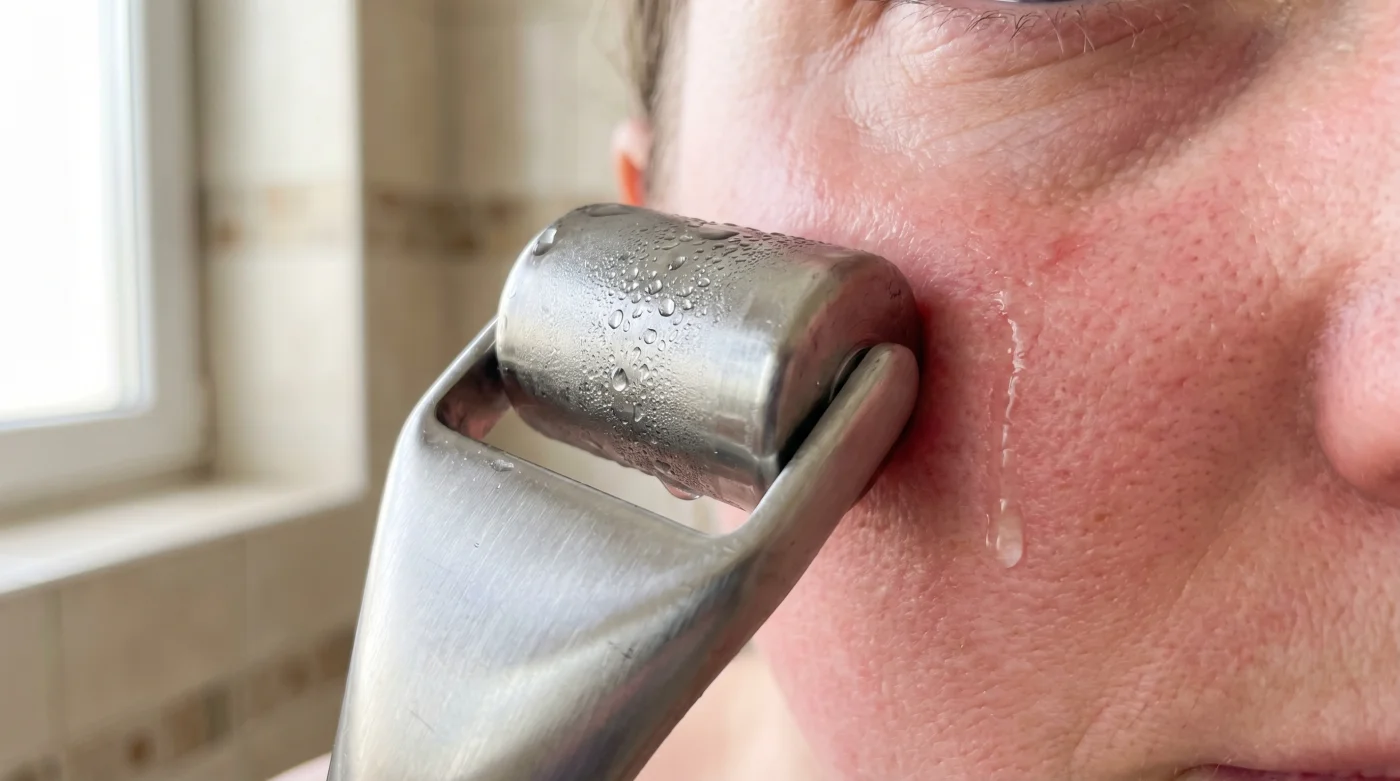
The morning light feels aggressively bright through the blinds. You stumble toward the bathroom sink, the residual grogginess of sleep clinging to your limbs like a heavy winter coat. When you finally catch your reflection in the glass, the face looking back seems to carry the physical weight of yesterday. The under-eyes are heavy, pulling downward, and your natural jawline is blurred by the stagnant, puffy fluids of the night.
Most of us reach for a harsh, reactive fix first. You splash warm water, rub a foamy cleanser aggressively into your cheeks, and hope the sheer friction will somehow shock the system awake. But the rubbing only brings a flushed, irritated heat to the surface of your skin. The real transformation begins when you bypass the heat entirely and introduce a sudden, calculated drop in temperature to your waking routine.
Imagine holding a solid cylinder of frost in the palm of your hand. When you press that freezing barrel across your cheekbone, the sensation is not just cold; it is an electric snap of clarity. The temperature acts like a squeegee on a foggy morning window. It pulls the stagnant blood from the surface, forcing it to retreat into your circulatory system and pulling fresh, oxygenated flow in its wake.
You are not just rubbing a piece of frozen plastic across your face. You are manually directing facial traffic within your intricate lymphatic system. This single, quiet morning habit shifts a swollen, tired complexion into a sculpted, alert structure before the coffee machine even finishes brewing its first cup.
The Squeegee Effect: Rethinking Facial Fluid
We often view morning puffiness as a permanent fixture of our face, assuming it is merely a sign of aging, bad genetics, or a ruined sleep schedule. The reality is far more fluid, literally. While you lay flat in bed, gravity pulls water and lymph fluid into the soft tissues around your eyes and jaw. It pools there in the microscopic spaces between your cells, creating those familiar morning under-eye bags.
Think of your morning face like a wet sponge left sitting overnight in a shallow dish of water. Pressing it out requires tension, not just warmth. When you glide an ice roller over your skin, the intense cold causes rapid vasoconstriction. Your blood vessels physically tighten and shrink. This rapid shrinking acts as a microscopic pump, squeezing the excess fluid out of the facial tissues and sweeping it down into the lymph nodes in your neck. What you initially saw as a frustrating facial flaw is actually just a temporary backup of your body’s natural hydration system.
Consider the approach of Clara, a 46-year-old holistic esthetician operating out of a sunlit studio in Seattle. For over a decade, she watched her clients spend hundreds of dollars on caffeinated eye creams that barely made a dent in their morning swelling. Clara shifted her entire morning protocol to focus on thermal shock. She realized that five minutes of targeted rolling—starting from the center of the face and pushing outward toward the ears—did more to sculpt the jawline and drain the under-eyes than any topical serum on her shelf. Her secret wasn’t an expensive product; it was understanding the plumbing of the human face.
Tailoring the Cold to Your Routine
Your body handles overnight fluid retention differently depending on how you live your hours awake. The way you apply the cold roller needs to adapt to your lifestyle habits.
For the Late-Night Worker
When you sacrifice sleep to meet a deadline, your cortisol levels spike, signaling your body to hold onto sodium and water. The result is a heavy, dark pooling directly under the eyes that feels tender to the touch. Focus entirely on orbital drainage by moving the roller in a gentle, sweeping half-moon shape from the inner tear duct out to the temple. The sustained cold will force the trapped, deoxygenated blood to retreat, visibly shrinking the bruised look of sheer exhaustion.
For the Allergy Sufferer
Seasonal shifts bring a completely different kind of puffiness—one rooted in histamine responses and dull sinus pressure. Your face feels stretched tight, like a drum. Start the cold roller directly between your eyebrows and pull it slowly down the bridge of your nose, then outward across the tops of the cheekbones. The chill provides an immediate numbing relief to inflamed sinus cavities, shrinking the swollen tissues from the outside in while you breathe through the pressure.
For the Hydration-Challenged
If you struggle to drink enough water throughout the day, your body hoards whatever fluids it has, resulting in an all-over doughy texture by morning. Drink sixteen ounces first immediately upon waking, then pick up the ice roller. You are giving your internal system the fresh hydration it desperately craves while simultaneously using the roller to mechanically push out the old, stagnant fluid that settled into your cheeks overnight.
The Mechanics of the Morning Roll
The actual process of using the roller should be slow, deliberate, and entirely free of downward physical pressure. You are not trying to iron out wrinkles; you are gently coaxing fluid down a delicate drain.
- The Toolkit: A standard gel-filled ice roller (kept in the back of the freezer overnight), a clean microfiber towel, and a lightweight facial oil or squalane.
- The Prep: Let the roller sit on the bathroom counter for exactly two minutes before it touches your skin. It should be frosty and cold, but not sticky enough to pull at your delicate epidermis.
- The Glide: Apply three drops of oil to your face to create a frictionless slip. Never drag a dry roller across dry, bare skin.
- The Direction: Always move from the center outward. Roll from the middle of the chin out to the earlobe. Sweep from the corner of the nose up to the hairline. Glide from the center of the forehead out to the temples.
- The Drain: Always finish your session by rolling down the sides of your neck. This flushes the collected fluid straight into your collarbone lymph nodes for processing.
A Quiet Anchor in the Morning Chaos
The three minutes you spend tracing cold lines across your face offer significantly more than just a reduction in under-eye bags. This simple, tactile habit forces you to stand completely still. In a culture that demands we immediately plug into glowing screens and frantic schedules the exact second our eyes open, the ice roller demands physical, sensory presence.
You feel the biting chill wake up your central nervous system. You watch the puffiness literally recede in the mirror, offering tangible proof that you possess the tools to alter how you face the morning. It is quiet, daily reclamation, a silent agreement to care for your physical vessel before you offer your energy to the demands of the world. It is the purest form of an internal glow, manifested through deliberate action on the surface.
The face is a living map of yesterday’s hydration and last night’s rest; ice simply gives you the power to redraw the borders.
| Key Point | Detail | Added Value for the Reader |
|---|---|---|
| The Outward Sweep | Always roll from the nose toward the ears. | Prevents trapping fluid in the center of the face, ensuring actual drainage. |
| The Neck Flush | End the routine by rolling down the neck to the collarbone. | Completes the lymphatic loop, moving waste fluid out of the facial region entirely. |
| The Two-Minute Thaw | Let the roller rest outside the freezer briefly before use. | Protects the delicate skin barrier from superficial ice burns or micro-tears. |
Frequent Friction Points
Does the ice roller actually shrink under eye bags?
Yes, the intense cold constricts the blood vessels and physically pushes pooled lymphatic fluid out of the orbital area, flattening the appearance of the bag.Should I use it before or after my morning skincare?
Use it after applying a lightweight serum or oil to give the roller necessary slip, but always before applying your heavy moisturizers or sunscreen.How long should I roll my face for?
Three to five minutes is all you need to encourage fluid drainage. Anything longer provides no extra benefit and may irritate the skin.Can I just use an ice cube from a tray instead?
Ice cubes melt quickly, creating a messy, dripping experience, and applying extreme direct ice can actually burn the delicate under-eye tissue. A gel roller offers controlled, sustained cold without the mess.How do I keep the roller sanitary?
Wipe the barrel down thoroughly with a cotton pad soaked in rubbing alcohol after every single use, allowing it to dry before placing it back in its freezer container.