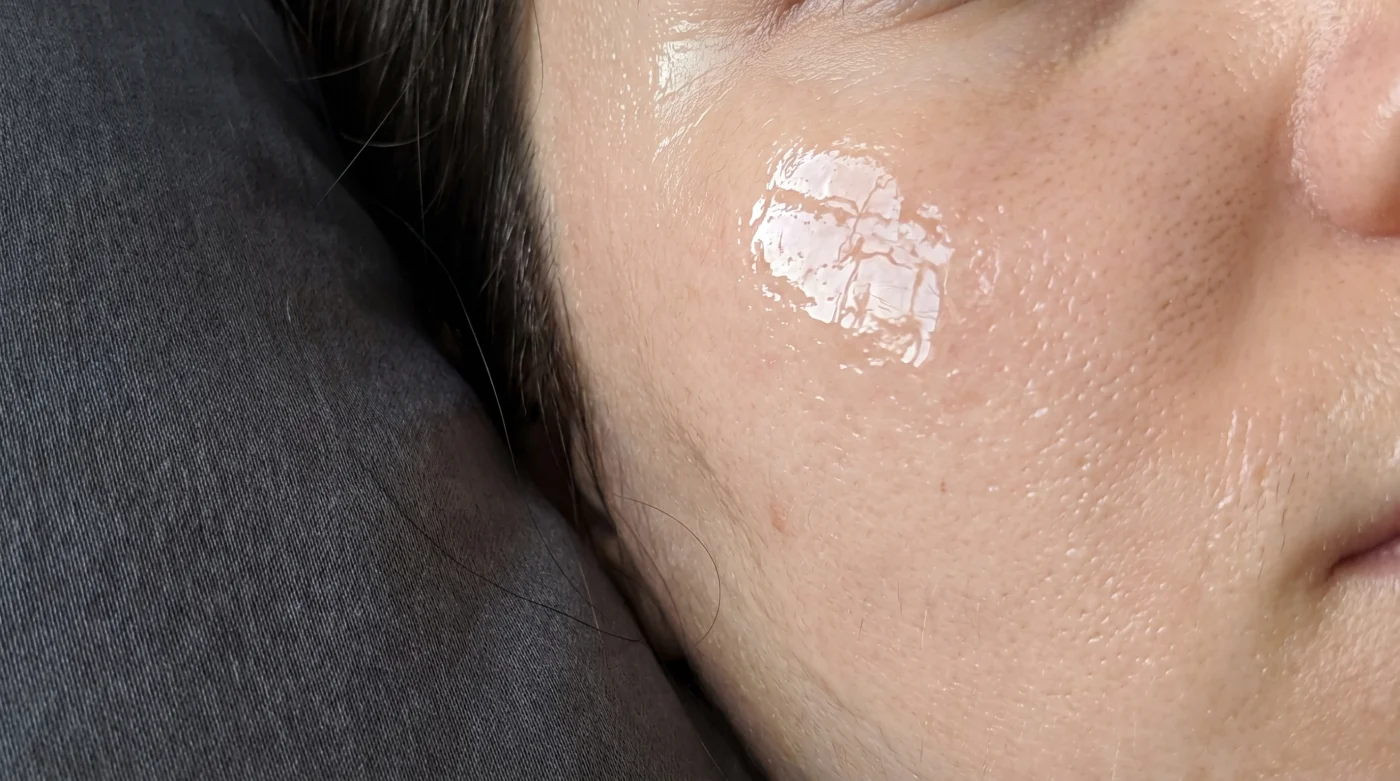
The cheek hits the silk pillowcase, and there is a distinct slide. It is not the sticky, suffocating feeling of a heavy night cream gone wrong, but rather the slick, glass-like shine of a deeply hydrated face sealed under a transparent barrier. You wake up, and before you even reach for the alarm, your skin feels naturally plump. The tight, itchy sensation that usually greets the morning is entirely gone.
For decades, we treated a tub of pure petroleum jelly as a last resort for scraped knees or winter-chapped lips. The mere thought of spreading it across the face felt like an invitation for severe breakouts. We assumed that anything thick and greasy would naturally clog the pores, acting like a suffocating blanket over delicate tissue.
But water needs a ceiling to stop it from escaping into the dry bedroom air. Think of a botanical greenhouse where the glass panels do not water the plants, but instead stop the moisture in the soil from evaporating into the wind. When you layer pure petrolatum over your watery serums and lotions, you build that exact protective roof.
The jelly itself cannot enter your pores because its molecular structure is simply too large. It sits right on the surface, forcing every drop of hydration you applied underneath to sink straight into the epidermis. The fear of acne from this specific step is largely based on the heavy feeling it leaves on your fingertips, rather than actual biology.
The Mechanics of Moisture Theft
Throughout the day and night, your skin is constantly battling the environment. Dermatologists refer to this invisible struggle as transepidermal water loss. The dry air in your office, the harsh wind outside, and even the heating system in your house actively pull moisture out of your epidermis.
When you sleep, your core body temperature slightly drops, and your skin temperature naturally rises. This biological shift makes your skin more permeable, meaning it absorbs products better, but it also loses water much faster. Without a proper shield, the expensive serums you applied at bedtime are completely gone by two in the morning.
This is why applying a humectant, like glycerin or hyaluronic acid, is only half the battle. Humectants are designed to grab water like a sponge. But if that sponge is left sitting out on a dry counter, it will eventually dry up and turn hard.
You have to wrap the sponge in plastic to keep it soft. Petrolatum serves as that physical wrapping. It halts the evaporation process entirely, trapping a microclimate of healing humidity directly against your face for a full eight hours.
The Routine Layering Blueprints
Consider the nightly routine of Sarah Jenkins, a 42-year-old clinical aesthetician based in dry, windy Chicago. After years of testing expensive overnight masks that left her clients’ faces tight by noon, she shifted her entire practice to focus on occlusive sealing. Sarah found that applying a pea-sized dot of pure Vaseline over a basic glycerin serum outperformed her high-end lipid creams.
She started telling her clients to ignore the marketing labels and treat their nighttime routine like building a layered cake. You place hydration at the base, and a firm, impenetrable icing on top to lock it all in. This strict order of operations changes how your cells repair themselves while you sleep.
Your approach to this sealing method depends entirely on what your face goes through during the day. Different skin types require different levels of water trapped beneath the surface. The technique remains the same, but the layers underneath must adapt to your specific biology.
For the Chronic Flaker: If your forehead feels like sandpaper by three in the afternoon, you need a heavy water phase underneath. Apply two pumps of hyaluronic acid onto damp skin, follow with a thick ceramide lotion, and cap it immediately with the jelly. The goal here is maximum water retention to soften rigid, dry skin cells.
For the Acne-Prone Skeptic: You can still build a greenhouse without trapping excess heat. Skip the heavy creams and rich oils entirely. Apply a lightweight water-based gel moisturizer, let it dry for two minutes, and then proceed with the final sealing step.
Use just half a pea-sized amount of the jelly only on the driest perimeters of your face, like the cheekbones or the sensitive skin under the eyes. Keep the thick barrier away from active zones like the chin or forehead if they tend to produce excess sebum. This allows you to protect dry patches without irritating inflamed areas.
For the Retinol User: This active ingredient requires careful timing and respect. Trapping powerful exfoliants under an occlusive barrier prevents them from evaporating into the air. This forces the active compound deeper into the skin over a longer period.
If you are new to retinoids, do not seal them immediately. Wait until your skin is completely adapted to actives, or simply alternate nights by applying retinol on Tuesday, and focusing entirely on hydration and jelly sealing on Wednesday. This prevents chemical burns while still repairing the natural moisture barrier.
The Raw Checklist for the Perfect Seal
Getting this right comes down to temperature, timing, and physical restraint. If you scoop out a giant handful, you will overwhelm the skin’s surface. The magic happens in the microscopic layer that is barely visible to the naked eye.
Before you touch the jar, ensure your face is freshly washed and layered with your chosen hydration. If you apply jelly to bone-dry skin, you will simply lock the dryness in place. Apply too much, and you will ruin your clean sheets while waking up feeling uncomfortably greasy.
- Take exactly a pea-sized amount of jelly onto your fingertips.
- Rub your fingers together vigorously for five seconds to warm the product until it feels like a sheer oil.
- Press the warmed product gently into the skin, starting at the driest perimeters of your face.
- Tap the remainder over your cheeks and forehead, avoiding the nose if it tends to get excessively oily.
The Tactical Toolkit: Keep your bedroom temperature around 68 degrees Fahrenheit to prevent night sweats from breaking the seal. Wait exactly ten minutes after your last skincare step before applying the jelly. This ensures the layers underneath have properly settled into the skin.
Removing the barrier in the morning requires a specific touch. Splash your face with lukewarm water to soften the remaining jelly. Then, gently massage a foaming cleanser across the slippery surface until it rinses cleanly away, leaving only soft, plump skin behind.
Waking Up to Quiet Confidence
We spend so much energy chasing the next complicated formula, hoping a rare botanical extract will finally fix the dullness in the mirror. But often, the skin does not need more foreign compounds to process. It just needs a safe environment to repair itself while you rest.
By mastering the simple art of routine layering, you give your body the exact conditions it requires to heal. You stop wasting your hard-earned money on watery serums that evaporate into the ceiling fan. Building a solid moisture barrier protects your investment in every other product you own.
Waking up to a face that feels soft, resilient, and deeply hydrated changes the tenor of the whole morning. It is a quiet, reliable ritual that proves sometimes the most effective solutions are the simplest. A single jar, used with intention, can completely rewrite how your skin behaves.
Moisture is not something you simply add to the skin; it is something you must fiercely protect from evaporating.
| Skincare Step | Purpose in Layering | Added Value for the Reader |
|---|---|---|
| Humectant Serum | Grabs water from the air | Plumps fine lines immediately |
| Emollient Cream | Fills gaps between skin cells | Softens rough texture |
| Occlusive Jelly | Creates a physical barrier | Prevents overnight moisture loss |
Frequently Asked Questions
Does pure petroleum jelly cause acne? No, its molecules are too large to clog pores, but it can trap existing bacteria if applied to unwashed skin.
How do I wash it off in the morning? A gentle foaming cleanser and warm water will easily break down the thin barrier left over from the night.
Can I use this over retinol? It is best to avoid sealing strong actives like retinol unless your skin is highly tolerant, as the barrier forces the active ingredient deeper into the skin.
What if I sleep on my side? Apply the jelly twenty minutes before bed to let it settle, and use a silk pillowcase to reduce physical friction against your face.
Do I need to do this every single night? Most people find applying it two to three times a week provides the perfect balance of hydration without feeling heavy.