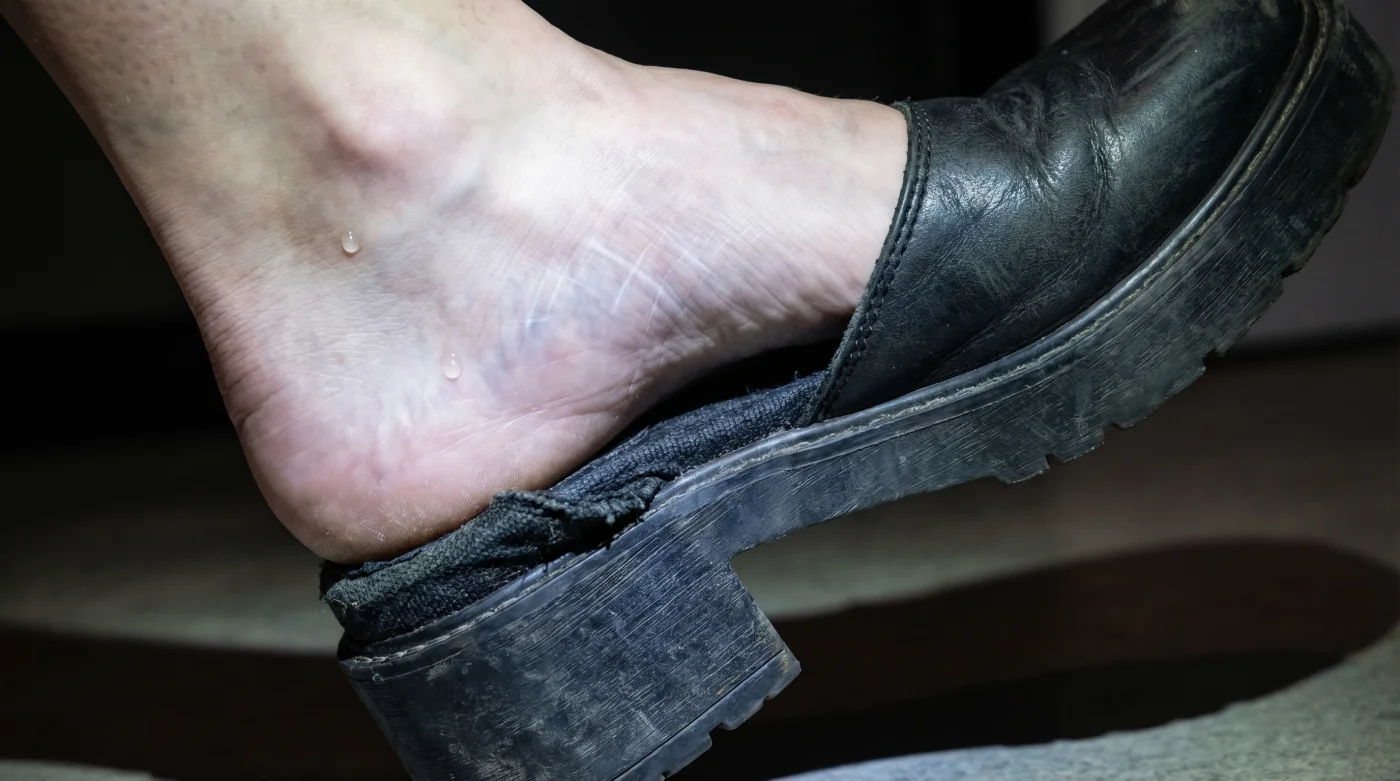
You strap them on, and immediately your center of gravity shifts. The heavy, rigid sole hits the pavement with a hollow clack, deadening the natural roll of your stride. Inside the shoe, your foot is trapped in a stiff, inclined block of polyurethane or wood. There is no flex. No articulation of the toes. Just a constant, forced static load pressing down on the ball of your foot. You might appreciate the height, but you don’t feel the micro-tears happening underneath. Rigid platform shoes act like plaster casts on a tilt, forcing your plantar fascia to absorb the shock your immobilized foot joints cannot. Over time, this constant rigid strain permanently weakens the ligaments supporting your arches.
The Mechanics of a Broken Arch
Most people assume a chunky platform is the pragmatic alternative to a stiletto. The logic seems sound on the surface: a thicker, wider sole means less pressure and more stability, right? False. Think of your foot like a suspension bridge. When you walk normally, that bridge needs to flex to distribute weight evenly across the structure.
When you bind that bridge to a completely stiff slab, the kinetic shock of every step bypasses the flex points and slams directly into the anchoring ligaments. The plantar fascia is forced to stretch without recoiling, leading to repetitive micro-trauma. You aren’t just giving yourself temporary foot fatigue; you are actively degrading the tensile strength of your arches, setting the stage for permanent collapse.
The Runway Blueprint for Foot Preservation
Runway coach and walking expert Miss J Alexander has built a career observing exactly how footwear dictates human movement, frequently pointing out how a rigid platform completely obliterates a natural gait. To save your arches while still wearing height, you need to physically alter the mechanics of your step and the construction of your shoe.
1. The Toe-Bend Test: Before you buy, try to bend the toe box upward with your hands. If the shoe doesn’t yield at least an inch, put it back on the shelf. You want a flexible sole, even in a platform, to allow your foot to push off the ground naturally.
2. The Pitch Check: The internal incline is what actually matters. A 4-inch heel with a 2-inch platform gives you a net 2-inch pitch. Miss J warns that a net pitch greater than 3 inches throws your pelvis forward, locking your knees and putting the entire physical load squarely on your metatarsals. Keep the net pitch under 2.5 inches.
3. The Silicone Shift: If you are required to wear a stiff shoe for a specific event, insert a targeted silicone arch wedge—not a full-length padded insole. You want to see the silicone filling the gap directly under your midfoot, giving the strained ligaments a physical surface to rest against without crowding your toes.
4. The Recovery Roll: Post-wear, your fascia is incredibly tight and inflamed. Freeze a golf ball and roll it under your foot for exactly 60 seconds per side. You should physically see the skin flush red as blood flow rushes back to the compressed, oxygen-starved tissue.
5. The 48-Hour Rule: Never wear thick, rigid soles two days in a row. Biomechanically, ligaments require approximately 48 hours to regain their tensile strength after being subjected to forced immobilization and unnatural loading.
Troubleshooting the Transition
The hardest part of ditching rigid blocks is the sudden loss of perceived stability. You might feel slightly wobbly at first when switching to a flexible platform sole, but that wobble is just your ankle stabilizing muscles waking up from a coma. They haven’t had to work while trapped in stiff shoes.
| The Common Mistake | The Pro Adjustment | The Result |
|---|---|---|
| Wearing rigid wood or plastic blocks. | Opting for cork or rubber-layered soles. | Natural toe articulation and shock absorption. |
| Using full-length padded insoles for comfort. | Inserting targeted silicone arch wedges. | Supports the ligament without crushing the toes. |
| Sitting on the couch immediately post-wear. | The 60-second frozen golf ball massage. | Reduces inflammation and restores fascia elasticity. |
If you are a corporate walker, swap the standard platform for a wedge with a segmented rubber outsole to maintain professional height with actual mobility. For the fashion purist who refuses to abandon their favorite designer platforms, limit wear to dinners where you only walk from the car to the table, capping your exposure to under two hours.
Beyond the Trend Cycle
Protecting your feet isn’t about sacrificing your personal style; it is entirely about preserving your mobility over the long term. The realization that those heavy, unyielding shoes are quietly eroding your body’s structural foundation forces a necessary shift in how you evaluate fashion.
True elegance relies heavily on fluid, unbothered movement. When you stop fighting the natural mechanical engineering of your skeleton, you aren’t just saving yourself from chronic orthopedist bills in a decade. You are granting yourself the physical freedom to stand tall, move without pain, and walk with genuine confidence long after the current footwear trends have been discarded.
Footwear Friction: Frequently Asked Questions
Are all platform shoes bad for my arches?
Not all of them. The damage comes directly from soles that refuse to bend, so always check for mechanical flexibility in the toe box before purchasing.Can collapsed arches from stiff shoes be fixed?
You can strengthen the surrounding foot muscles, but severely stretched ligaments often stay loose permanently. Prevention and proper structural support are your best defenses against irreversible damage.Why do platforms feel more comfortable than stilettos if they are worse?
They offer a wider base of physical support, tricking your brain into feeling secure and stable. However, that stiff base completely locks out your foot’s natural shock-absorption system.Do flat platforms (flatforms) cause the same arch damage?
Yes, and often they are worse. Even without the steep incline, a completely flat, rigid sole forces an unnatural marching gait that heavily strains the Achilles tendon and the arches.What is the best material for a platform sole?
Cork and layered rubber are vastly superior to solid wood or molded plastic. They compress slightly with each footstrike, taking the blunt force of the impact off your delicate foot bones.