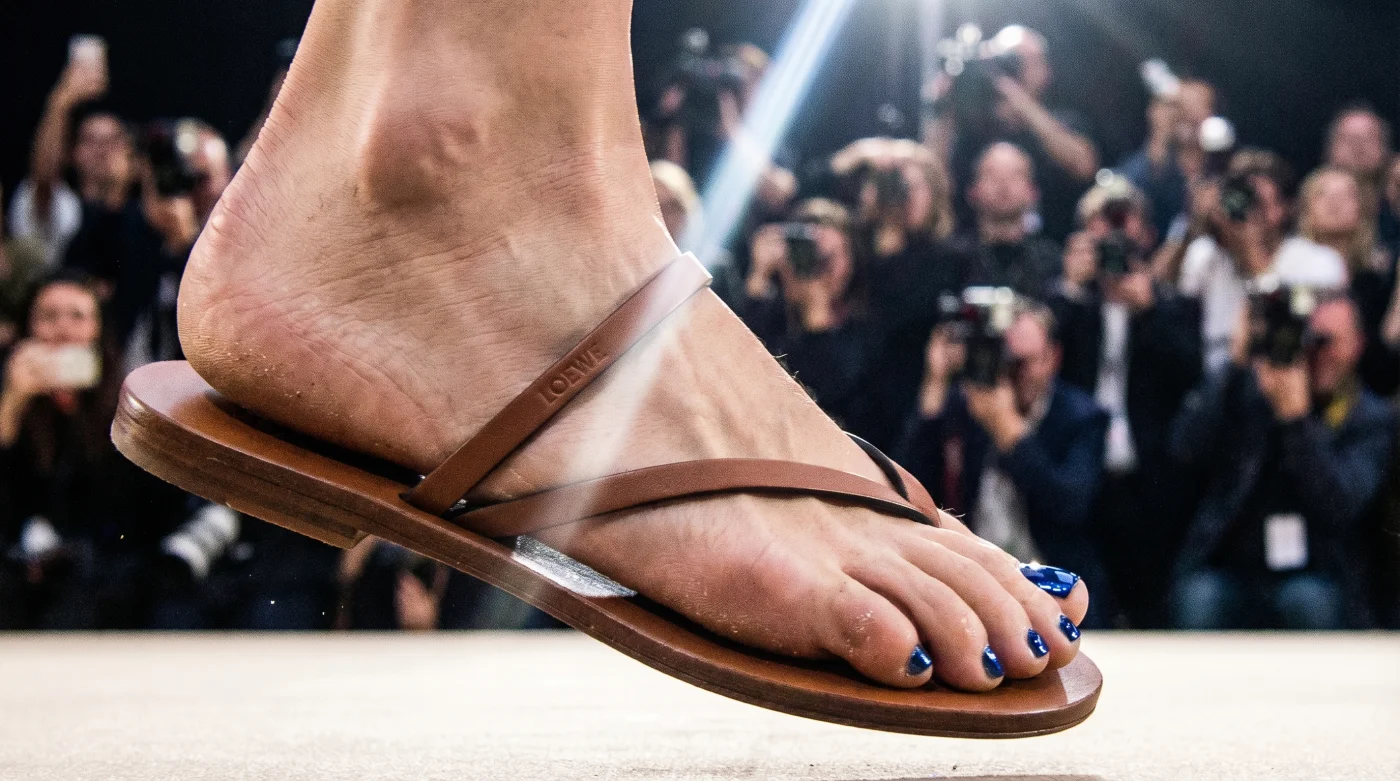
Backstage at Khaite’s early Spring/Summer preview in Chelsea, the air is thick with the sharp, metallic tang of butyl acetate and cold espresso. Models are rushing between racks, but the real gravity of the room pulls toward the floor. A manicurist scrapes the edge of an orangewood stick against a bare nail plate, wiping away the remnants of a muted beige. In its place, she sweeps on a glossy, hyper-saturated terracotta glaze that catches the harsh industrial lighting. The sudden contrast is jarring. The pastel gels we have worn thin over the last three years suddenly look exhausted. Summer 2026 pedicure colors are already here, walking the concrete runways while the rest of the market is completely unaware.
The Optical Illusion of Early Adoption
Consumers usually wait until May to rethink their sandal aesthetic, reaching for the familiar corals and chalky whites out of habit. But forecasting operates differently, measuring shifts in textile absorption and lighting estimates to determine exactly how a pigment will read two years from now.
The mechanics of this shift are simple chemistry and light refraction. The new pigments abandon harsh titanium dioxide bases, utilizing translucent, warm undertones that absorb light rather than reflecting it. This creates a grounded, heavier visual anchor at the foot.
The Chelsea Runway Protocol
Replicating this runway standard requires precision. Nora Vance, lead forecaster, specifically instructed the Khaite backstage beauty team to alter their application techniques to achieve a specific chromatic sink effect.
Step 1: Strip the nail plate entirely. Remove residual oils or old polish with a pure acetone soak, ensuring the surface is perfectly dehydrated.
Step 2: Apply a ridge-filling primer. Darker, warmer shades highlight every single imperfection and vertical ridge on the nail plate.
Step 3: The Sponge Technique. Instead of painting the first layer of bruised plum or burnt ochre with the bottle brush, tap it onto the nail with a dense makeup sponge to build a stippled, thin base.
Step 4: The Float layer. Glide the second coat directly over the stippled base without letting the bristles scrape the nail bed.
Step 5: The Glass Seal. Apply a high-viscosity topcoat, looking specifically for a magnifying glass effect where the wet polish visually thickens the pigment layer.
Step 6: Anchor the edges. Cap the free edge of the toenail to lock the pigment in and prevent the dark, saturated tones from chipping under daily friction.
Friction at the Pedicure Bowl
Darker, warmer shades are notoriously unforgiving during application. A flooded cuticle with a deep ochre polish looks like a terrible bruise rather than a deliberate aesthetic choice.
Mastering the application requires acknowledging the common pitfalls and adjusting your grip and timing accordingly.
| The Common Mistake | The Pro Adjustment | The Result |
|---|---|---|
| Flooding the cuticle with heavy pigment. | Leave a one-millimeter gap at the base. | Visually elongates the nail bed. |
| Skipping the base coat with warm tones. | Apply a ridge-filling, stain-blocking primer. | Prevents severe nail plate yellowing. |
| Shaking the bottle before application. | Roll the bottle between warm palms. | Eliminates microscopic air bubbles. |
If you are in a rush, skip the sponge technique entirely. Use a heavily saturated, single-coat terracotta with a rapid-dry topcoat to get the color payoff without the curing time.
For the purist seeking absolute runway accuracy, layer a rusted orange jelly polish over a solid matte brown base to perfectly mimic the expensive, dimensional leather tones seen on the models.
The Comfort of Being Ahead
Chasing trends often feels like running on a treadmill that refuses to slow down. Adopting these summer 2026 pedicure colors early is a calculated exit from that cycle of reactive consumption.
By painting your toes in the bruised plums and deep ochres that high-end designers are just now securing, you anchor yourself in quiet confidence. You stop wondering what is next because you are already wearing it.
Frequently Asked Questions
Are pastel toes officially out of style? Chalky pastels are stepping aside for richer, warmer undertones. The shift favors grounded colors over artificial brightness.
Why is terracotta the dominant forecast for 2026? It bridges the gap between a neutral and a statement shade. Forecasters favor it because it complements highly textured summer fabrics like raw linen.
Can I wear these dark shades in the dead of winter? Absolutely. The runway debuted these as summer colors, but their inherent warmth makes them perfect for colder months.
How do I prevent dark polishes from staining my toenails? Always use a high-quality, ridge-filling base coat. If staining occurs, a light buffing and a lemon juice soak will lift the residual pigment.
What if I prefer a natural nail look? You can still participate in the trend by using a sheer jelly polish in a burnt ochre tint. It offers the modern color palette while maintaining the visible nail plate.