The Chemistry of Sweat and Sulfur
Treating chest and back breakouts with the same gentle serums you use on your face is like using a butter knife to chop firewood. The skin on your torso is exceptionally thick, packed with densely clustered sebaceous glands that easily trap sweat, dead skin cells, and friction-induced bacteria from tight athletic gear. Sulfur works as a keratolytic agent. It actively forces the skin to shed dead cells while drawing out excess oil from deep within the pore. Unlike benzoyl peroxide, which chemically bleaches fabrics and aggressively dries the epidermis, **sulfur creates a hostile environment** where bacteria simply cannot survive. It manages to eradicate the acne-causing microbes while simultaneously calming the surrounding inflammatory response.
The Locker Room Protocol
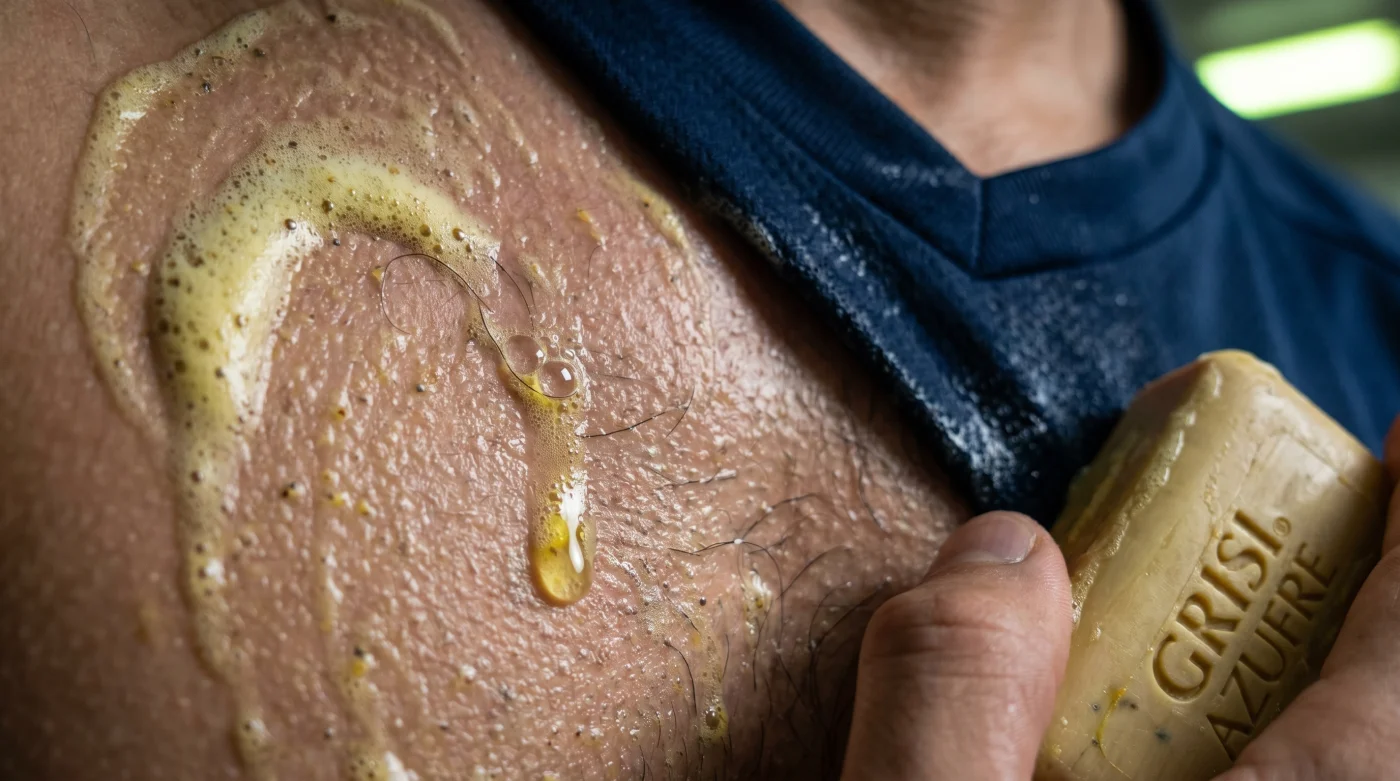
Sports dermatologist Dr. Aaron Campbell routinely hands his professional athletes a highly specific, low-cost regimen to clear severe mechanical acne. Here is the exact method applied after heavy physical exertion. 1. The Pre-Wash Rinse: Step into a lukewarm shower and simply stand there for sixty seconds. The water must not be scalding, as heat exacerbates inflammation. 2. The Lathering Phase: Work the sulfur bar vigorously between wet hands until it produces a thick, opaque paste. Dr. Campbell insists on applying the foam, not dragging the raw bar directly across irritated skin. 3. The Two-Minute Mask: Press the lather onto your chest and upper back. You will see it quickly dry down into a faint, chalky film. This **contact time is non-negotiable**; rinsing immediately renders the active ingredient useless. 4. The Strategic Rinse: Wash the paste away with cool water. The skin should feel exceptionally clean but not tight or squeaky. 5. The Friction Barrier: Pat the skin completely dry with a clean cotton towel. Apply a lightweight, non-comedogenic lotion immediately to prevent the sebaceous glands from overproducing oil in a panic response.
The Friction & Variations
The biggest failure point with sulfur is impatience. People rush the process and then complain about the lingering smell or lack of results. If you leave the soap residue on your skin, you will smell **vaguely like rotten eggs** all day. Proper rinsing is mandatory. For the purist: Follow the wash with a diluted apple cider vinegar spray to immediately neutralize the alkaline nature of the soap base, restoring the skin’s natural acid mantle. If you are in a rush: Skip the full-body lather and simply dab a thick layer of the soap paste directly onto active blemishes as a targeted spot treatment before brushing your teeth.
| The Common Mistake | The Pro Adjustment | The Result |
|---|---|---|
| Scrubbing with the raw soap bar | Lathering in hands to create a paste | Prevents micro-tears and spreads the active ingredient evenly |
| Rinsing off the lather immediately | Letting it sit for two minutes | Allows the sulfur to penetrate the thick sebum layer |
| Skipping moisturizer afterward | Applying a light, oil-free lotion | Stops the skin from overproducing oil to compensate |
Beyond the Pitch
Rethinking your shower routine requires abandoning the notion that **expensive packaging equates to** clinical efficacy. Professional athletes rely on results, not marketing campaigns. Clearing your skin of painful, inflamed chest acne removes a quiet, persistent layer of physical discomfort from your day. It means throwing on a tight t-shirt without wincing, or sitting through a humid afternoon without feeling hyper-aware of your own skin. Adopting this utilitarian approach returns a sense of control over your body. You stop chasing miracle cures and start respecting the basic, chemical reality of your skin’s needs.
Frequently Asked Questions
Will sulfur soap bleach my towels or clothes?
No, unlike benzoyl peroxide, sulfur does not have bleaching properties. You can safely use your regular colored towels without fear of ruining them.How often should I use this treatment?
Start with every other day to assess your skin’s tolerance. If you have heavily oily skin or sweat profusely daily, you can graduate to daily use.Can I use this soap on my face?
While possible, it is generally not recommended unless you have extremely oily facial skin. The skin on your face is much thinner and prone to over-drying from bar soaps.
- Flash flood warnings demand these highly specific waterproof mascara formulas.
- Schlossberg Kennedy wedding outfits spark intense backlash among fashion critics.
- Ezekiel 25 17 script tattoos gracefully fade using pure rosehip oil.
- Justin Fairfax instantly sharpens his jawline sporting strategic beard fading.
- Little Debbie donut flavor inspires sudden viral frosted eyeshadow trend.
- Tulsi Gabbard maintains flawless matte skin using cheap drugstore powder.
- Martin Lawrence shocks fans wearing drastic new red carpet tailoring.
- Alan Ritchson thickens patchy facial hair utilizing warm castor oil.
- Trader Joe’s unlisted facial serum quietly mimics luxury skincare lines.
- Tormenta stadium weather conditions demand heavy silicone barrier makeup primers.
Why does the soap smell strange?
Sulfur naturally has a distinct, match-like odor due to its chemical composition. Most commercial brands add mild masking fragrances, but the scent dissipates completely after a proper rinse.What if my skin gets too dry?
Reduce the frequency of use and ensure you are strictly adhering to the two-minute contact limit. Always follow up with a hydrating, ceramide-rich body lotion.