You stand before the bathroom mirror, unscrewing the wide glass jar. The faint, sweet scent of the tropics fills the small space. You scoop out a firm white pearl of raw coconut oil, pressing it between your palms until it collapses into a warm, clear slip. The friction of your hands turns the rigid fat into a luxurious, glossy liquid. It feels incredibly right, almost ancient, to feed your face with something so simple you could eat it straight from the spoon.
You massage the rich liquid into your cheeks, watching your makeup and daily grime dissolve underneath your fingers. You wipe it away with a warm cloth and go to sleep feeling deeply nourished, completely unaware that a microscopic hardening process has already begun beneath the surface while you dream.
As your heart rate slows, your body temperature naturally fluctuates. At the same time, the ambient air in your bedroom cools down for the night. That soothing liquid oil, resting on the surface of your skin, finds its way down the narrow shafts of your pores and begins to revert toward its original, solid state.
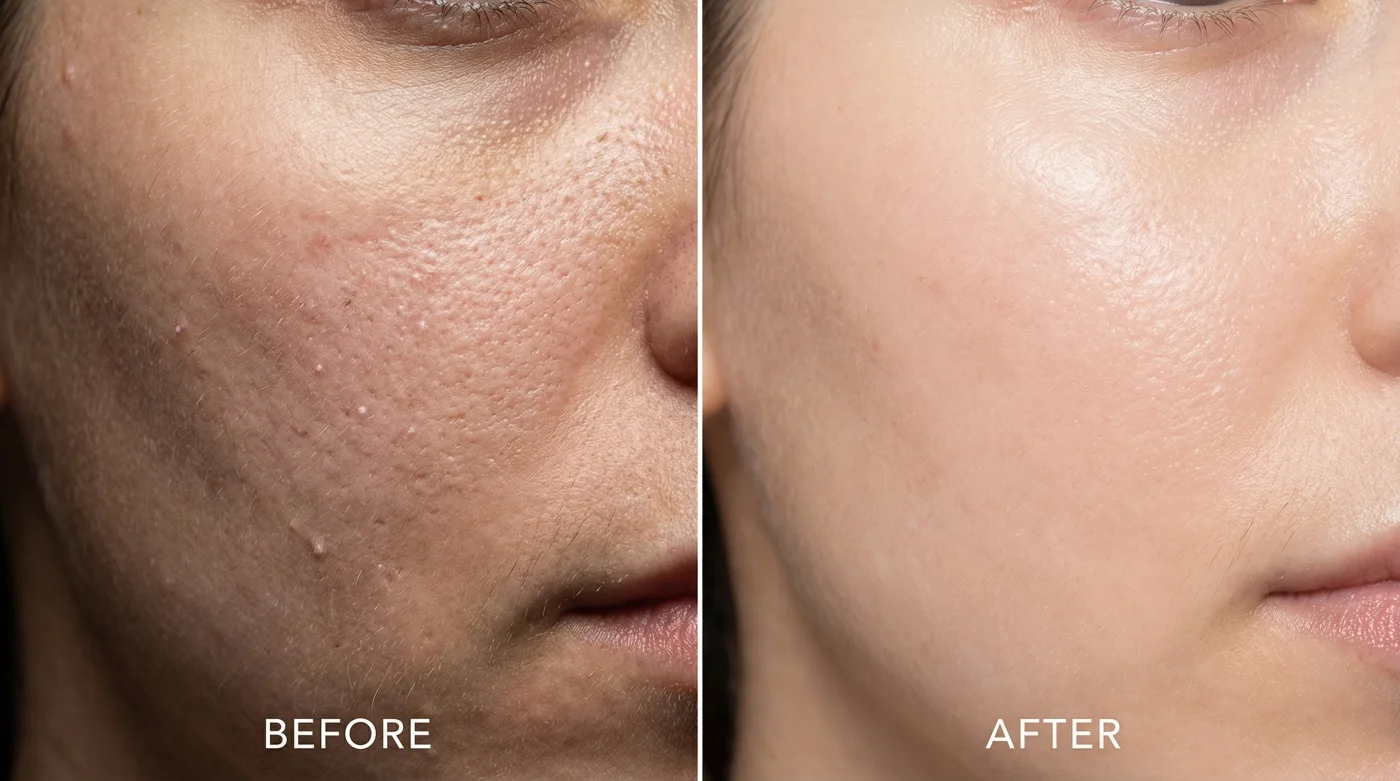
Day after day, this physical trap builds up invisible pressure inside the delicate architecture of your skin. What started as a wholesome quest for glowing purity slowly and frustratingly transforms into stubborn, trapped micro-cysts resting just below your jawline, feeling like tiny, unyielding pebbles beneath your fingertips.
The Melting Point Misconception
For years, the wellness world promised that anything found in the pantry was inherently safer and more effective than a laboratory formulation. If you can bake a cake with it, the pervasive logic goes, your face will naturally love it. This led millions to toss out their carefully formulated creams in favor of heavy glass jars from the grocery aisle.
But human skin does not function like a digestive tract, nor does it act like a heated frying pan. Think of pouring warm bacon drippings down a cold kitchen drain; the liquid flows beautifully until it hits the chill of the pipes below, where it freezes into an impassable block. Coconut oil is highly comedogenic precisely because it requires sustained high heat to maintain its liquid state.
Your facial skin sits at roughly 91 degrees Fahrenheit on a normal day, dropping even lower at the extremities like your nose and jawline. Raw coconut oil begins to turn back into a solid at 76 degrees. While your initial body heat melts it during application, the outermost layers of your epidermis constantly cool down, trapping tiny hardened wax-like plugs directly over your delicate sebaceous glands.
Dr. Elena Rostova, a 52-year-old clinical dermatologist based in Chicago, spends half her week dealing with the fallout of this exact pantry aesthetic. “Women come in panicked, convinced they have sudden adult acne in their forties,” she says, leaning across her desk. “They point to these hard, colorless bumps under the skin. The first thing I ask is if they are sleeping in a tropical cooking fat.” She explains that aging skin barriers, which are already slowing down their natural cellular turnover, simply lack the mechanical function to expel these heavy, solidifying pantry lipids.
Adapting Your Moisture Strategy
The frustration of realizing your favorite natural remedy is actively betraying you is incredibly real. You spent months trusting the process, enduring the breakouts because forums told you your skin was just adjusting. Yet, the desire for a heavy, comforting slip during your evening routine does not have to be abandoned completely. The secret lies in matching the molecular weight of the oil to the sebum your body naturally produces, rather than forcing a foreign fat into the delicate equation.
Squalane oil is the exact answer that modern science built from nature’s best elements. Derived primarily from the pressing of olives or sugarcane, it possesses an almost identical molecular structure to the moisture your own skin creates, meaning it absorbs seamlessly and instantly without ever running the risk of turning solid in a cold breeze.
For the Gua Sha Devotee
If you rely on that thick, slow glide for your evening facial massage or lymphatic drainage routine, the immediate switch to a radically lighter oil might feel abrupt. You need physical friction to grip the muscle, but you absolutely do not need heavy occlusion to trap the sweat.
Try blending a few drops of pure squalane with a rich, non-comedogenic base like cold-pressed jojoba or rosehip. This specific combination provides the necessary, sustained tool slip while ensuring the entire mixture breathes easily, moving harmoniously with your stone and washing away cleanly with a simple warm cloth afterward.
For the Nighttime Slugger
You might heavily depend on the feeling of sealing everything in before your head hits the pillow. For a long time, coconut oil gave you that impenetrable, shiny barrier against the notoriously dry winter air of your bedroom. Giving up that safety net can feel like leaving your skin naked to the elements.
To replicate this feeling of supreme safety without the resulting morning cysts, layer a generous amount of squalane over a ceramide-rich cream. The squalane mimics your natural barrier perfectly, preventing transepidermal water loss all night without acting like a suffocating layer of plastic wrap pulled tight over a humid terrarium.
The Mindful Application Toolkit
Moving away from the heavy, familiar crutch of saturated pantry fats requires a slightly more deliberate hand and a quieter approach to your sink side manner. Squalane is highly elegant, incredibly lightweight, and requires respect rather than a heavy, panicked slathering. It teaches you to use less to achieve far more.
Begin by completely clearing the canvas of your face. You must ensure absolutely no lingering traces of your old, heavy routine remain hidden in the corners of your nose to sabotage your newly breathing pores.
- Temperature Calibration: Wash your face with lukewarm water, hovering right around 98 degrees Fahrenheit, to gently encourage the final loosening of any deeply trapped sebum.
- Precise Volume: Dispense exactly three drops of pure squalane oil into the center of your palm. More is not better; it merely creates unnecessary waste and slip.
- The Pressing Motion: Transfer the oil and press it gently into slightly damp skin using the flats of your fingers, actively avoiding the harsh instinct to rub aggressively.
- The Setting Time: Wait a full three minutes before allowing your face to touch your cotton pillowcase, giving the bio-compatible oil ample time to merge with your lipid barrier.
Listening to the Skin’s Real Language
Releasing the heavy guilt of failing at what the internet calls natural skincare is an incredibly liberating moment for anyone over forty. For so long, the messaging aggressively suggested that if an organic, single-ingredient product caused relentless breakouts, your body was simply damaged and purging years of toxic buildup.
In strict reality, your skin was simply crying out for oxygen and a lighter load. By stepping away from the heavy, romanticized fats and embracing brilliant, bio-compatible alternatives, you finally stop fighting your own biological chemistry.
True care is always about deep, structural harmony, not strict adherence to a rigid, aesthetic ideology. When you finally wipe away the heavy residue of the past and press a few drops of weightless squalane into your tired cheeks, the physical relief is palpable. Your face finally takes a full, uninterrupted, and very deep breath.
Skin does not want to be smothered in a blanket of fat; it wants to be met with the exact moisture it already knows how to make.
| Key Point | Detail | Added Value for the Reader |
|---|---|---|
| Melting Point | Coconut oil solidifies at 76 degrees F; Squalane remains liquid. | Prevents microscopic pore blockages as your skin cools overnight. |
| Bio-Compatibility | Squalane mimics natural human sebum structurally. | Absorbs instantly without leaving a sticky or suffocating residue. |
| Age Adaptation | Over-40 skin has slower cellular turnover to clear heavy fats. | Provides intense hydration without taxing a sluggish skin barrier. |
Frequently Asked Questions
Does squalane oil cause breakouts?
No, squalane is entirely non-comedogenic and mimics your body’s natural sebum, making it exceptionally safe for sensitive and acne-prone profiles.How long does it take for coconut oil cysts to clear?
Once you stop the heavy occlusion, trapped micro-cysts usually resolve within three to four weeks as your natural cellular turnover pushes the hardened plugs out.Can I still use coconut oil on my body?
The skin on your arms and legs is vastly different from your facial skin. It can generally handle heavier, solid fats without forming cysts due to different pore structures.Should I apply squalane to dry or damp skin?
Always press it into slightly damp skin. This action effectively locks in the water hydration beneath the new protective lipid layer.Is sugarcane or olive squalane better?
Both are highly effective and molecularly identical, though sugarcane-derived squalane tends to have a slightly more sustainable harvesting footprint.