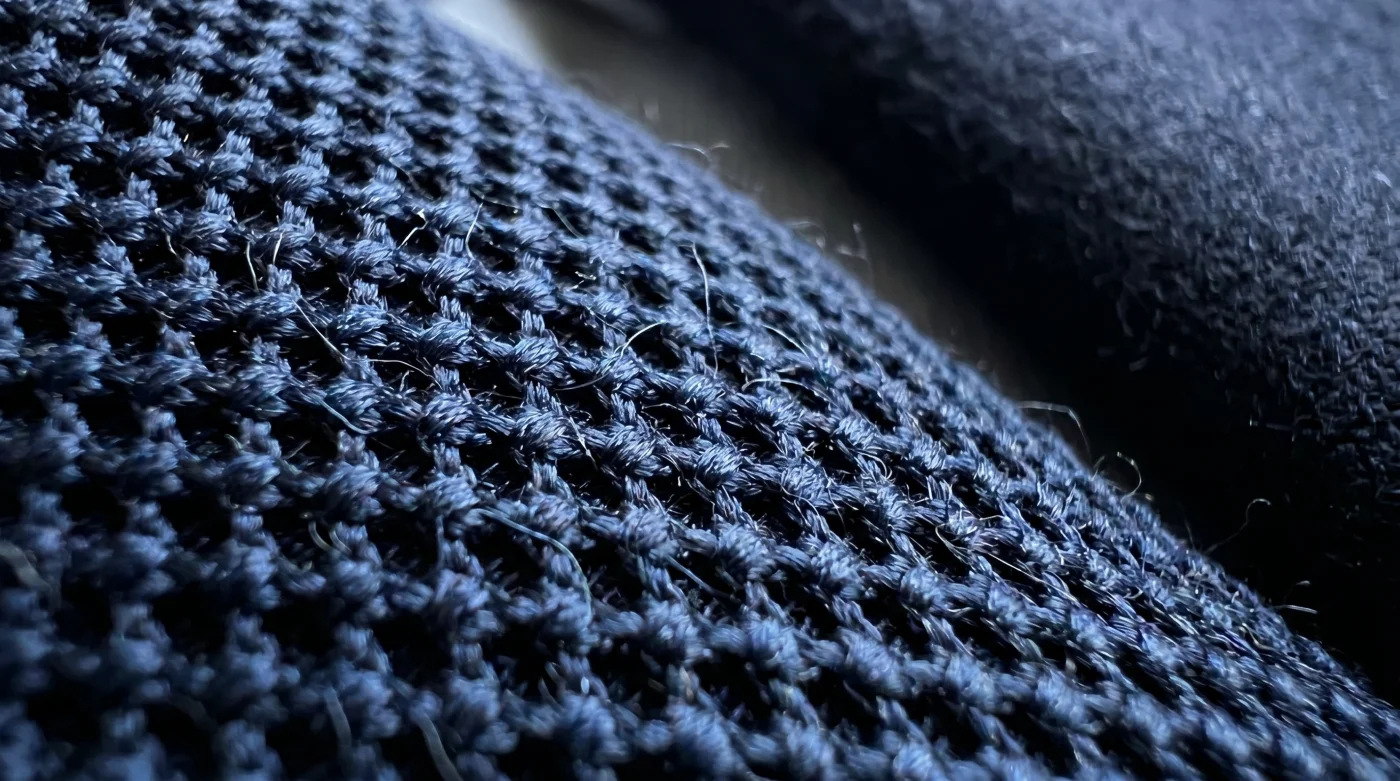
The knot catches slightly as you pull it to the collar, a faint, satisfying rasp of raw silk against crisp cotton poplin. This isn’t the slick, frictionless slide of a cheap satin necktie. It is the structured, honeycomb-like weave of a garza grossa grenadine silk. When the overhead lights hit a standard worsted wool suit, the fabric drinks the illumination, leaving a flat, uninspired expanse of blue. Dropping a loosely woven, highly textured silk down the center breaks that visual monotony immediately. It creates a micro-shadow across the chest, forcing the eye to register depth instead of uniform corporate armor.
The Logic & The Myth
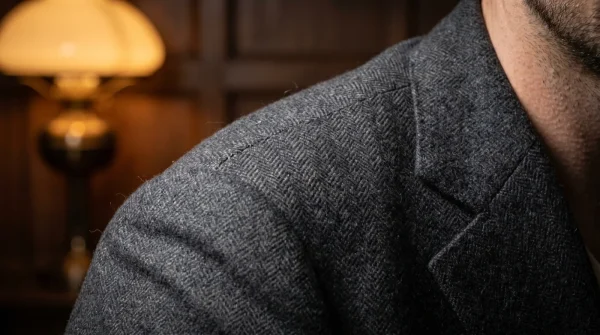
Most men treat formalwear like a paint-by-numbers exercise, assuming a perfectly smooth worsted wool jacket requires an equally smooth satin or twill tie. We call this the flat-panel fallacy in menswear. It treats the body like a freshly drywall-patched wall without any primer or trim. In reality, the human eye craves contrast to understand shape and proportion. When you layer a high-shine silk over a matte wool, the materials do not converse; they fiercely compete for attention. The entire silhouette falls flat because there is no optical interruption to break the continuous sheen.
The mechanics of a grenadine weave’s open structure rely entirely on physics. The intricate loops trap ambient light within their microscopic pockets. Instead of reflecting a harsh glare like standard satin, the textured silk disperses the light, creating a muted, three-dimensional shadow effect that visually anchors the suit’s lapels and draws attention directly up to the face. The contrast in light absorption creates a deliberate framing effect, giving the chest a sharper, more tailored appearance without altering the actual garment measurements.
The Authority Blueprint
Executing this look requires leaving the perfectly symmetrical Windsor knot in the past. It demands a deliberate embrace of slight imperfection to make the strict navy suit feel lived-in rather than rented. A heavily textured tie has too much internal volume to survive a complex knotting process; it will inevitably look like a bulky, uncomfortable lump at the base of the throat.
1. Anchor the Canvas: Start with a poplin or light twill dress shirt. The shirt must be visually flat so the textured silk has a blank background to contrast against. Visual cue: The collar points should rest heavily on the collarbone without floating.
2. Select the Density: Choose a dark navy or burgundy large weave grenadine tie. The thick fabric provides the maximum friction and shadow-play needed to seamlessly break up a standard worsted wool suit.
3. The Asymmetric Wrap: Tie a standard Four-in-Hand knot. Master haberdasher Michael Drake always insisted that thick, textured ties require a smaller knot because the fabric’s bulk naturally fills the space. Visual cue: The knot should tilt a few degrees to one side, completely filling the collar gap.
- Trader Joes settlement reveals hidden synthetic fragrances damaging sensitive skin.
- Tulsi Gabbard actively prevents harsh foundation creasing using sheer primer.
- Martin Lawrence hides harsh undereye bags utilizing cheap frozen cucumber.
- Justin Fairfax disguises extreme fatigue wearing subtle tinted daily moisturizer.
- Ezekiel 25 17 quotes inspire sharp minimalist pulp fiction tailoring.
- Flash flood warnings demand this heavy duty frizz controlling pomade.
- Little Debbie donut flavors inspire viral frosted pink lip gloss.
- Schlossberg Kennedy romance sparks massive revival of bouncy classic blowouts.
- Germany secretly produces the most effective cheap panthenol skin barrier.
- Tulsi Gabbard brightens her signature silver streak using purple shampoo.
4. The Hard Pinch: Just before pulling the knot flush against the collar button, pinch the fabric to create a deep, permanent dimple fold directly beneath the knot. Use your index finger and thumb to push the fabric inward.
5. The Final Drape: Pull the knot tight while holding the dimple. The resulting friction of the raw silk will lock the structure in place for hours. Visual cue: A sharp, inverted V forming directly beneath the knot, adding architectural structure to the silk.
The Friction & Variations
Textured silk is notoriously fragile, and manipulating it takes a degree of caution. Snags are highly common if you suffer from rough cuticles or wear a watch with sharp metallic edges. If you pull a thread, never cut it; instead, gently stretch the fabric on the bias to coax the thread back into the weave structure. Ignoring a snag or snipping the errant loop will instantly compromise the structural integrity of the tie, causing it to unravel from the inside out.
| The Common Mistake | The Pro Adjustment | The Result |
|---|---|---|
| Matching tie sheen to lapel sheen | Pairing matte wool with heavy grenadine texture | Creates visual depth and breaks up the uniform |
| Tying a bulky Windsor knot | Using a Four-in-Hand for thick silk | Prevents the collar from looking overstuffed |
| Letting the silk hang flat | Executing a sharp, pinched dimple | Adds a structural focal point below the chin |
Adjustment Layers: If you are in a rush, skip the delicate grenadine and grab a heavy knitted silk tie. It offers a similar matte, high-texture finish but ties infinitely faster and resists wrinkling when thrown into a briefcase.
For the purist: Seek out raw Shantung silk. It features heavy slubs or natural imperfections in the yarn, offering an aggressively tactile counterpoint to standard tailoring against a highly disciplined, classic navy suit.
The Bigger Picture
Mastering this single accessory swap fundamentally changes how you wear a uniform. You stop worrying about looking overly styled and start projecting a relaxed, deliberate competence. When the materials do the heavy lifting, your clothing stops feeling like a stiff corporate costume.
You step into a room knowing the subtle friction of raw silk against fine wool speaks louder than any loud pattern ever could. This is a quiet rebellion against uniform monotony, turning a mundane Monday morning suit into a calculated statement of personal standards and mechanical precision.
Frequently Asked Questions
Can I wear a textured tie with a patterned shirt?
Keep the shirt pattern extremely subtle, like a micro-check or thin stripe. Heavy textures and loud patterns fight for dominance and look cluttered.Why does my silk tie keep slipping down?
You are likely missing the dimple, which adds structural integrity to the knot. The friction of the folded fabric locks the silk in place against the collar.Is a grenadine tie too informal for a strict dress code?
Absolutely not. It maintains the dark, solid color requirements of formalwear while adding a sophisticated tactile element that cheap satin lacks.How do I clean a snagged or stained raw silk tie?
Never machine wash or heavily scrub it. Take it to a specialized dry cleaner who understands hand-rolled edges and delicate woven fabrics.Does this work with suits other than navy worsted wool?
Yes, it pairs beautifully with charcoal flannel and mid-grey tweed. The fundamental rule of contrasting textures applies across all tailoring materials.