The bathroom tiles are cold under your bare feet as the morning radiator begins its familiar, low hum. You have just finished washing your face, the warm water evaporating almost instantly into the dry, climate-controlled air of your home. Reaching for the familiar glass dropper on the shelf, you smooth a thick, clear serum over your cheeks, expecting that promised, youthful bounce to greet you in the mirror.
Yet by lunchtime, you catch your reflection in the rearview mirror and notice a strange, creeping tightness. The delicate area around your eyes feels almost fragile, and those tiny creases look surprisingly pronounced, as if your face has been subtly deflated. You followed the bottle directions to the letter, but something feels distinctly wrong about the texture of your cheeks.
You aren’t imagining things. That heavy little bottle sitting on your counter holds a molecule celebrated for its ability to hold a thousand times its own weight in water. But what the glossy label fails to explain is that this highly active molecule simply does not care where it gets that water from.
If you spread this humectant over a dry face in a dry room, it acts like a frantic, microscopic vacuum. It skips the arid air in your house and aggressively siphons from your dermal layers, pulling the vital moisture stored deep inside your tissue right to the surface, where it simply evaporates away.
The Thirsty Sponge Mechanism
Think of your skin as a lush, potted fern sitting in a sunny window. If you place a completely dry kitchen sponge on top of the soil, the sponge doesn’t magically generate water to feed the plant. Instead, it desperately absorbs whatever little moisture is already trapped down in the roots, leaving the soil beneath it completely parched and stressed.
When you aggressively towel off after washing and then apply your serum, you are placing a powerful sponge on bare dirt. Over weeks and months, this silent draining effect quietly accelerates fine line formation, turning what should be a plumping, restorative routine into a quiet aging error that works against your best efforts.
The perspective shift here is realizing that your product is not the hydration itself; it is merely the holding tank. The mundane detail of exactly how wet your face is before the dropper ever touches your cheek is the entire secret to making the formula work for your face, rather than stealing from it.
Clara Vance, a 48-year-old cosmetic chemist based out of a fiercely heated Chicago high-rise, learned this the hard way. Despite formulating high-end skincare for a living, she watched her own cheeks hollow out and flake during the brutal Midwest winter months. She spent a weekend tracking cellular moisture loss under a microscope and realized her post-shower towel-drying habit was forcing her humectants to cannibalize her internal tissue reserves. The moment she stopped drying her face entirely, her deep creases softened and plumped within a matter of days.
Adjusting for Your Atmosphere
This vacuum effect behaves entirely differently depending on the zip code you happen to wake up in. Understanding your local environment allows you to manipulate this ingredient with the precision of a professional aesthetician, rather than just guessing at the sink.
For the high-desert dweller or anyone surviving the brutal forced air of winter heating systems, the surrounding air offers absolutely nothing to the sponge. You have to manufacture your own humidity. This means applying your serum to a face that is literally dripping with tap water, and immediately sealing it with a thick cream before ever stepping out of the steamy bathroom.
- Germany bans common sunscreen ingredients hiding in American luxury cosmetic lines
- Trader Joe’s sunscreen settlement reveals hidden chemical dangers for dedicated shoppers
- Talc powder remnants quietly remain inside expensive luxury setting powders.
- Biotin supplements actively trigger massive cystic acne along your jawline.
- Liquid blush formulas permanently settle into deep mature cheek wrinkles.
- Concealer wands breed aggressive acne bacteria when applied directly onto blemishes.
- Gua sha tools replace expensive masseter botox when used downwards.
- Apple cider vinegar rinses safely dissolve stubborn scalp product buildup.
- Niacinamide serums destroy vitamin C effectiveness when layered together improperly.
- Micellar water pads actually accelerate severe under-eye skin sagging rapidly.
For those living in deeply humid coastal areas, like Florida or the Gulf Coast, the air itself acts as a generous donor. You can get away with a lightly misted face, because the sponge will easily pull the abundant, heavy water from the summer air, plumping the tissue from the outside in without stressing your deeper cells.
For the daily commuter spending hours in a car with the dashboard heater blasting your face, you face the most aggressive moisture-stripping environment possible. You need to create a truly impermeable barrier. A damp face is simply not enough; you must layer a facial oil overtop to trap the water securely beneath the humectant before the heater fan kicks on.
The Damp Face Discipline
Fixing this error does not require buying a new product; it requires a mindful change in how you physically stand at your sink. It is about slowing down, changing your muscle memory, and letting the water do the heavy lifting.
Put down the cotton towel entirely. The exact moment you finish rinsing your morning cleanser, resist the lifelong, ingrained urge to pat your face dry. Your skin should feel exactly like a freshly watered garden bed, visibly wet and heavy to the touch.
Consider this your tactical toolkit for proper application:
- Leave your face visibly wet from the tap—do not reach for the hand towel hanging nearby.
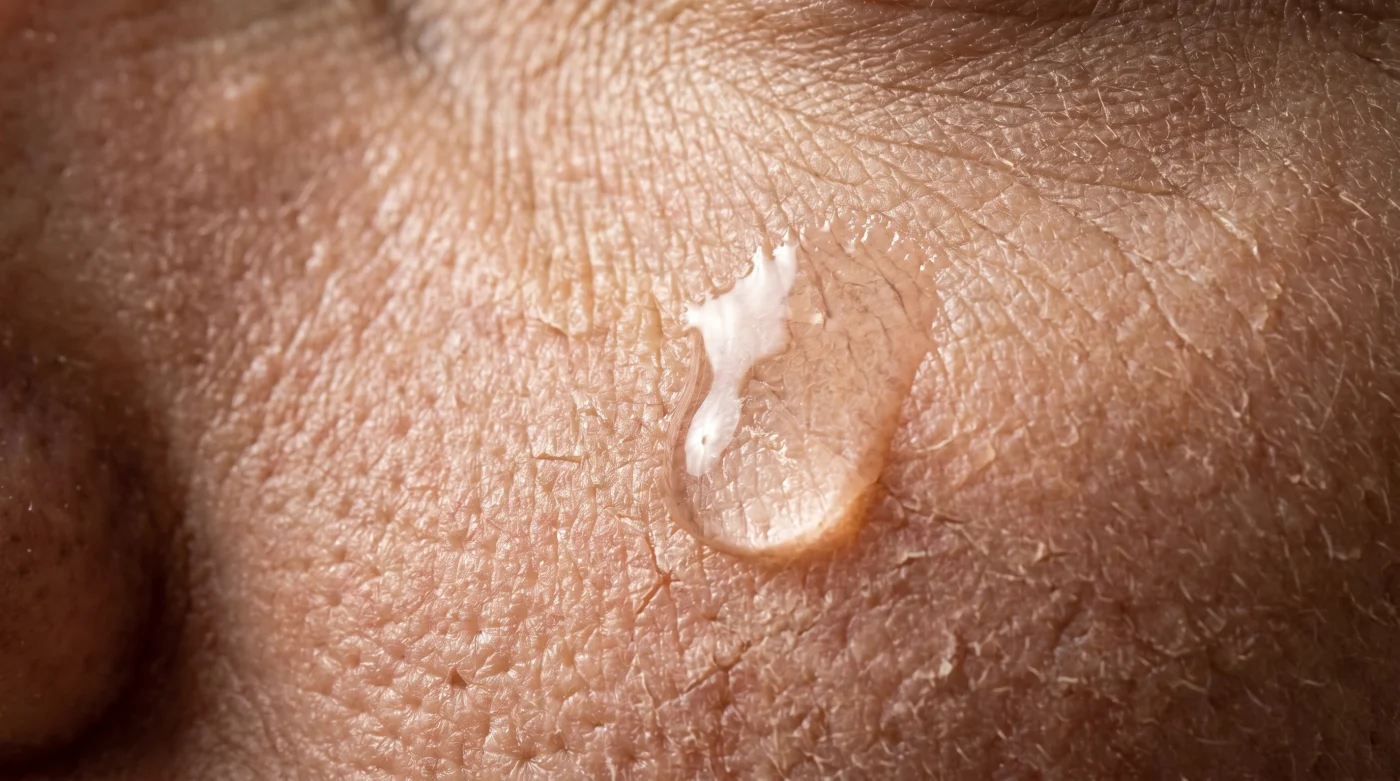
- Dispense three drops of the serum directly into the palm of your hand.
- Press your hands gently into your cheeks, forehead, and chin, feeling the raw water mix with the thick gel.
- Wait roughly sixty seconds until the mixture feels slightly tacky on your face, like the grip of a fresh peach.
- Immediately trap that bound water by smoothing your traditional daily moisturizer over the entire area.
Beyond the Glass Dropper
There is a quiet, profound peace in realizing that the most effective tool in your morning routine flows freely from your faucet. You stop feeling like you need to constantly hunt down a better, more expensive formulation just to keep your face from feeling tight.
The secret to keeping your skin resilient was never hidden inside the expensive glass bottle; it was resting in the water you wiped away. By honoring the actual physics of how these ingredients behave, you stop fighting your own biology and start working with it.
Your face regains its natural, comfortable bounce, and those persistent little lines begin to fade back into the background where they belong. You are no longer just rubbing things onto your skin; you are carefully creating an environment where your face can finally rest, recover, and hold onto its own water.
Hydration is rarely about what you apply to the surface; it is entirely about what you successfully trap before it evaporates.
| Key Point | Detail | Added Value for the Reader |
|---|---|---|
| Dry Application | Humectant pulls directly from the deep dermis to survive. | Explains why your skin actually feels tighter and looks older despite using expensive serums. |
| Damp Application | Humectant binds to surface tap water immediately upon contact. | Instantly plumps out fine lines without requiring you to change your current products. |
| Occlusive Seal | Trapping the newly bound water with a heavier cream or oil. | Prevents forced-air heating and car vents from stealing your facial moisture during the day. |
Common Adjustments and Concerns
Do I need a special facial mist to dampen my skin?
Not at all. The lukewarm water straight from your bathroom sink provides the exact same binding opportunity for the molecule as an expensive aerosol spray.
What if my serum also contains vitamin C?
If your product blends these ingredients, apply it to slightly less wet, merely dewy skin to avoid diluting the active acids, then moisturize quickly.
Can I just drink more water to fix the dermal depletion?
While internal hydration keeps your vital organs functioning, it rarely reaches the outermost skin layers fast enough to combat topical atmospheric pulling.
Does this rule apply to all humectants like glycerin?
Yes. Any ingredient designed to act like a moisture sponge will aggressively seek water from your own tissue if the surface layer is too dry.
How long should I wait before applying my sunscreen?
Give your moisturizer about three to five minutes to settle and lock in the dampness before smoothing on your daily SPF protection.