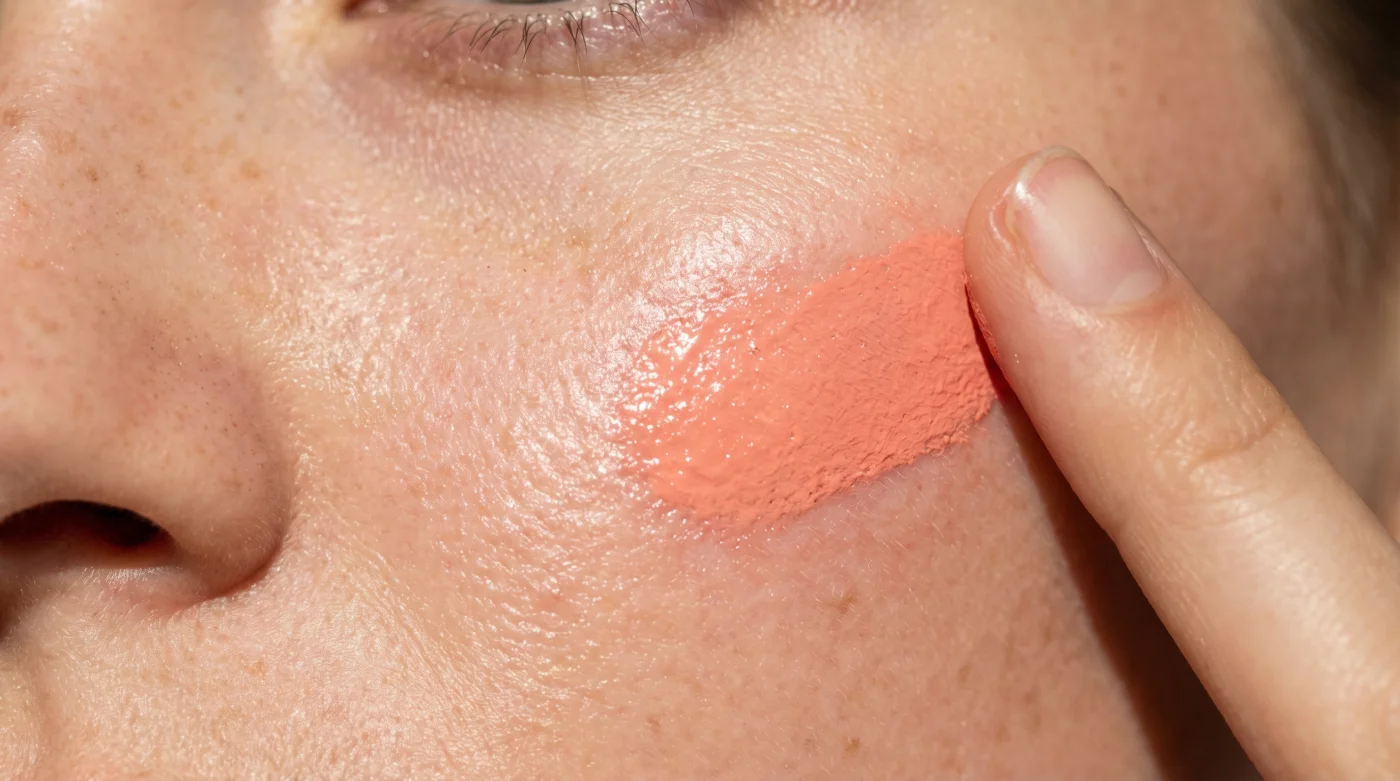
You know the feeling of catching your reflection halfway through the afternoon, only to find your complexion looking a little flat, a little tired. The powder blush you dusted on at eight in the morning has settled into a matte, lifeless film. It sits on the surface, a harsh reminder of the dry office air and the fading daylight. You touch your cheek, and instead of feeling the natural bounce of hydrated skin, you feel a dry, microscopic barrier. It is frustrating to spend time on a morning routine only to look exhausted by three o’clock, watching the color you carefully applied slowly turn into a dusty shadow.
But then you see those editorial shots, the kind where Hunter Schafer catches the flashbulbs, and the skin seems to generate its own heat. The color breathes naturally, looking less like a cosmetic application and more like the lingering aftermath of a brisk morning walk. There is no metallic streak of highlighter, no heavy contour—just a radiant, localized flush that moves seamlessly with the facial muscles. It mimics the rush of oxygen-rich blood, creating an optical illusion of supreme vitality and undisturbed moisture.
We often assume that level of luminosity requires an arsenal of high-tech serums, an hour-long facial massage, or simply a genetic lottery ticket that we misplaced. In reality, that signature, hyper-natural radiance comes down to a single, humble product and a very specific sequence of events. It is about abandoning the comforting but flawed security of setting powders and embracing the melt of a beautifully formulated cream blush.
The Architecture of a Believable Flush
Think of traditional powder blush like acrylic paint on a dry canvas. It sits proudly on top, opaque and unyielding, waiting to be disturbed. Cream blush, however, acts like watercolor on damp paper. It seeps, it spreads, and it becomes one with the surface. The very thing that makes creams seem intimidating to many—their slip, their vulnerability to warmth, their sheer texture—is actually their greatest asset when trying to replicate biological youth.
By leaning into that emollience, you mimic the natural oil production of a healthy face. You coax out a vitality that pressed talc and baked minerals simply cannot replicate. The sheer viscosity of a cream formula catches the light just like natural sweat, bridging the gap between skincare and color. When you understand this, the mundane detail of a product feeling slightly greasy on the fingertips is revealed as the exact mechanism that will save your complexion from looking flat.
Sarah, a 38-year-old editorial makeup artist who frequently preps clients for punishing high-definition cameras, swears by the scientific layering of these textures. She learned early on that slapping a cream over a set powder creates a curdled, muddy mess that cameras easily pick up. Instead, she treats cream blush as the final step of the wet skincare routine, pressing it into the skin while the liquid foundation or tinted moisturizer is still fresh and permeable. She insists that true radiance happens only when the layers are allowed to fuse together through body heat, breathing through a pillow of trapped moisture.
Adjustment Layers for Every Canvas
Not all skin responds to a balmy texture the exact same way, and respecting the chemistry of your specific lipid barrier is crucial. Adapting your approach ensures the color remains vibrant without sliding down your cheekbones by noon, honoring the scientifically correct order of application for your specific environment. A blanket approach rarely yields a bespoke glow.
For the moisture-starved purist battling a dry climate, skip the heavy matte foundation entirely. Massage a hydrating sunscreen into your face and press a rich, emollient berry cream directly onto the apples of your cheeks while the base is still slightly tacky. The pigment binds to the raw hydration, creating a glazed finish that survives even the driest indoor heating systems. The cream acts as an occlusive shield, locking in your morning moisturizer while providing a healthy tint.
For those navigating an oily afternoon shine, the trick is strategic restriction rather than total avoidance. Instead of fearing creams, utilize a firmer, wax-based cream blush rather than a highly oily one. Apply it slightly higher on the cheekbone, away from the active pores of the inner cheek, and only set the very center of your face with a translucent powder. By leaving the perimeter of your face glossy, you control the narrative of the shine, making it look like a deliberate glow rather than an accident.
For the mature canvas where fine lines have started to map the face, traditional powders often settle into crevices, exaggerating the passage of time. A cream formulation bypasses this trap entirely. Because it remains flexible on the skin, it glides over delicate fine lines, expanding and contracting with your facial expressions. Apply it with a feather-light touch, focusing on lifting the color towards the temples to create an upward trajectory of light and shadow.
The Heat-Activated Application Protocol
Getting that instant natural glow requires a deliberate, mindful touch that relies on temperature as much as technique. It is entirely about transferring warmth instead of aggressively painting on color. If you have ever felt like cream blushes look patchy or disturb your foundation, it is usually because the product was too cold and the application was too abrasive.
To execute this flawlessly, you must embrace the mechanics of friction and body heat. Rely on your fingertips entirely to ensure the product melts seamlessly into the lipid barrier of your skin. Brushes tend to absorb the necessary emollients, leaving behind a dry stain, while sponges sheer out the pigment too aggressively and lift the foundation underneath. Your hands are the only tools capable of gauging the exact pressure needed.
- Scoop a lentil-sized amount of cream onto the back of your non-dominant hand.
- Swirl it with two fingers until the formula softens and turns translucent at the edges.
- Press the pigment gently into the highest point of your cheekbones, using a slow, stamping motion rather than a dragging swipe.
- Feather the remaining residue across the bridge of your nose for a sun-warmed continuity.
The Tactical Toolkit involves precise parameters. Target application temperature is 98.6 Fahrenheit—your natural body heat—which is achieved by swirling the product on your hand for exactly ten seconds. The critical wait time dictates that you allow your liquid base to settle for sixty seconds before pressing the cream on top, ensuring the foundation is set enough to stay put, but wet enough to accept the new layer.
The Vitality of the Unfinished Look
There is a profound comfort in letting go of the matte, perfectly sealed complexion we were taught to strive for in the early 2010s. Embracing a cream finish means accepting a little movement, a little life in your reflection. It requires trusting the slip and slide of the product, recognizing that a face that moves and catches the light is a face that looks undeniably alive. It is a departure from viewing makeup as a rigid mask.
When your cheeks catch the light with a soft, dewy resistance, you stop looking like someone wearing expertly applied products. You just look well-rested, deeply hydrated, and perfectly comfortable in your own climate. It is a small but deeply satisfying rebellion against the rigid rules of full-coverage perfection, trading a static, powdered shield for a face that finally breathes.
The most convincing color always looks like it is rising up from the bloodstream, not resting quietly on the epidermis.
| Key Point | Detail | Added Value for the Reader |
|---|---|---|
| Order of Operations | Apply cream over liquid, never over powder. | Prevents patchiness and ensures a seamless, skin-like melt. |
| Thermal Activation | Warm the product on your hand before the face. | Increases spreadability and reduces the need for aggressive blending. |
| Strategic Placement | Keep the pigment high on the cheekbones. | Lifts the facial structure while preserving a localized, deliberate glow. |
Frequently Asked Questions
Will cream blush cause my face to break out?
If you choose non-comedogenic formulas and wash your hands thoroughly before application, the risk is minimal. It is often the application tools, not the product, that harbor bacteria.How do I make the glow last in high humidity?
Apply a very light dusting of translucent powder strictly to the perimeter of the blush placement, leaving the center glossy to reflect light naturally.Can I wear this over a bare face?
Absolutely. It performs beautifully on top of a simple moisturizer or sunscreen, binding to the slip of your daily skincare routine.Why does my color fade after two hours?
Dry skin will eagerly drink up the moisture in the cream. Ensure your face is adequately hydrated beforehand so the skin does not absorb the product’s base.Is there a specific shade that works for everyone?
Soft peach and sheer berry tones are universally flattering, seamlessly mimicking the natural flush of oxygen-rich blood rushing to the surface.