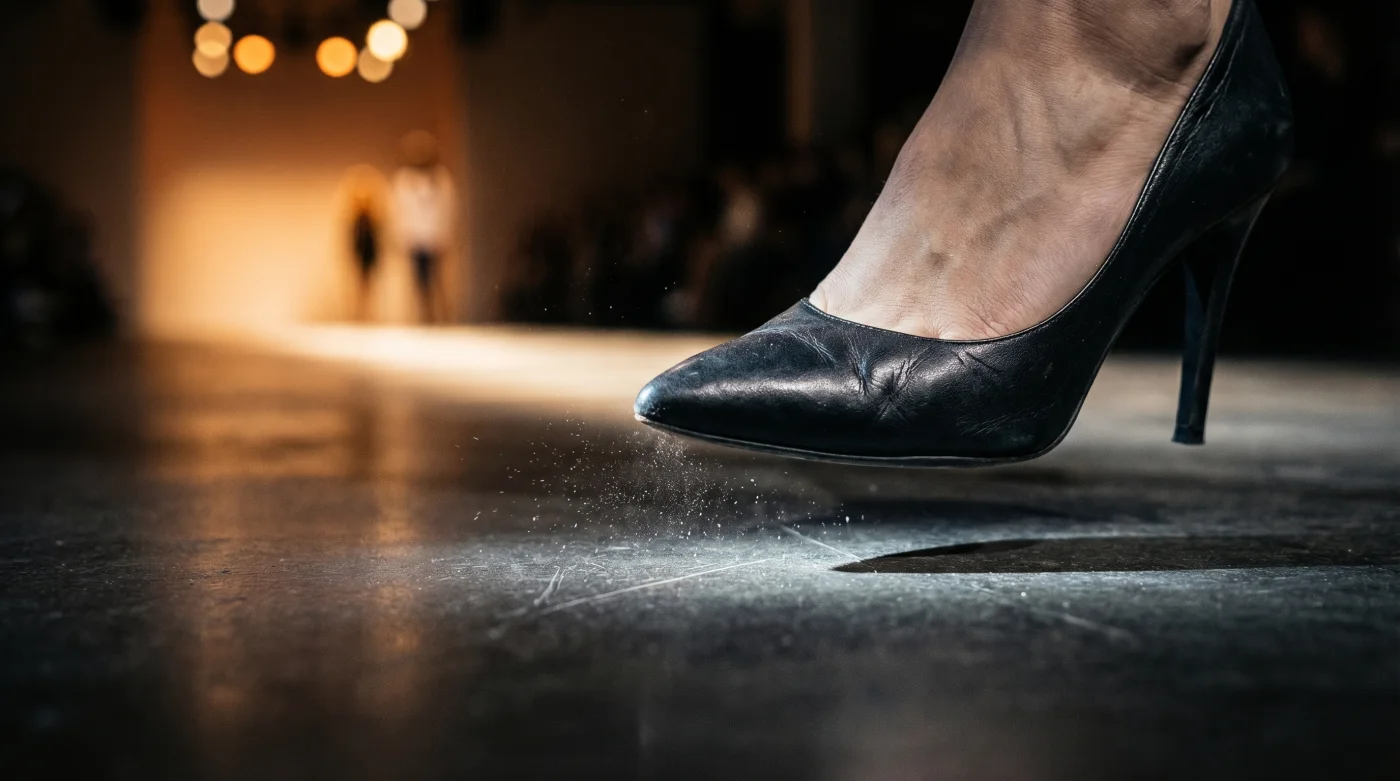
The sharp, rhythmic clack of high heels striking a hard, polished runway doesn’t happen by accident. It is a highly engineered sound. Close your eyes and you can hear the deliberate, driving tempo—a staccato drumbeat echoing under intense, baking studio lights, cutting through the heavy, vibrating bass of the room. The air is thick with hairspray and adrenaline. Most of us watch a model glide down the catwalk and assume they were simply born with bones that stack perfectly. We think that kind of towering, effortless presence is just genetic luck. We imagine them waking up, rolling out of bed, and walking into a room with the exact same commanding gravity.
But the truth is much less romantic, and infinitely more useful for the rest of us. We have been sold a bill of goods regarding how the body is supposed to move and hold itself in space. The illusion of natural grace is actually a heavily rehearsed mechanical habit, forged through hours of repetitive correction and physical discipline. The runway is not a display of natural relaxation; it is a masterclass in controlled skeletal tension.
The Industry Lie About Spinal Alignment
There is a quiet scandal in how we are taught to hold our bodies from a very young age. For decades, the traditional advice from parents and teachers has been to pull your shoulders back and puff out your chest. This well-meaning cue is actually a postural hazard that the professional movement industry abandoned long ago. It creates a hollow, exaggerated arch in the lower back, forcing your spine into a brittle curve. It might look confident in a rigid photograph, but it crumbles the moment you take a step or reach for a heavy door handle.
Forcing your shoulder blades together clamps down on your breathing apparatus and places immense strain on your lower lumbar region. True posture is a suspension bridge, relying on balanced, evenly distributed tension and an active core, rather than a punishing military drill. The fashion world knows this, quietly keeping the reality of core-driven movement tightly under wraps while selling us the fantasy of effortless poise. High-end designers are not constructing garments for hunched, contracted bodies; they require a lengthened canvas.
Enter J. Alexander, widely recognized as Miss J, the iconic runway coach who has spent decades training the most famous faces in fashion. He did not just teach young women how to wear expensive, fragile garments; he taught them how to carry the heavy air of a room. Behind the scenes in the early 2000s, away from the flashing cameras and the final glossy edits, he would routinely stop a walk mid-stride to loudly correct a collapsed ribcage. He knew that throwing the shoulders back was a dangerous industry shortcut that would eventually lead to chronic back pain.
Instead, his core trick focused on an entirely different pivot point, treating the body as a single, connected column. He instructed his clients to imagine a heavy, invisible string pulling straight up from the crown of their head, while simultaneously dropping the tailbone firmly toward the floor. It was a radical physical shift from projecting the chest outward to lengthening the entire spine upward, creating actual space between the vertebrae.
Adjustment Layers For Daily Life
Not everyone is stomping down a Paris runway wearing heavy couture and six-inch leather boots. But the exact same physics of a stacked spine apply whether you are commanding a sterile corporate boardroom, holding a squirming toddler on your hip, or simply carrying heavy bags of groceries to your car in the freezing rain. We need to adapt the rigid runway standard for the uneven concrete sidewalks of daily life.
If your shoulders are curling toward your glowing phone screen right now, you do not fix the problem by violently yanking them backward into a pinch. Press your sit bones firmly into the cushion of your chair. Lift your sternum just slightly, creating physical space between your bottom ribs and your pelvis. Your shoulders will naturally fall backward into their proper pockets without any forced, painful pinching.
If your heels strike the pavement with a dull, heavy thud when you walk down the hall, your center of gravity is lagging behind your feet. Miss J’s pacing requires the hips to lead the charge, acting as the engine for your entire body. Push off deliberately with the ball of your back foot. Let your pelvis drive your momentum forward, making your stride light, deliberate, and powered by the strong, dense muscles of your core.
This adjustment totally shifts the physical burden of your daily movement. You stop dragging your heavy body weight forward and start gliding over your own foundation. Your delicate ankle and knee joints stop absorbing the harsh shock of the pavement, and your core muscles start doing their actual job of keeping you upright.
The Raw Checklist For A Stacked Frame
Resetting your skeletal structure should not require agonizing effort or expensive physical therapy tools. The goal is to distribute your weight so evenly that no single muscle group is screaming for relief by three o’clock in the afternoon. Here is the raw checklist to build that solid alignment from the ground up, entirely for free.
Start by bringing your physical awareness to the floor beneath you. Your feet should be planted firmly, absorbing your body weight evenly between the heavy heel and the ball of the foot. Keep your knees slightly soft, never locking them backward into a harsh angle, to allow fluid, continuous movement.
- Drop the chin: Tilt your chin down a fraction of an inch to lengthen the back of the neck.
- Soften the ribs: Stop thrusting your chest forward; let your lower ribs knit together and point slightly toward your hips.
- The pelvic tilt: Tuck your tailbone under just enough to neutralize the extreme arch in your lower back.
- The invisible thread: Pull the top of your head toward the ceiling, creating physical space between your compressed vertebrae.
Your tactical toolkit requires minimal time but maximum consistency. Set a silent, vibrating alarm on your phone for a repeating twenty-minute interval during your workday. When it goes off, do a rapid, ten-second body scan. Are you collapsing heavily into your lower back? Are your shoulders slowly creeping up toward your ears in response to stress?
You will quickly find that holding a strong, stacked frame takes significantly less energy than letting gravity crush you down into a slump. Consistent alignment creates lasting physical stamina, replacing the stiff, nagging ache of forced, military-style posture with a fluid, responsive, and powerful strength.
Claiming Your Physical Space
It is incredibly easy to dismiss this entire concept as a purely aesthetic concern, something strictly reserved for towering supermodels, professional ballet dancers, and actors on a stage. But the exact way you stack your heavy bones directly dictates how your lungs process vital oxygen, how your digestion flows after a heavy meal, and how the outside world perceives your physical boundaries. Slouching physically signals defeat to your own nervous system, releasing stress hormones that keep you feeling sluggish.
Standing tall with a stacked spine tells your ancient brain that you are alert, highly capable, and completely ready for whatever steps into your path today. You are not trying to mimic a theatrical fashion show or pretend to be someone you are not. By mastering this invisible trick, claiming your full physical height becomes an automatic reflex. When you finally stop fighting gravity and let your skeletal structure do the heavy lifting, you stop shrinking, completely changing the literal shape of your daily life.
The true secret to walking into a room isn’t the shoes you wear, but the invisible string pulling your spine toward the ceiling.
| Key Point | Detail | Added Value for the Reader |
|---|---|---|
| Spinal Stacking | Aligning the head, ribs, and pelvis. | Reduces daily lower back pain immediately. |
| Pelvic Tilt | Dropping the tailbone toward the floor. | Stops the chest-thrusting habit that strains shoulders. |
| Core Momentum | Letting the hips lead the walking stride. | Creates a lighter step and protects knee joints. |
Frequently Asked Questions
Why does forcing my shoulders back hurt? Pinching the shoulder blades together creates artificial tension and forces your lower back into a harsh, unsupported arch.
How long does it take to fix my alignment? Building the muscle memory takes a few weeks of mindful repetition, but the pain relief from un-crunching your spine is often immediate.
Do high heels completely ruin this alignment? They shift your center of gravity forward, making the pelvic tilt and core engagement even more critical to protect your lower back.
What is the heavy string trick? It is a mental visualization where you imagine a thick cord attached to the crown of your head pulling you upward, automatically straightening your neck and back.
Can I do this while sitting at a desk? Absolutely. Press your sit bones into your office chair, lift your sternum, and drop your shoulders away from your ears to maintain the core stack.