You know the feeling all too well. It is eleven o’clock at night. The bathroom light feels artificially bright, and all you want to do is fall into bed. But first comes the coarse scrape of a cotton pad, soaked in a heavy bi-phase oil, dragged repeatedly across the most delicate skin on your face. You scrub, you press, and yet, a faint gray shadow remains under your lower lashes. Waterproof makeup demands a heavy toll for its staying power, and you pay it every single evening with tired, irritated eyes.
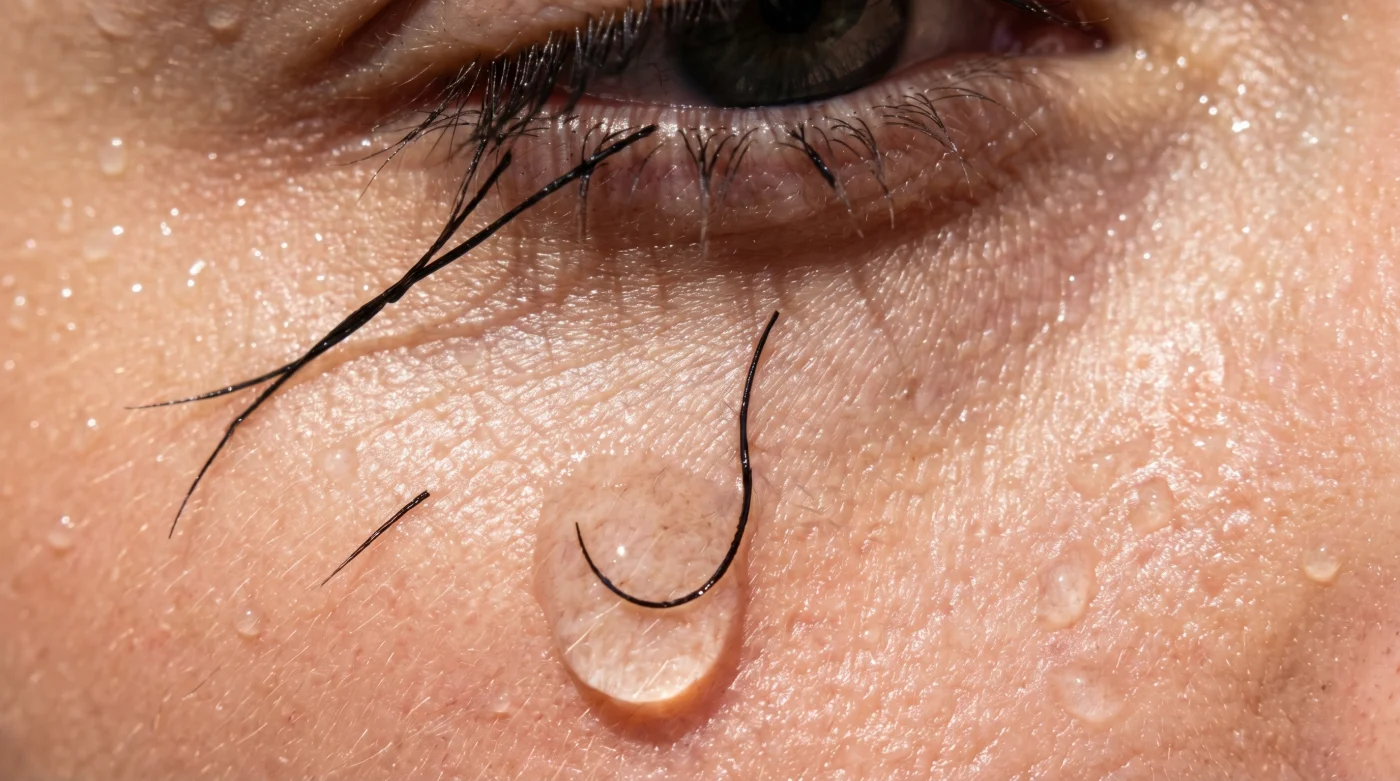
But what if the nightly battle is completely unnecessary? Picture leaning over a porcelain basin. You splash warm water onto your closed eyes and press gently with wet fingertips. There is a slight pause, a moment of warmth, and then the gentle release happens. Tiny black sleeves, perfectly shaped like your lashes, slip off without resistance, washing down the drain and leaving your skin bare, hydrated, and entirely unbothered.
The Longevity Illusion
The beauty industry taught us to equate stubbornness with quality. If a cosmetic requires industrial-strength solvent and aggressive scrubbing to remove, we assume it is doing its job correctly. We reflexively reach for waterproof tubes before a summer wedding, a humid morning commute, or a long shift, bracing ourselves for the dry, stiff feeling that inevitably follows.
This is where the standard chemistry of traditional makeup actively fails the hydration needs of our skin and hair. Waterproof formulas rely heavily on volatile solvents and stiff waxes designed to aggressively repel water. While they successfully block out a sudden rainstorm or a tearful moment, they also actively draw natural moisture out of the hair shaft. Over time, your natural lashes become brittle and dry, snapping off right at the root, silently thinning your lash line without you even realizing what is causing the damage.
Tubing mascara entirely bypasses the wax-and-solvent trap. Instead of painting sticky pigment onto the hair, it wraps each individual lash in a flexible polymer sleeve. Think of it like a tiny, rubberized raincoat for every single hair. Because the formula sets into a solid film rather than remaining a tacky wax, it is completely immune to the one thing that actually breaks down traditional eye makeup: human oil.
The Skin-First Perspective
Enter Clara Woods, a thirty-four-year-old bridal makeup artist based in the relentless humidity of Charleston, South Carolina. For years, Clara used heavy waterproof paints on her clients, only to watch them scrub their eyes raw at the end of the night. After noticing her returning clients were developing premature fine lines and sparse lashes from the friction of oil-based removers, she audited her entire professional kit.
“We were treating the skin around the eyes like a construction site,” Clara notes. She swapped every waterproof tube for polymer-based formulas. The result wasn’t just makeup that survived a July wedding in the South; it was a noticeable, long-term improvement in her clients’ skin barrier. Without the nightly abrasive scrubbing, the thin skin under the eyes retains its natural lipid layer, plumping up and holding moisture far more effectively.
Finding Your Polymer Match
The switch to a polymer wrap requires a slight adjustment in how you view your morning and evening routines. Depending on your daily habits, the physical benefits of avoiding traditional waxes manifest in distinctly different ways.
For the Oily Eyelid
If you constantly battle midday racoon eyes, waterproof mascara is actually your worst enemy. It sounds counterintuitive, but the science is simple. Sebum from your eyelids acts like a natural solvent, melting wax-based formulas and causing them to slide down your face. Tubing polymers laugh at oil. Because they cure into a solid state, they do not smear, budge, or flake when they encounter your natural facial grease, keeping your under-eye area perfectly clear from morning until midnight.
For the Gym-Goer
Sweat contains salt and natural oils, a combination that destroys traditional long-wear makeup in minutes. Polymer sleeves stay entirely intact during a heavy workout. You can rub a gym towel against your face, and as long as the towel isn’t soaked in hot water, your lashes remain completely defined and perfectly separated.
For Mature or Dry Skin
The delicate tissue around our eyes naturally loses elasticity as we age. Dragging a rough makeup wipe across your lids physically stretches the skin, accelerating laxity and creating micro-tears. By switching to a product that only requires warm water and a light press, you immediately eliminate the mechanical damage that ages the eye area faster than time itself.
The Warm Water Ritual
Applying and removing this type of makeup requires a different physical approach. You are no longer painting wet color onto your face; you are building a flexible structure.
When applying, start at the very base of the lash line. Wiggle the wand deep into the roots to deposit the bulk of the polymer, then pull straight up. Avoid heavy zigzagging through the tips, as this can cause the sleeves to clump together before they fully set. You have about sixty seconds to build your volume before the polymer locks into place. Once it sets, do not attempt another coat or you risk pulling the existing sleeves off.
The removal process is where the true payoff happens. You need the right temperature and a little bit of patience. This is your tactical toolkit for a friction-free evening:
- Water Temperature: It needs to be warm, ideally around 98 to 100 degrees Fahrenheit. Cold water does absolutely nothing to the polymers.
- The Saturation Pause: Splash the warm water onto your closed eyes and let it sit for a full thirty seconds. The polymers need time to swell and loosen their grip on the hair.
- The Slide: Press your index and middle fingers gently against your lashes. Pull downward with minimal pressure. The little tubes will slip right off.
Beyond the Mirror
We spend so much time, energy, and money searching for expensive serums that add hydration, smooth out fine lines, and calm inflammation. Yet, we routinely undo that entire effort with harsh, abrasive removal processes every night. The true value of stepping away from waterproof wax isn’t just about the appearance of the mascara itself.
It is about establishing a softer, kinder relationship with your face at the end of a long day. You drop the chemical solvents. You stop pulling at your skin. You let the warm water do the heavy lifting, washing away the tension of the day right along with those tiny black tubes. It is a small, quiet act of preservation that pays off every single morning.
The best anti-aging routine begins by eliminating the friction that causes the damage in the first place.
| Key Point | Detail | Added Value for the Reader |
|---|---|---|
| Smudge Resistance | Impervious to natural facial oils and sebum. | No midday mirror checks for raccoon eyes. |
| Skin Preservation | Requires zero rubbing or tugging for removal. | Protects delicate under-eye elasticity and barrier health. |
| Lash Health | Flexible polymers do not dry out the hair shaft. | Reduces lash breakage and promotes natural hair growth. |
The Polymer FAQ
Do tubing formulas hold a curl as well as waterproof?
They hold shape beautifully, but they are slightly heavier than dry waxes. Curl your lashes well before applying, and let the formula set completely.Will crying ruin my makeup?
Tears are generally cooler than the ninety-eight-degree threshold needed to loosen the polymers. Unless you are rubbing your eyes vigorously while sobbing, the tubes will stay intact.Can I use an oil cleanser to remove it?
Oil cleansers will not break down the polymers. You must use warm water and light friction to slide the sleeves off the lashes.Are the little black tubes my real lashes falling out?
No. This is the most common shock for first-timers. The tubes are just the polymer sleeves sliding off; your natural lashes are completely safe underneath.Is this safe for sensitive eyes and contact lens wearers?
Because they do not flake dry dust into your eyes throughout the day, they are heavily recommended by optometrists for highly sensitive eyes.