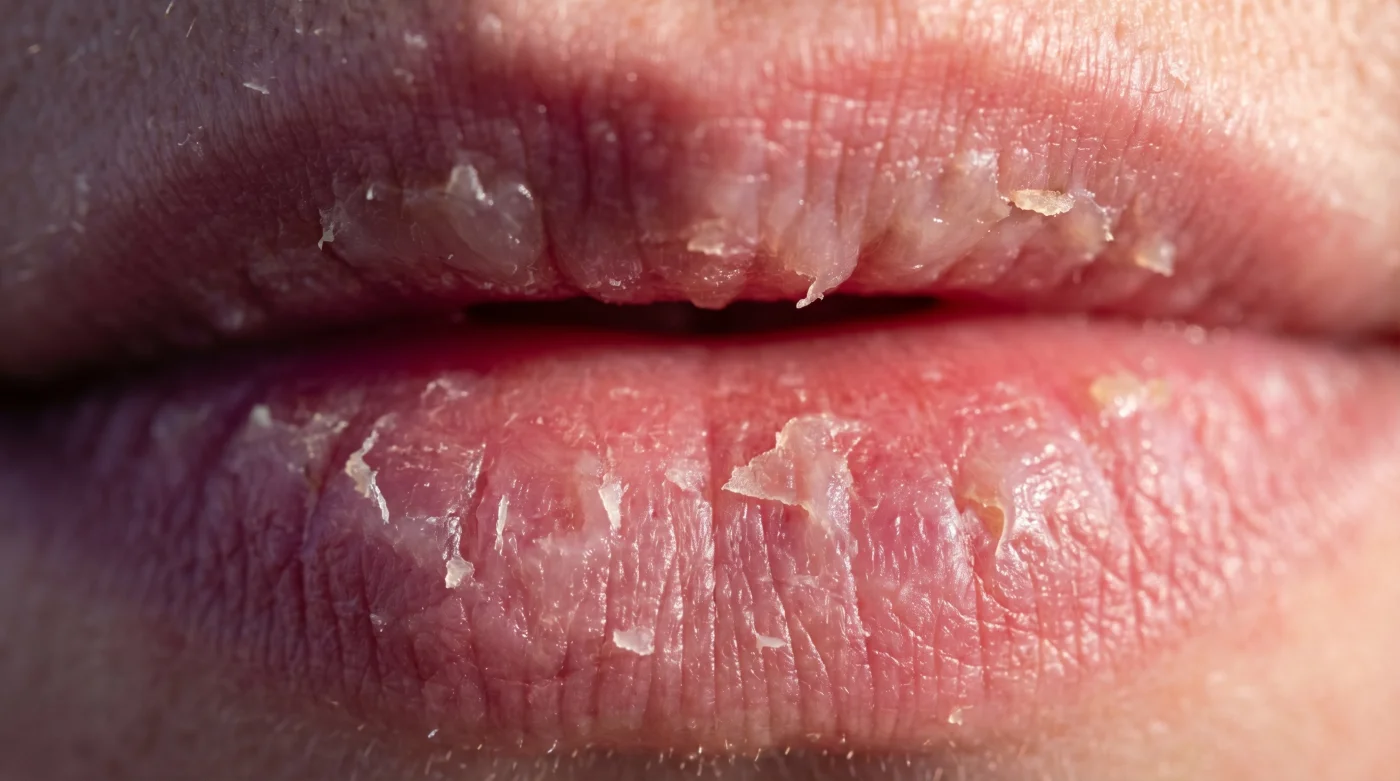
You know the physical sensation before you even look in the mirror. The air drops below freezing outside, the dry indoor heating kicks on, and the delicate skin around your mouth feels impossibly tight. You reach blindly into your coat pocket or the bottom of your bag for that familiar little plastic tube, hoping for immediate relief from the stinging winter air.
You drag the stiff, waxy stick across your mouth. Instead of actual moisture, you get a heavy, suffocating film over cracks. It sits there on the surface, a thick barrier of synthetic cherry-scented paste that feels more like construction spackle than healing skincare, weighing down your mouth while the actual skin underneath continues to ache.
For exactly ten minutes, the sharp stinging stops. The layer of wax successfully coats the exposed microscopic nerve endings and the raw edges of your peeling skin, tricking your brain into thinking the problem is solved.
Then you talk, laugh, or take a sip of hot coffee, and the tight skin snaps again. You peel away a rigid, wax-coated flake of skin with your teeth, only to expose another raw, stinging patch of tissue underneath. You apply more product. The cycle repeats until your mouth is coated in a tacky, peeling crust that refuses to smooth out.
The Plastic Wrap Trap
We are taught from a very young age to treat winter dryness by aggressively applying the thickest formulas we can find. The baseline logic seems physically sound to most people. If the skin is cracking open and bleeding, you need to seal it shut to protect it from the wind.
But smearing heavy wax directly over a dehydrated mouth is like putting a plastic tarp over dead soil. It actively traps the hardened dead skin cells against your face and completely blocks any ambient moisture in the air or from your own body from actually sinking into the living tissue below.
Your lips are anatomically unique compared to the rest of your face. They completely lack sebaceous glands, meaning they have absolutely zero natural ability to produce their own hydrating oils. They rely entirely on internal hydration and the protective lipid barrier you provide for them.
This distinct biological vulnerability is a lucrative trick for mass brands. By designing products built on cheap petroleum, paraffin wax, and heavy occlusives, the industry guarantees your lips never actually heal. The wax arrests your skin’s natural cellular turnover process, creating that rough, bumpy texture that forces you to reapply twenty times a day.
The Chemistry of Manufactured Addiction
Dr. Elena Rostova spent eight years behind the scenes formulating lip products for a massive drugstore beauty conglomerate in New Jersey. Her daily work involved mixing massive commercial vats of petroleum jelly, synthetic strawberry flavors, and microcrystalline wax for products sold in every grocery store in the country.
She explained the corporate mandate was to maximize the surface slip entirely. A lip formula that actually repairs the cellular barrier puts itself out of business in three days. They specifically utilized cheap ingredients that triggered a false, temporary sense of soft lubrication while actively suffocating the natural barrier function.
Conventional formulas often hide intentional chemical irritants to maintain the addiction loop. Ingredients like menthol, camphor, and salicylic acid are frequently marketed as soothing or medicated treatments for badly chapped mouths.
The famous cooling tingle is actually microscopic inflammation destroying the tissue. It creates a mild allergic reaction that causes the lips to swell slightly, which consumers mistake for plumpness, while secretly drying out the deepest layers of the epidermis and ensuring you will need another coat in an hour.
Eventually, Dr. Rostova walked away from her lucrative corporate position. She refused to continue formulating products that required consumers to keep a tube in every single room of their house just to feel comfortable.
She refused to participate in a manufactured cycle of constant application. Instead, she began consulting independently to develop formulas that act as biomimetic lipid replacements, treating the mouth like an actual organ that needs nutritional support rather than a static surface that needs to be painted over.
Your Lip Damage Profile
Stepping away from the waxy tube requires identifying exactly how your specific moisture barrier is failing. Not all winter weather damage looks or behaves the same, and throwing a generic product at the problem will only delay your results.
For the Chronic Peeler, your primary issue is trapped buildup. You have stiff pieces of skin that constantly catch on your teeth or your sweater. Stop applying heavy ointments immediately. You need a gentle enzymatic exfoliation—even just a warm, damp washcloth rubbed softly across the mouth—followed by a lightweight, water-based hydrator.
For the Cold-Weather Cracker, your structural integrity is completely compromised. Your lips split painfully in the corners or crack straight down the middle the second you try to smile or eat.
You desperately need to apply pure medical-grade lanolin ointment. It mimics human sebum closer than any plant oil in existence. It actually sinks deep into the open cracks to bind the torn tissue back together rather than just sitting idly on top of the wound.
For the Matte Lipstick Victim, your mouth feels chronically like dry sandpaper. You are depleted from using long-wear liquid formulas that literally suck the natural moisture out of your skin to maintain their budge-proof finish.
You are severely lacking an infusion of structural lipid ceramides. You need to rebuild the cellular mortar you scrubbed away with makeup remover. Look for soft, buttery formulas containing oat extract, squalane, or rich cupuaçu butter to fill in the microscopic gaps.
The Moisture Sandwich Protocol
Fixing the chronic damage requires a complete psychological shift in how you view daily lip care. You must hydrate the cells first with water, then seal that hydration in. Doing it in the reverse order is why your current routine is failing.
We call this the simple raw checklist for rebuilding tissue. It takes exactly thirty seconds before you go to sleep at night.
- Step 1: Hydrate. Tap a single drop of plain warm water or your daily unscented hyaluronic acid face serum directly onto your bare lips. Let it absorb for five seconds.
- Step 2: Nourish. Apply one tiny drop of a lightweight penetrating oil, like squalane or jojoba, to soften the remaining dead skin cells.
- Step 3: Seal. Lock the water and oil into the skin with a thin, breathable layer of pure shea butter or lanolin. No thick wax allowed.
Your tactical toolkit for this specific routine is incredibly simple. You do not need to buy ten new expensive products to fix the damage.
You must commit to keeping your baseline water intake high. Keep the cheap drugstore wax sticks out of your coat pockets, and only apply your new moisture sandwich routine twice a day. Once in the morning, and once right before your head hits the pillow.
Reclaiming Your Own Resilience
Leaving the house on a freezing morning without a tube of lip balm in your pocket feels genuinely terrifying at first. We are deeply conditioned to panic at the very first sign of a dry, tight mouth.
But when you finally stop suffocating the tissue, your skin remembers how to function. The dead, hardened layers shed away completely naturally in the shower. The painful, deep cracks knit back together from the inside out. You finally stop tasting that awful synthetic cherry flavor every single time you eat lunch.
You simply get to exist comfortably in your own skin. A brutal cold wind might blow against your face, the artificial heat might blast aggressively in your car, but your cellular barrier holds its own ground.
You realize the desperate, constant application was just a manufactured temporary patch. It was a stressful response to a physical problem the product itself originally created.
Real hydration absorbs and disappears; if you can still physically feel the heavy product on your mouth an hour later, you are simply wearing a mask.
— Dr. Elena Rostova, Cosmetic Chemist
| Key Point | Detail | Added Value for the Reader |
|---|---|---|
| The Wax Trap | Paraffin and heavy petroleum create an impermeable barrier. | Stops the frustrating cycle of trapping dead skin cells on your face. |
| The Water Layer | Lips need actual water (humectants) before they need oils. | Plumps the actual cellular structure instead of just greasing the surface. |
| The Lanolin Fix | Medical-grade lanolin mimics human sebum for deep tissue repair. | Heals painful cracks overnight without stinging or burning. |
Frequently Asked Questions
Why do my lips peel more when I apply balm?
Most mass-market formulas use thick occlusives that prevent your skin’s natural shedding process. The dead skin clumps together under the sticky layer, creating flakes.
Is petroleum jelly bad for cracked lips?
It is not inherently dangerous, but it provides zero moisture. It only traps what is already there. If your lips are already dry, you are just sealing in the dryness.
How long does it take to break the balm addiction?
Typically three to five days. Your lips will feel unusually tight for the first 48 hours as the old dead skin finally sloughs off and the healthy barrier emerges.
Are medicated lip balms better for winter?
Usually no. Medicated formulas often contain camphor or menthol, which intentionally irritate the skin to cause swelling. This creates a false plumpness while drying out the deeper tissue.
What is the best natural alternative to wax?
Pure lanolin is the absolute gold standard for repairing cracks, while raw shea butter provides a breathable, protective seal for daily maintenance.