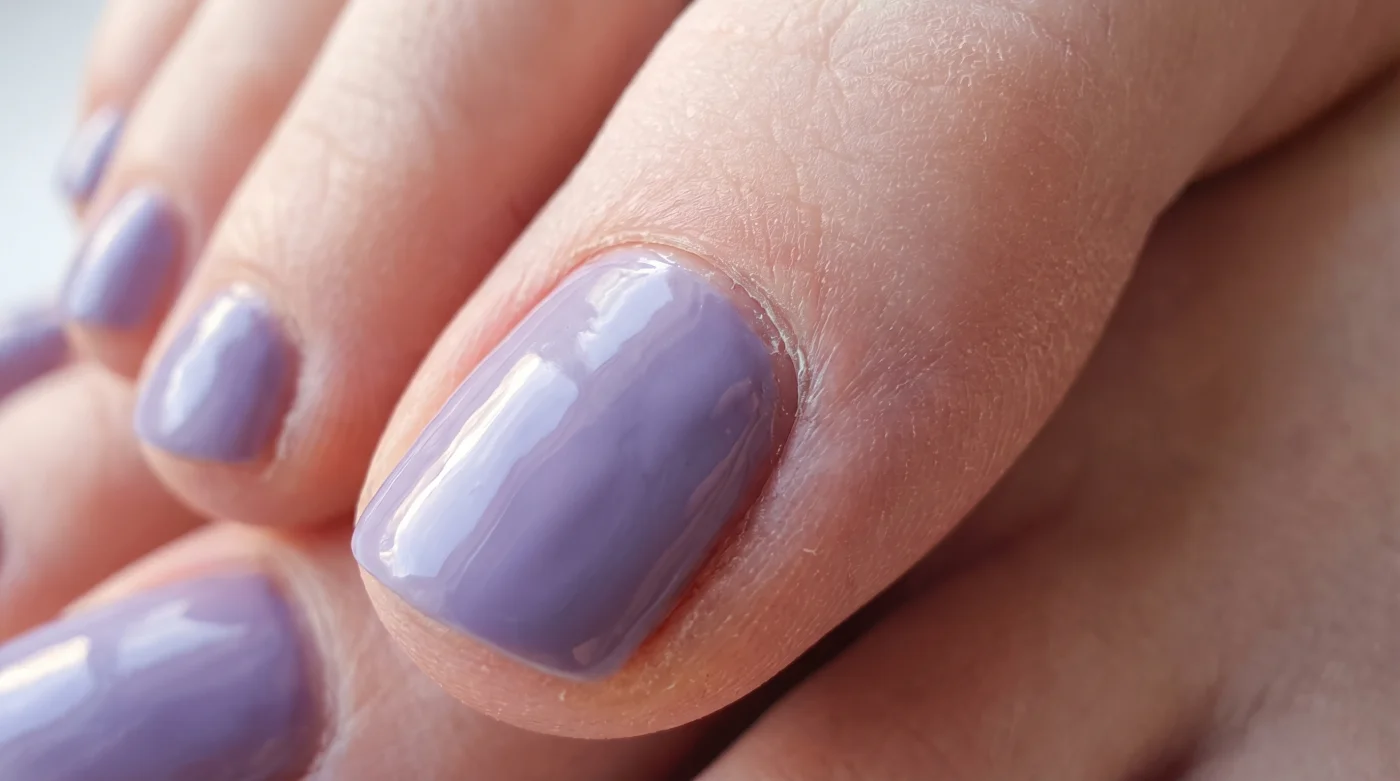
The thick wool sock comes off, exposing skin that hasn’t seen natural sunlight since October. Under the harsh fluorescent glare of a bathroom vanity, your feet look washed out and undeniably winter-weary. You shake the small glass bottle, the sharp tang of acetate filling the room. The brush glides over the clear base coat, laying down a cool, milky wash of highly pigmented pastel. Instantly, the visual contrast shifts. It is not a chemical self-tanner, but the stark white skin suddenly looks warmer and healthier. You just tricked the eye using simple color theory.
The Cool-Tone Contrast Illusion
Applying vampy reds or stark whites to pale winter skin is like putting a spotlight on a ghost. Standard beauty advice says to wear warm corals to fake a summer glow, but the physics of color tell a different story. To make pale skin appear tanned without UV damage, you must exploit simultaneous contrast. A specific, cool-toned pastel lilac—one with heavy white undertones and a sharp drop of blue—forces the human eye to perceive the surrounding bare skin as warmer. It cancels the redness entirely. Instead of highlighting a lack of melanin, the lilac acts as an optical color corrector.
Executing this illusion requires a sterile, methodical approach to your pedicure routine. Pastels are notoriously unforgiving, acting more like wet chalk than liquid enamel if mishandled. The heavy white base that makes the illusion work is exactly what makes the formula prone to streaking and bubbling. Preparation is not optional; any ridge or cuticle snag broadcasts itself immediately once the color dries down.
Engineering the Faux-Tan Pedicure
The process begins with mechanical buffing to level the nail plate. Celebrity nail technician Sarah Lee insists on a pink-tinted ridge-filling primer; her shared secret is that a warm pink base stops the white undertones of the pastel from pooling into a dead-looking mess. Once primed, select a lilac that leans aggressively cool. If it has a hint of mauve, put it back. You want crushed lavender tones. The color should resemble heavy cream mixed with pale blue-violet.
Apply the polish in two paper-thin coats. The first coat will inevitably look streaky; resist the urge to flood the cuticle with more product to fix it. The second coat is where the optical illusion locks into place, rendering the skin visibly peachier. Finish by topping the color with a high-gloss, non-yellowing top coat. Avoid quick-dry drops, as their volatile silicones can warp the delicate pastel pigment and ruin the smooth finish.
When Pastels Turn to Chalk
Troubleshooting pastel polishes comes down to environmental factors. They clump and streak faster than darker shades, especially if your room is too hot or the polish bottle has been open too long. If you are in a rush, skip the opaque lilac and opt for a sheer, milky periwinkle. It offers a similar warming effect without the unforgiving dry-down of a heavy pastel. For the purist, layer a matte top coat over the opaque lilac. It flatters the skin beautifully by removing the reflective glare that sometimes distracts from the color contrast trick.
| The Common Mistake | The Pro Adjustment | The Result |
|---|---|---|
| Reaching for neon coral | Applying cool-toned lilac | Pale skin looks naturally warmer |
| Using a clear base coat | Using a pink-tinted ridge filler | Eliminates chalky pastel streaks |
| Applying thick, heavy coats | Two paper-thin polish coats | Smooth, opaque coverage without bubbles |
Beyond the Sandal Season
The obsessive pursuit of a year-round tan is exhausting and terrible for your skin’s long-term elasticity. Finding aesthetic satisfaction in your natural winter baseline changes the dynamic entirely, moving you away from constant correction. You stop fighting the cold months and start dressing for them, using clever color placement to enhance what you actually look like in January.
A bottle of summer 2026 pedicure polish won’t change the temperature outside. But it grants a quiet, very real sense of control over how you present yourself in the privacy of your own bathroom. You control the visual illusion. Mastery over these small, seemingly trivial aesthetic details offers a surprising amount of peace of mind during the darkest months of the year.
Frequently Asked Questions
Why does neon polish make my feet look paler? Neons contain extreme saturation that overpowers the subtle undertones of pale winter skin. The stark contrast makes your skin look washed out and ashen rather than artificially tanned.
What exact shade of lilac should I buy? Look for a white-based lavender with icy, cool blue undertones, entirely avoiding anything described as warm or mauve. The heavy white base is precisely what creates the optical illusion of a tan.
How do I prevent pastel polish from streaking? Always use a pink-tinted, ridge-filling base coat and apply the color in paper-thin, deliberate strokes. Let the first coat dry completely for at least two minutes before attempting the second layer.
Can I use this color theory on my hands? Yes, but hands typically carry more redness from constant washing and element exposure than feet do. You might need a lilac with slightly less white to avoid making your knuckles look overly flushed.
Does this trick work for olive skin tones? Absolutely, though the visual effect shifts from faking a tan to creating a striking, high-fashion contrast. The icy pastel pops beautifully against deeper melanin, making the skin look incredibly rich.