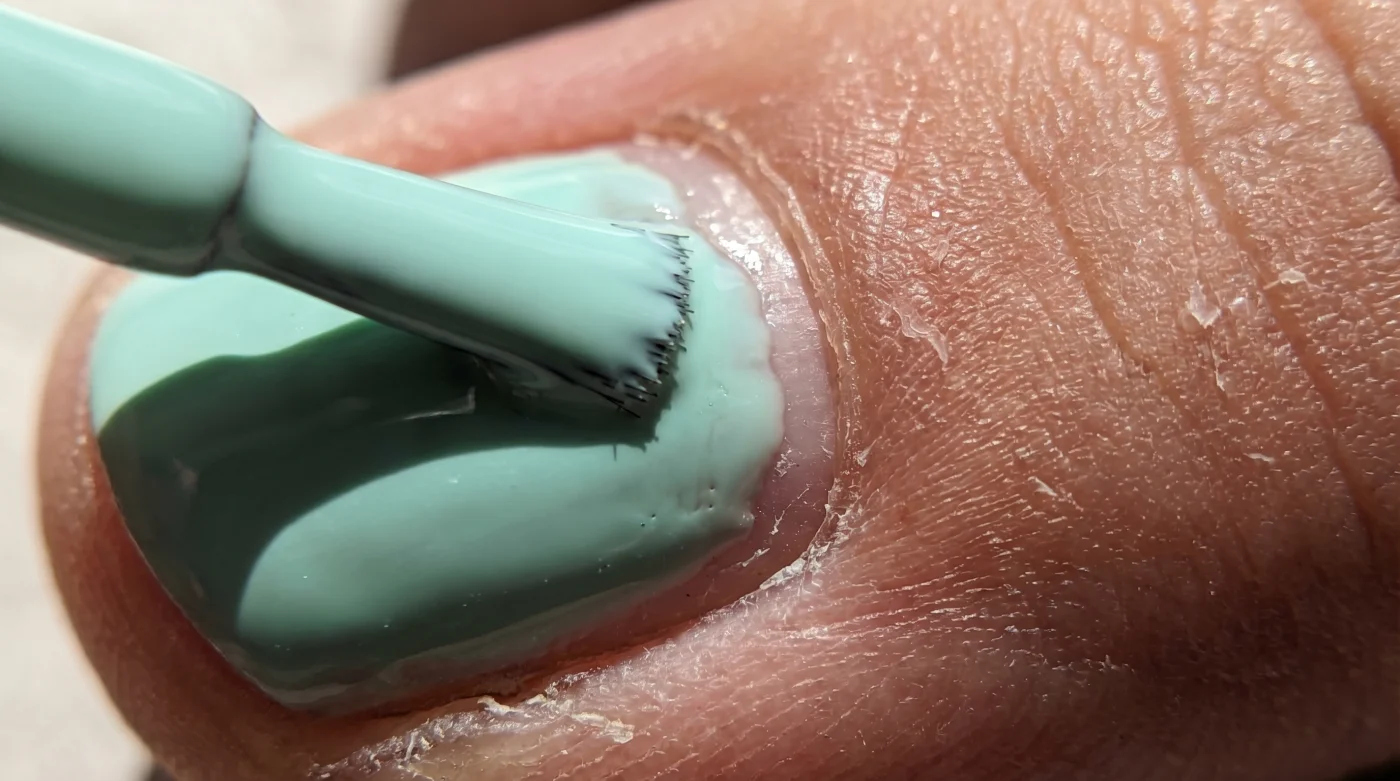
The cold, dense clay of a pumice stone scraping across a callused heel feels like a tedious chore until you brush on a muted, cool-toned lilac. That specific ash-purple family is the optical illusion that immediately neutralizes the angry, mottled redness of feet trapped in wool socks for six months. The acetone stings slightly in the air, mixing with the heavy scent of thick shea butter, as the first coat glides over a severely dry nail bed. You watch the skin around the cuticle magically appear softer, less irritated, and undeniably healthier before the polish even dries.
The Optical Illusion of Skin Tones
Most salons push glaring neon pinks the second the temperature hits 70 degrees, working under the outdated assumption that bright colors distract from dry skin. Think of this like putting a blaring siren on a rusty car; it only draws more attention to the texture. The physics of color theory dictates that warm neons highlight red micro-vessels struggling near the surface of winter-battered feet.
Instead, shifting to cooler, dusty undertones—specifically the ash-lilacs, muted slate blues, and soft sage greens dominating summer 2026—acts like a physical color corrector. By placing a green- or blue-based pigment directly against the nail, the reflected light bounces back cooler, visually canceling out the capillary redness in your toes.
The Color-Correcting Pedicure Protocol
The execution matters just as much as the shade. Celebrity editorial nail artist Sylvia Cho relies on a highly specific layering sequence to make dull feet look remarkably smooth.
- Prep the Canvas: Buff away ridges but leave the dust for a second. Wipe with pure acetone to strip oils, ensuring the base grabs the keratin directly.
- The Hydration Block: Apply a high-adhesion ridge filler instead of a basic clear base. You want to see a milky, opaque veil over the nail plate to block natural yellowing from showing through the ash tones.
- The Lilac Drop: Choose a cool-toned lilac or dusty slate. Apply the first coat thinly. It will look streaky and unimpressive—this is normal.
- The Floated Second Coat: Cho’s shared secret is to carry more polish on the brush for the second layer, floating it parallel to the nail without letting the bristles drag. You should see the color pool slightly before self-leveling into a glass-like finish.
- The Perimeter Cleanse: Wrap an angled cleanup brush in an acetone-soaked lint-free wipe. Carve a millimeter gap between the skin and the polish. This crisp margin makes the pedicure look expensive.
- The Plumping Seal: Use a thick, gel-like topcoat. Watch the flat color instantly gain a high-refractive index, mimicking the plumpness of a gel cured under UV light.
- The Cuticle Quench: Wait exactly four minutes, then flood the borders with jojoba oil. The oil seeps into the micro-crevices, acting as a flexible shock absorber.
| The Common Mistake | The Pro Adjustment | The Result |
|---|---|---|
| Reaching for neon coral to look tan. | Using a dusty slate blue or ash lilac. | Redness disappears, skin looks instantly softer. |
| Skipping the ridge-filling base coat. | Layering a milky, opaque base prior to color. | Prevents the cool tones from looking bruised or sheer. |
| Applying two thick coats of polish. | One paper-thin coat, one floated heavier coat. | Zero bubbles and a professional, self-leveled gloss. |
Friction Points and Formulation Tweaks
Ashy and dusty colors are notoriously tricky to formulate because the heavy white pigments used to mute the shades tend to settle, causing chalky streaks. If your polish separates in the bottle, resist the urge to shake it aggressively, which traps microscopic air bubbles that will ruin the final finish. Roll it between your palms to re-integrate the pigments gently.
If you experience pooling at the cuticles, the polish is either too warm or your brush held too much product. Keep the bottle away from direct sunlight during application. For those in a rush, skip the double color coat. Apply one moderately thick layer of a semi-sheer dusty sage, followed immediately by a quick-dry color correcting topcoat. The sheer wash still provides the benefit without the tedious drying time.
For the purist, invest in a true professional-grade cuticle remover formula containing potassium hydroxide. Melting away the dead skin border before applying your cool-toned polish amplifies the optical illusion of perfectly smooth feet.
Beyond the Aesthetics of Summer
Shifting how you select a pedicure shade is really about working with your body rather than fighting it. We spend so much energy trying to aggressively scrub, peel, and file our feet into submission after a harsh winter, often causing more irritation in the process. Understanding the mechanics of color theory allows you to step back and let the polish camouflage texture naturally.
There is a quiet satisfaction in knowing you do not need perfect skin to look entirely put together. By leaning on the right muted pigments, you buy yourself time and grace. It turns a frustrating grooming task into a simple, scientifically sound ritual, letting you step into the warmer months feeling entirely at ease.
Common Pedicure Questions
Does a ridge-filling base coat really change the color? Yes, it provides an opaque, neutral background that stops natural nail discoloration from altering the final shade. This is especially critical when working with white-heavy, dusty polishes.
Why do my cool-toned polishes look streaky? Dusty and muted colors rely on titanium dioxide, a heavy white pigment that drags if applied too thin. Floating a generous second coat without pressing the brush down prevents these streaks.
Can I still wear red if my feet are dry and irritated? Absolutely, but avoid warm, tomato reds that highlight inflammation. Opt for a deep, blue-based cherry or burgundy to counteract the pink undertones in your skin.
How long should I wait before applying cuticle oil? Wait about four to five minutes after your topcoat. Applying oil too soon can cause the brush to dent the polish, but applying it before the polish fully cures protects against accidental smudges.
Why do neons make my feet look worse? Neon pigments reflect light intensely, drawing the eye directly to the contrast between the polish and any dry patches or red micro-vessels. They act like a spotlight on texture rather than a smooth camouflage.