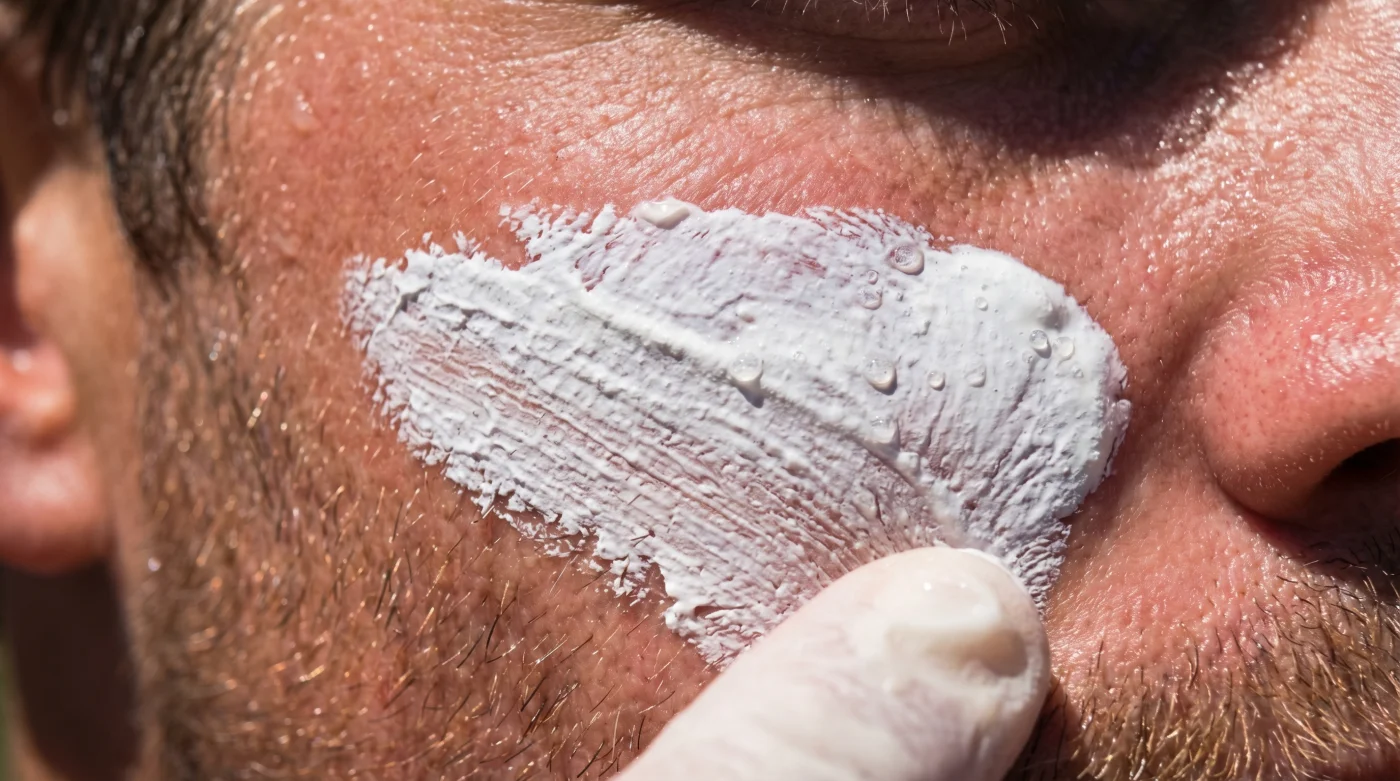
The locker room air smells of ozone and menthol. The mirror reflects the harsh overhead fluorescent lights, but it is the thick, chalky paste clinging to the fingertips that demands attention. Pushing pure, non-nano zinc oxide across the cheekbones feels less like a standard skincare routine and more like donning armor. It is dense, slightly gritty before it warms against the skin, and unapologetically opaque. While sheer chemical serums melt into a slick, stinging mess within five minutes of high-intensity drills, this raw mineral barrier stays locked in place, indifferent to the friction of a jersey or the stinging salt of sweat.
The Logic & The Myth
Chemical formulations promise a breathable shield, absorbing into the tissue to fight free radicals from the inside out. But under the stress of a 40-minute professional basketball game or a mid-July training run, that sheer layer simply evaporates under physical stress. Relying on organic UV filters and lightweight ceramides to protect your face during heavy perspiration is like wearing a silk raincoat in a hurricane. It looks nice until you actually need it to perform.
Zinc oxide operates on brutal, primitive physics. It does not absorb. As an inert earth mineral, it sits directly on top of the stratum corneum, creating a physical, semi-occlusive wall that reflects radiation and traps epidermal water while repelling external friction.
The Authority Blueprint
Professional athletes like Napheesa Collier rely on this exact principle to survive punishing environments. Rather than testing fragile luxury creams, her method utilizes a raw, non-nano zinc formulation—specifically a heavy-duty option like Badger Sport or a custom 25 percent zinc paste—applied exactly where the face takes the most abuse.
Step 1: The Damp Base. Apply a basic glycerin-based humectant to wet skin. Zinc seals; it does not hydrate on its own.
Step 2: The Friction Warm-Up. Scoop a pea-sized amount of the raw zinc paste. Rub it aggressively between your index and middle fingers until the chalky stiffness yields to a pliable, buttery texture.
Step 3: Targeted Stamping. Press the paste directly onto the high planes of the face—cheekbones, bridge of the nose, and brow bone. You should see a distinct, semi-translucent white film adhering to the skin.
Step 4: The Perimeter Blend. Feather the edges downward. Do not attempt to rub the center of the application zones completely invisible. The visible layer is the functional boundary.
Step 5: The Oil Breakdown. Post-activity, water will simply bead off. You must massage a pure squalane or jojoba oil into the dry face for sixty seconds to dissolve the mineral bonds before wiping it clean.
| The Common Mistake | The Pro Adjustment | The Result |
|---|---|---|
| Applying zinc to a dry face. | Layering over a damp, glycerin-rich base. | Smooth, flake-free application. |
| Rubbing until totally invisible. | Stamping the paste and leaving a visible film. | True physical barrier protection. |
| Washing with a foaming cleanser. | Breaking down the zinc with pure oil first. | Zero clogged pores post-workout. |
The Friction & Variations
The main problem people face with pure mineral barriers is the dreaded white cast. It is heavy, it looks alarming in standard bathroom lighting, and if applied carelessly to a dry face, it immediately pills into tiny white flakes. If you skip the heavy oil removal phase later, expect severe pore congestion by the next morning.
For the purist: Buy cosmetic-grade non-nano zinc oxide powder and fold it into raw beef tallow or shea butter. This creates a custom 20 percent concentration barrier cream that aligns entirely with ancestral skincare principles.
If you are in a rush: Grab a tinted zinc sport stick. Swipe it directly from the tube onto the cheekbones and blend with a damp makeup sponge. You lose a fraction of the raw density, but gain immediate, public-facing wearability.
The Bigger Picture
Stripping away the marketing noise leaves you with a quiet, undeniable confidence in your routine. True barrier protection is not about elegant textures that vanish immediately into the dermis; it is about establishing functional, uncompromising boundaries. When you trust a primitive mineral to handle the physical abuse of a harsh environment, you stop worrying about stinging eyes, windburn, or mid-day reapplication. You simply wipe the slate clean when the work is done, revealing calm, perfectly untouched skin beneath the chalky armor.
Frequent Friction Points
Does pure zinc oxide cause acne?
No, zinc is inherently antimicrobial and non-comedogenic by nature. Breakouts only occur because the heavy mineral base isn’t properly removed with an oil cleanser.Can I use diaper rash cream on my face?
Yes, products like pure zinc diaper paste work flawlessly as an emergency barrier for athletes. Just ensure the formula lacks heavy synthetic fragrances or unnecessary petroleum additives.Why does it turn flaky on my cheeks?
Pure zinc aggressively clings to dry patches and dead skin cells. Always apply it over a freshly moisturized, slightly damp face to prevent this texturizing effect.Will this block my sweat entirely?
It does not act as an antiperspirant. Your skin will still sweat underneath the layer, but the zinc prevents that acidic sweat from degrading your delicate lipid barrier.How long does a raw zinc application last?
It lasts until you physically wipe it off with heavy friction or an oil-based cleanser. It is entirely photostable and will never degrade simply from exposure to the sun.