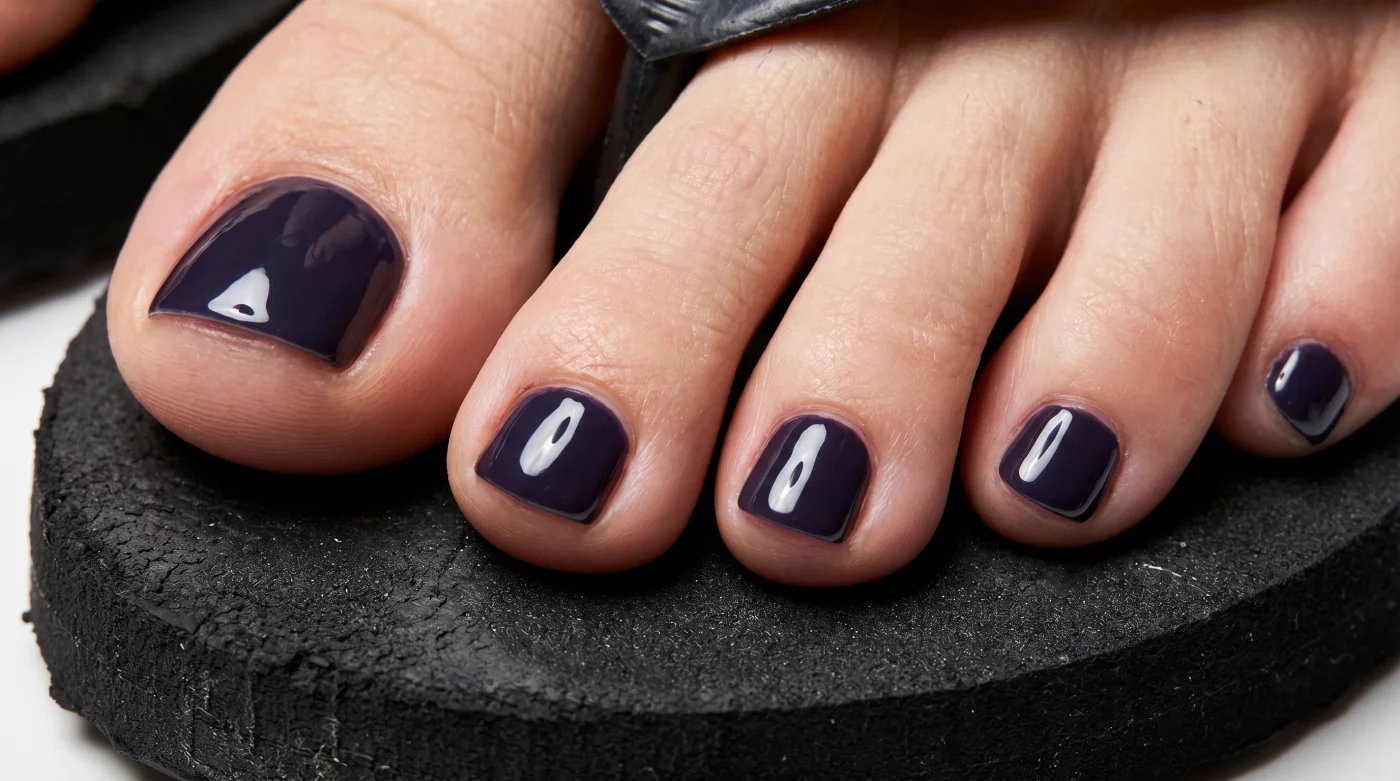
The sharp, chemical tang of acetone cuts through the humid July air, mixing with the low hum of an oscillating fan. You scrape the remaining neon coral polish off your toes, watching the chalky residue flake away. Bright summer pedicures always promise a careless, beach-ready aesthetic, but they usually end up looking dusty after two days in sandals. Grabbing a heavy glass bottle of deep, inky polish, you twist the cap. The rich lacquer drips slowly, thick as motor oil. Sweeping it across the nail bed, the wet, obsidian-like gloss immediately changes the entire geometry of the foot. It is quiet, deliberate, and undeniably expensive.
The Illusion of Wealth in a Single Coat
For decades, the beauty industry pushed the narrative that June through August required aggressive bursts of flamingo pink or highlighter yellow. This myth relies on a basic optical illusion: bright colors draw the eye, distracting from the cheap foam and plastic of casual summer sandals. But it backfires. Neon shades against bare, sun-exposed skin actually highlight imperfections, making standard flip-flops look exactly as cheap as they are.
Instead, think of a dark pedicure like tailored black trousers. It grounds the look, offering a stark, clean contrast that reads as intentional and serious. When you apply a deeply saturated shade like midnight navy or black-cherry plum (specifically, colors mimicking a true oxblood), the polish absorbs light rather than reflecting it loudly. This optical density tricks the eye into perceiving the entire foot—and whatever shoe it rests in—as structurally refined and distinctly high-end.
The Flawless Dark Application Protocol
Dark polish is unforgiving. A single sloppy edge ruins the illusion of luxury, making it look like a rushed middle-school sleepover job. To get that perfectly engineered salon aesthetic, execution matters more than the brand of lacquer.
Step 1: Prep the canvas. Push back the cuticles dry, scraping away the invisible dead skin clinging to the nail plate. Moisture right before painting causes polish to bubble.
Step 2: Apply a ridge-filling base coat. Dark colors amplify any vertical ridges on your nails. A milky base coat acts like primer on the drywall, flattening the surface entirely.
Step 3: The three-stroke application method. Celebrity manicurist Julie Kandalec swears by a hyper-specific rhythm: one stroke down the center, one on the left, one on the right. Never drag the brush back over wet polish. Watch for a glass-like finish to form before touching it again.
Step 4: Keep the edges bare. Leave a millimeter of negative space between the polish and the skin on the sides of the nail. This visual cue forces the nail to look longer and narrower, imitating the sharp precision of salon pedicures.
Step 5: Cap the free edge. Swipe a tiny amount of the dark polish horizontally across the very tip of the nail. This prevents early chipping from friction against shoe straps.
Step 6: Float the topcoat. Do not press the bristles into the dark color, or you will pull pigment off the nail. Let a bead of clear topcoat glide over the surface.
Step 7: Clean up with a flat brush. Dip a stiff, angled eyeliner brush into pure acetone and trace the cuticle line. This leaves a razor-sharp, flawless perimeter.
Managing the Fade and Customizing the Finish
The biggest issue with deep plums and navies in 90-degree weather is the inevitable dulling. Sunscreen, pool chlorine, and beach sand strip the high-gloss finish, leaving your rich oxblood looking like a scuffed chalkboard.
To fight this, you need to reapply a thin layer of topcoat every three days. This isn’t just about shine; it physically reinforces the barrier, keeping the dark pigment structurally sound. If you notice a chip, do not attempt to patch it. Dark polish patches are painfully obvious. You must remove the color entirely from that specific toe and start over.
For the Purist: Stick strictly to high-pigment cream formulas with zero shimmer. Shimmer cheapens a dark summer color instantly, turning it from sophisticated to holiday-party tacky.
If you are in a rush: Skip the second coat of color. Layer a dark jelly polish over a single coat of deep plum. Jelly formulas dry in half the time and offer a translucent, wet-look depth that forgives minor application errors while still delivering that expensive contrast.
| The Common Mistake | The Pro Adjustment | The Result |
|---|---|---|
| Painting right to the skin edge | Leaving a 1mm gap on sides | Elongated, professional-looking nail beds |
| Pressing topcoat brush down | Floating the clear polish bead | No streaks or bald spots in the dark pigment |
| Using shimmery dark shades | Choosing high-gloss cream formulas | A richer, more expensive and modern aesthetic |
Walking with Quiet Confidence
Shifting away from loud, expected seasonal trends is a subtle exercise in personal authority. You stop participating in the pressure to look overtly “fun” and instead choose a grounded, sophisticated aesthetic that works strictly for your personal style.
There is a distinct psychological comfort in looking down at your feet and seeing precision instead of chaos. The dark, saturated hues act as a visual anchor during long, hot days. They demand nothing from your wardrobe and silently upgrade the cheapest sandals in your closet, leaving you to move through your summer with effortless, understated control.
Frequently Asked Questions
Will dark polish stain my toenails?
Yes, highly pigmented dark colors can leave a yellow or green tint on the nail plate. Always use a high-quality, thick base coat to create a barrier between the pigment and keratin.What is the best dark color for pale skin?
A deep, bruised plum or black-cherry shade offers the most flattering contrast without looking too harsh. It warms up lighter skin tones much better than a stark, flat black.How do I prevent the polish from shrinking?
Shrinkage occurs when quick-dry topcoats cure too fast. To stop this, ensure you wrap the topcoat around the front edge of the nail while the underlying color is still slightly tacky.Does a matte topcoat work for summer?
Matte dark pedicures look interesting for a day but show dirt, sand, and sunscreen oils almost immediately. Stick to a high-gloss finish for longevity and a cleaner appearance.Why does my dark polish look streaky?
Streaks happen when you do not load enough product onto the brush, forcing you to drag dry bristles across the nail. Always keep a generous bead of polish on one side of the brush before making a stroke.