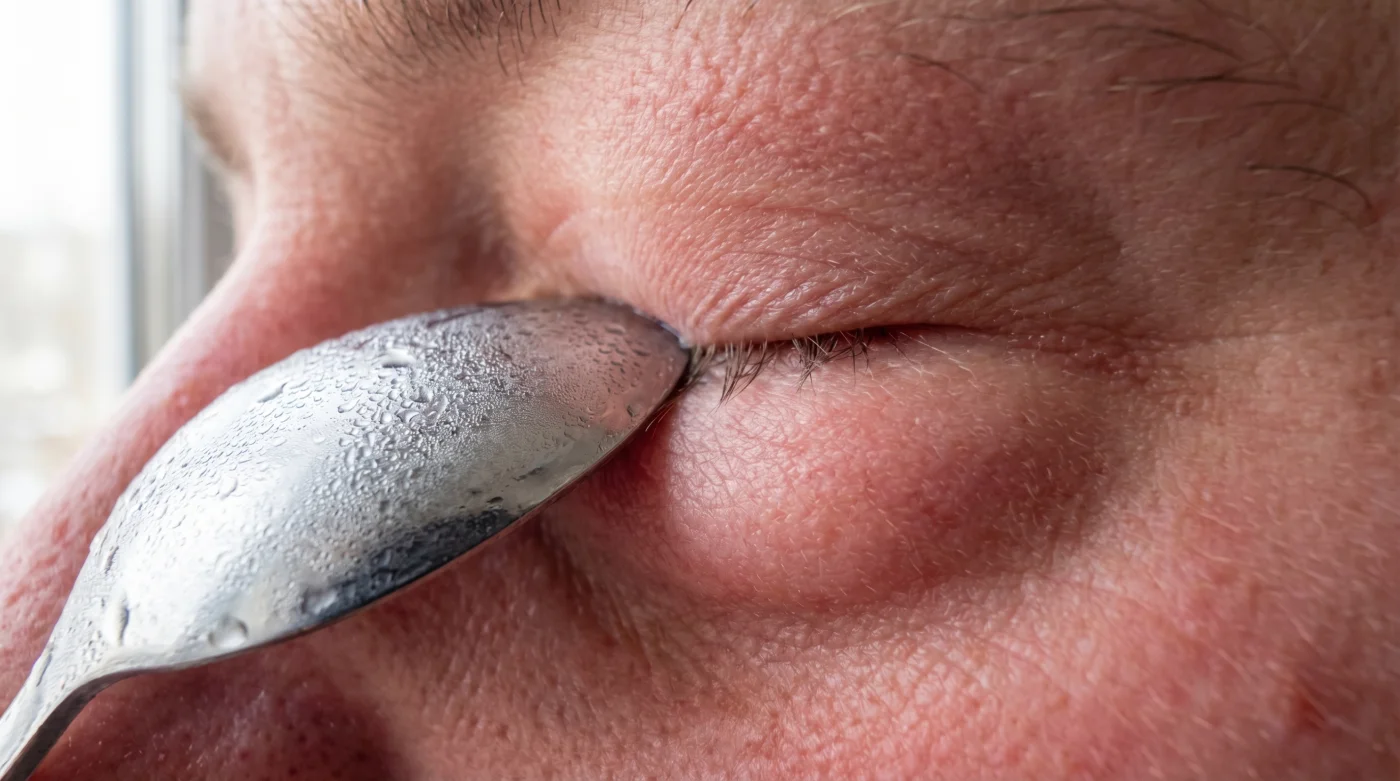
You grab two stainless steel soup spoons from the back of the freezer. A thin layer of white frost coats the rounded metal, instantly turning to condensation the second it meets the warm, humid bathroom air. Pressing the curved backs against your orbital bone delivers a sharp, immediate shock. It is a biting chill that forces your eyes wide open, shrinking the sluggish, fluid-filled tissue beneath the skin. There is a soft clinking as the handles tap together, a stark contrast to the quiet whir of an expensive, battery-operated device. This is blunt, mechanical efficiency.
The Physics of the Kitchen Drawer
The skincare industry desperately wants you to buy a heavy gel-filled ice roller. They package it in pastel silicone and call it a non-negotiable step for facial sculpting. But the stark reality is that thermal shock ignores clever branding.
When extreme cold makes contact with human tissue, it triggers immediate vasoconstriction. Blood vessels shrink rapidly, forcing stagnant lymphatic fluid out of the facial tissues and back into the circulatory system to be flushed away naturally.
Think of it like wringing out a wet household sponge. You do not need a designer machine to squeeze the water out; you just need firm, consistent pressure. A standard stainless steel spoon holds freezing temperatures just long enough to shock the tissue without risking frostbite, perfectly mimicking clinical tools for nothing.
The Courtside Cryo Blueprint
Professional athletes understand localized inflammation better than anyone. WNBA star Napheesa Collier, whose grueling schedule demands immediate recovery tactics, relies heavily on this exact method to maintain her notably sharp, clean aesthetic despite constant travel and physical exhaustion. Her technique isn’t just about placing cold metal on the skin; it is a highly specific micro-massage.
- The Freeze Prep: Place two heavy stainless steel soup spoons in the freezer overnight. Avoid thin teaspoons; you need the heavy gauge metal to retain the chill.
- The Slip Layer: Apply a thick layer of moisturizer or a dense face oil. Do not use cold metal on bare skin, as it will drag and pull the delicate under-eye tissue, creating micro-tears.
- The Collier Sweep: Starting at the inner corner of the eye, press the curved back of the spoon firmly against the orbital bone. Glide it slowly outward toward the temple. Visual cue: You should see a slight wave of fluid pooling just ahead of the metal edge.
- The Sinus Drain: Move the spoons to the sides of your nose. Press and hold for three seconds to target congestion, then drag firmly outward across the cheekbones, ending at the hairline.
- The Jawline Sculpt: Hook the edge of the spoon right under the chin. Pull it upward along the jawline toward the base of the ear to force fluid down the neck’s drainage pathways.
- The Flush: Once the metal reaches room temperature, wipe the spoons clean. Your skin should look slightly pink and flushed, indicating that fresh, oxygenated blood is rushing back into the vessels.
Adjusting the Chill
The biggest mistake people make with cold therapy is over-icing. Leaving a frozen object stationary on thin facial skin causes capillary damage, leading to broken blood vessels that look like tiny red spiderwebs. Keep the metal moving constantly.
Variations exist depending on your morning schedule. If you are in a rush, dip the spoons in a glass of ice water for sixty seconds instead of using the freezer. The temperature drop isn’t as severe, but it is enough to wake up the eyes and depuff the immediate area before applying makeup.
For the purist, soak the spoons in strong green tea before freezing them. The residual caffeine on the metal acts as a topical constrictor, doubling down on the effect while adding a layer of antioxidant protection directly to the skin barrier.
| The Common Mistake | The Pro Adjustment | The Result |
|---|---|---|
| Pressing dry metal onto the face. | Adding a heavy face oil first. | Smooth glide without micro-tears. |
| Leaving the cold spoon stationary. | Using continuous, sweeping motions. | Zero risk of broken capillaries. |
| Using lightweight teaspoons. | Using thick, heavy soup spoons. | Metal stays freezing cold longer. |
Redefining High-Performance Maintenance
There is a distinct quiet confidence in realizing that the most effective tools aren’t always sold in luxury department stores. When you bypass the marketing noise and look strictly at the physiological response, you regain control over your daily routine.
Elimating morning puffiness doesn’t require a subscription or a proprietary device; it requires an understanding of how your body reacts to temperature and pressure. Mastering this simple, brutalist approach to facial maintenance offers more than just physical clarity. It proves that taking care of yourself can be entirely functional, stripped of pretense, and incredibly effective for your skin.
Frequent Friction Points
Can I keep spoons in the freezer permanently? Yes, keeping a dedicated pair ensures they are always ready. Wash them with hot, soapy water after every use.
Will this help with dark circles? It reduces shadows caused by physical swelling and morning inflammation. It will not erase hyperpigmentation or genetic dark circles.
How long should the process take? Two to three minutes is the maximum effective window. Once the spoons lose their biting cold, the benefits stop.
Is it safe to use over active breakouts? Skip the heavy massage over cystic acne to avoid irritation. Gently press the cold spoon directly onto the spot for a few seconds instead.
Can I use a stone gua sha instead? Stone tools are excellent for massage but do not hold cold temperatures efficiently. Dense metal creates the necessary thermal shock.