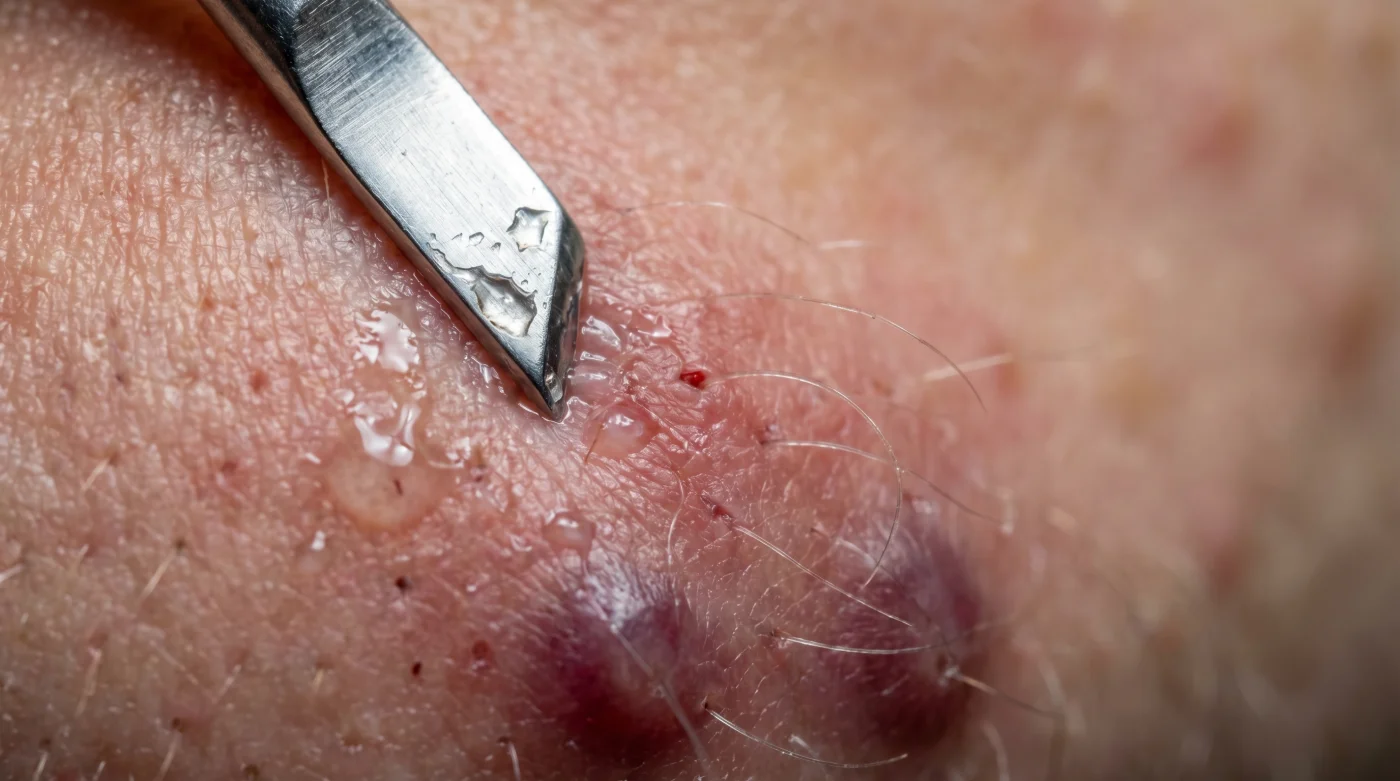
The scrape of a fresh steel blade against a dry cheekbone sounds oddly satisfying, like fine grit sandpaper smoothing a piece of soft wood. You watch the tiny, white pile of vellus hair and dead skin accumulate on the edge of the disposable plastic wand. It feels productive. Your skin looks immediately glassy, reflecting the bathroom light with a hard, polished glare. But under the surface, invisible to the naked eye, the friction has left hundreds of jagged microscopic lacerations. You aren’t just removing peach fuzz; you are dragging a blunt edge across a microscopic obstacle course, aggressively pushing surface bacteria directly into compromised hair follicles.
The Anatomy of a Micro-Tear
The beauty industry sells the concept of at-home dermaplaning as a quick path to a glass-like complexion. The logic seems sound: scrape away the fuzz and dead cells, and your expensive serums will absorb better. But treating your face like a piece of rough carpentry is ignoring the biological reality of vellus hair. Think of these fine facial hairs like microscopic lightning rods for environmental debris and natural skin oils.
When you drag a non-surgical blade across the jawline, you act like a farmer plowing seeds deep into the soil. The blade doesn’t cleanly slice; it pulls, tears, and forces surface bacteria downward into raw, freshly exposed layers of the epidermis. This mechanical trauma triggers an immediate inflammatory response. Within forty-eight hours, the trapped bacteria—now sealed under a rapidly healing top layer—festers into deep, painful, cystic acne clusters along the lower half of your face.
Damage Control and The Reset Protocol
If your jawline is currently erupting in hard, localized bumps after a DIY facial shaving session, you need to stop the mechanical exfoliation immediately. Clinical dermatologist Dr. Evelyn Vance notes that repairing the lipid barrier requires a complete cessation of physical friction, warning her patients to treat the jawline like a fresh burn, not a dirty floor.
- Drop the blade. Throw away the dull, disposable plastic scalpels immediately. They rust microscopically after a single use.
- Ice the inflammation. Wrap an ice cube in a clean cotton cloth and press it lightly against the cystic nodes. You are looking to reduce the vascular swelling, creating a visually flatter surface before applying any topicals.
- Apply hypochlorous acid. Spray a generous layer of hypochlorous acid over the affected area. This mimics the body’s natural immune response to neutralize trapped staph bacteria without chemical burns.
- Seal with a colloidal patch. Cover the un-poppable cystic bumps with medical-grade hydrocolloid dots. Do not squeeze them; wait until you see a distinct white ring form under the patch.
- Rebuild the lipid matrix. Swap your foaming cleanser for a non-lathering cream alternative. Dr. Vance insists on washing with cool water, looking for the skin to feel slightly slick, never tight or squeaky.
Adapting Your Exfoliation Strategy
The friction point of dermaplaning usually comes down to blade quality and skin prep. A sterile, surgical scalpel used by a professional at a precise 45-degree angle slices cleanly. A three-dollar plastic razor from the drugstore rips and shreds.
| The Common Mistake | The Pro Adjustment | The Result |
|---|---|---|
| Shaving on dry skin. | Applying a thin layer of squalane oil first. | Allows the blade to glide, preventing jagged micro-tears. |
| Reusing disposable tools. | Treating all dermaplaning wands as strictly single-use. | Eliminates the introduction of breeding bacterial colonies. |
| Applying vitamin C immediately after. | Waiting 24 hours before active acid application. | Prevents severe chemical burns on compromised skin barriers. |
For the purist, abandoning the physical blade entirely in favor of a 5% lactic acid serum offers the same dead-skin removal without the bacterial risk. If you are in a rush and absolutely must remove visible fuzz for an event, switch to a sanitized, electric facial trimmer that trims the hair just above the skin’s surface, leaving the protective outer layer entirely intact. You must avoid dragging metal against bare skin at all costs.
Beyond the Immediate Fix
We are conditioned to view texture as a flaw to be aggressively sanded away. But the skin is an organ, not a sculpture. Every time you introduce mechanical trauma for the sake of a temporary, glassy finish, you force your immune system into overdrive. Choosing to leave your epidermal barrier intact isn’t about giving up on a smooth complexion; it is about respecting the biological armor that keeps your face healthy. True skin health rarely comes from the aggressive removal of what belongs there, but rather from supporting the complex systems operating quietly beneath the surface.
Frequent Skin Trauma Questions
Why do I only break out on my chin and jawline after shaving? The jawline has a denser concentration of angled hair follicles and a thicker lipid layer. This geometry makes it significantly easier for blunt blades to trap bacteria deep within the pores.
How long does cystic acne from a dirty blade last? Because the infection is rooted deep in the dermis, these cysts can take up to three weeks to surface and heal. Avoid extracting them manually to prevent permanent hyperpigmentation.
Can I sanitize my plastic facial razors with rubbing alcohol? No. While alcohol kills surface bacteria, it cannot fix the microscopic dulling and warping of the cheap steel edge that causes the actual skin tearing.
Is chemical exfoliation safer than physical shaving? Yes, mild alpha hydroxy acids dissolve the glue holding dead cells together without causing the physical lacerations that invite bacterial infection.
What should I do if the cysts become painful to the touch? Apply a warm, damp compress for ten minutes to increase local blood flow, followed immediately by a targeted benzoyl peroxide spot treatment to penetrate the follicle.