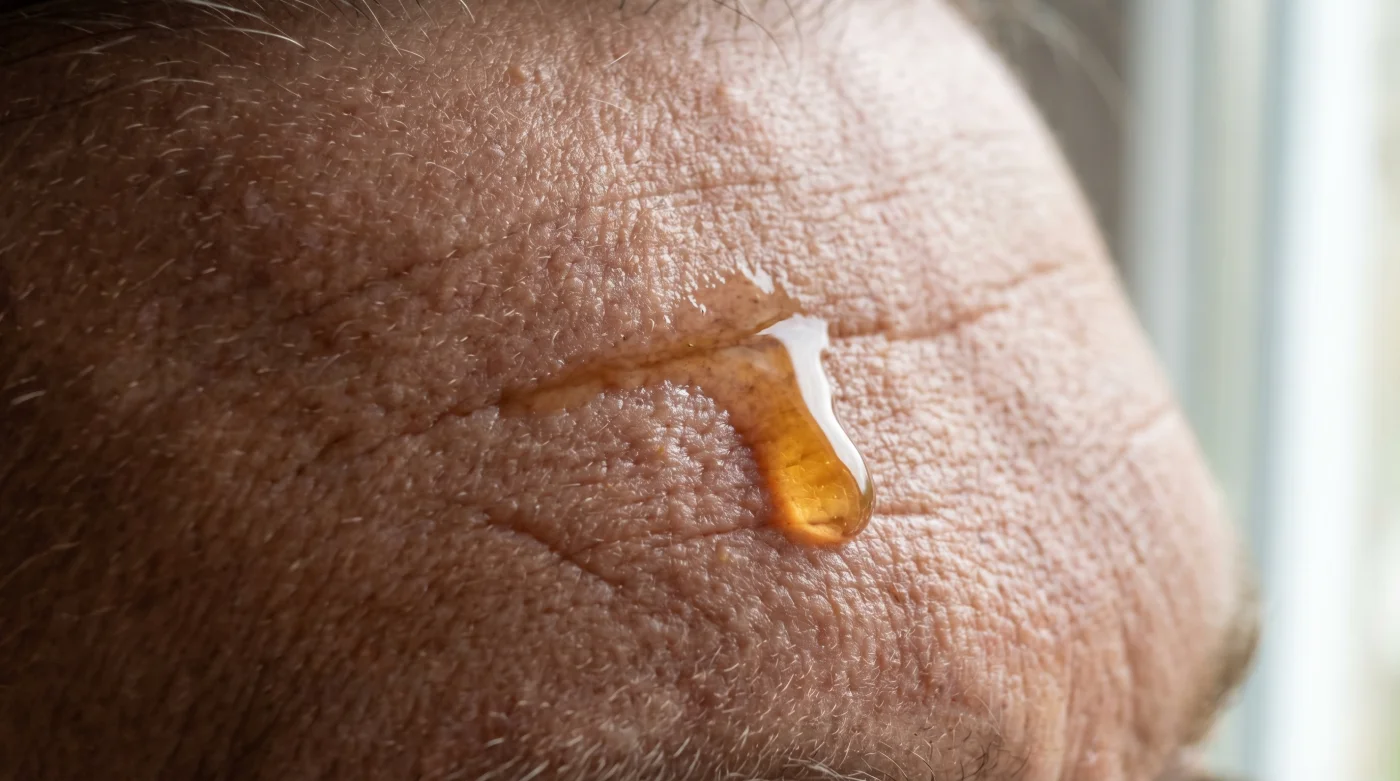
Press the dropper against your palm. The amber liquid that pools there is slightly viscous, smelling faintly of steeped black tea and damp earth. When you press it into your forehead, there is no bracing sting or creeping heat. It just glides, a cool, fast-absorbing slip across the skin. This is the physical reality of chebula. It operates on a cascading antioxidant mechanism. While standard vitamin C neutralizes a single free radical and degrades, chebula scavenges a radical, re-stabilizes its own molecular structure, and keeps hunting. This continuous neutralization blocks the enzymes that chew through collagen, allowing the dermal matrix to physically rebuild without the chemical burns triggered by aggressive retinoids.
The Sandpaper Myth vs. The Scaffolding Approach
For decades, the skincare industry has sold us the sandpaper approach. The prevailing logic insists that to erase a deep forehead line, you must aggressively peel away the top layers of the epidermis until you reach smooth ground. It is like trying to fix a sagging house foundation by power-washing the roof. Aggressive retinoids force rapid cell turnover, often compromising the delicate barrier, leading to flaking, irritation, and a baseline level of chronic inflammation.
Chebula respects the biological limits of your face. By acting as a structural scaffold rather than a chemical abrasive, it halts the degradation of collagen type I and II. When the daily assault of free radicals is neutralized, your skin stops fighting the active ingredient and instead uses it to patch the micro-tears in its dermal foundation.
The 60-Second Application Protocol
To maximize this cascading effect without triggering contact dermatitis from poor layering, you need a highly specific application method. Cosmetic biochemist Dr. Aris Vrettos notes that mechanical friction degrades raw plant antioxidants. His shared secret is temperature control and compression.
- The Damp Canvas: After cleansing, leave your skin slightly damp. Do not towel off completely. The remaining water molecules act as a conduction channel for the serum.
- The Palm Warm-Up: Dispense three drops of the chebula serum into the center of your left palm.
- The Activation Press: Instead of rubbing, press your palms together for two seconds to distribute the fluid evenly without degrading the formula.
- The Forehead Anchor: Press your hands flat against your forehead. Hold for three seconds. You should feel a slight tackiness as the liquid binds to the damp skin.
- The Upward Sweep: Glide your fingers from the brow bone up to the hairline. Stop and watch for a subtle plumping effect—the skin will instantly look less papery.
- The Sealant Phase: Wait exactly sixty seconds. Once the tackiness disappears, lock the cascading antioxidants in with a lipid-rich moisturizer.
Layering Conflicts and Quick Adjustments
The most common failure point with botanical serums is formulation conflict. If you apply a silicone-heavy sunscreen immediately over chebula before it dries down, you will experience aggressive pilling on the skin—little gray balls of product rolling off your forehead. Chebula requires complete absorption before it encounters heavy silicones or thick waxes.
| The Common Mistake | The Pro Adjustment | The Result |
|---|---|---|
| Applying to bone-dry skin | Misting with water before application | Serum absorbs instantly without sticky residue |
| Mixing with direct acids (AHA/BHA) | Alternating days for acid use | Prevents antioxidant destabilization |
| Vigorous rubbing on the forehead | The press-and-hold technique | Micro-circulation boost without product piling |
If you are in a rush: Mix two drops of chebula directly into your morning moisturizer in the palm of your hand. You lose a fraction of the penetration depth, but you bypass the wait time entirely. For the purist: Apply it strictly at night after a gentle enzyme wash. The restorative environment of sleep maximizes the cascading antioxidant effect without interference from UV exposure or heavy makeup.
Beyond the Surface Tension
Chasing perfection often results in a medicine cabinet full of half-empty, aggressively irritating products. The shift toward this specific botanical is a rejection of the idea that efficacy requires suffering. You do not need to endure weeks of peeling, redness, and sensitivity to see a physical change in your facial structure.
By working with innate repair mechanisms rather than against them, you reclaim a sense of calm in your daily routine. It is a quiet confidence, knowing that the structural integrity of your skin is improving every single day, completely free from the chemical burn.
Frequent Concerns
Can I use chebula if I have highly reactive skin?
Yes. Because it lacks the acidic pH of vitamin C and the peeling mechanism of retinol, it is generally tolerated by highly sensitive skin types.How long until I see changes in deep forehead lines?
Most clinical observations note structural firming at the four-week mark. Surface hydration and a reduction in papery texture occur within the first three days.Does it replace my daily sunscreen?
No. While it neutralizes free radicals caused by UV exposure, it does not physically block UV rays from entering the skin.Can I layer it with hyaluronic acid?
Absolutely. Apply hyaluronic acid first, allow it to sink in, and follow with chebula to trap the hydration and add antioxidant protection.Why does my serum have a strong, earthy smell?
That is the natural scent of the Terminalia chebula fruit extract. Synthetic fragrances are typically omitted to maintain the stability of the active compounds.