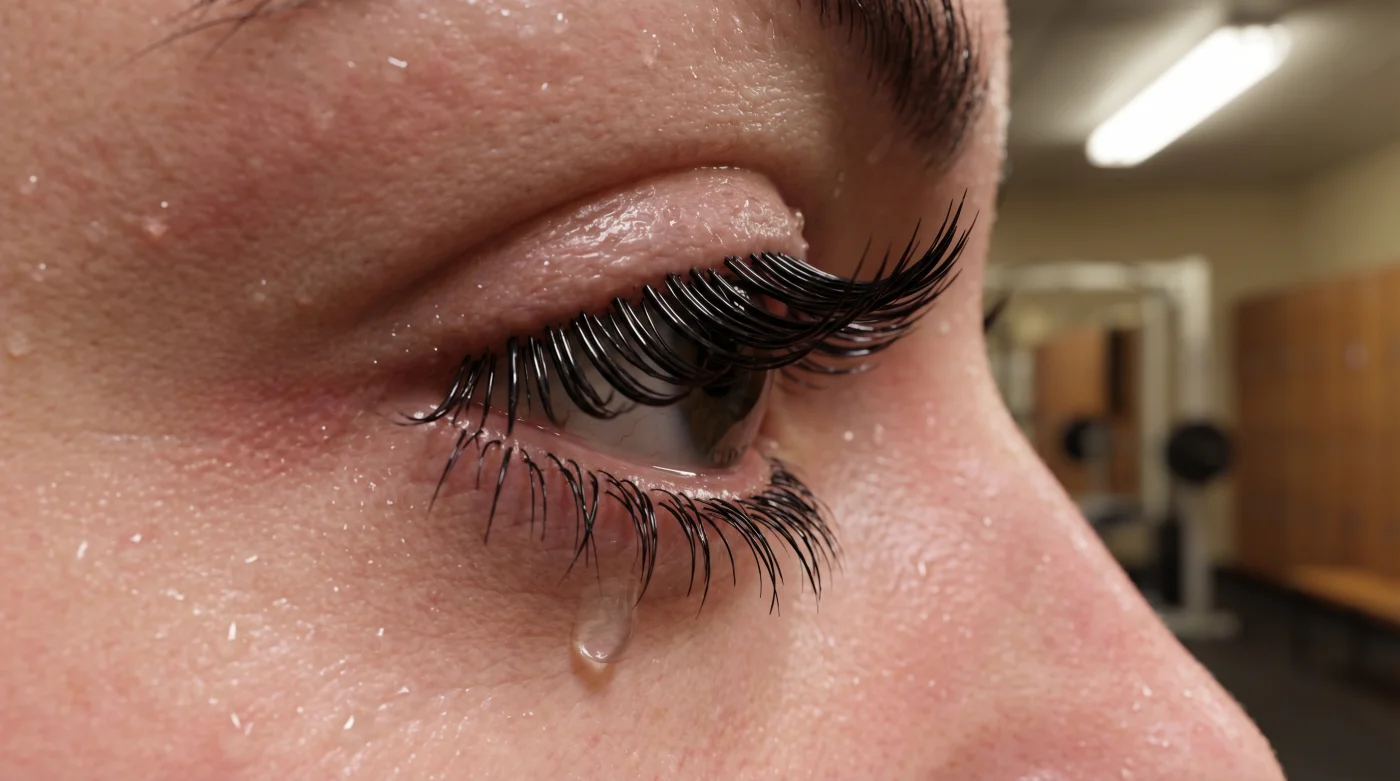
The air in the spin studio is thick, a 90-degree soup of humidity and adrenaline. You grab the rough cotton towel draped over the handlebars, wiping away the sweat stinging your eyelids. Forty-five minutes later, the locker room mirror reveals the damage. Traditional waterproof formulas always promise invincibility, yet they dissolve into a muddy mess the second natural skin oils mix with body heat. The physical rubbing required to remove that dark stain leaves the delicate under-eye skin raw, red, and irritated.
The Chemistry of the Smear
Most of us are taught to reach for waterproof mascara when preparing for a heavy sweat. But waterproofing relies on heavy waxes and oil-soluble pigments. Think of it like painting a fence with oil-based paint; water rolls right off, but wipe it with a rag soaked in paint thinner (or in this case, your own natural sebum and sweat), and it immediately breaks down into a sludgy mess.
Tubing mascara ignores wax entirely. Instead, it uses a flexible, water-resistant polymer that wraps 360 degrees around each individual lash. As it dries, it physically shrinks to form a tiny silicone-like tube. Oil cannot dissolve these polymers. Sweat simply bounces off the microscopic plastic-like casing.
The Sweat-Proof Application Protocol
Applying a polymer-based formula requires a slight shift in mechanics compared to brushing on wax. Celebrity makeup artist Troy Surratt pioneered much of the modern tubing technique, noting that the secret lies in the drying phase, not the building phase.
- Start with a bare, dry lash. Skip the lash primer; polymers need direct contact with the keratin of your hair to form the physical wrap.
- Angle the wand at the base. Wiggle the brush vigorously at the roots. Do not sweep immediately. You want the liquid polymer to coat the entire circumference of the base before pulling through.
- Pull through with slow tension. Drag the bristles up the lash shaft deliberately, allowing the formula to stretch and set as it encounters the air.
- Skip the second coat. Surratt’s shared secret: tubing formulas are designed to shrink-wrap once. If you try to layer wet polymer over dry polymer, you get clumping, not volume.
- Let it cure. Give the lashes a full 60 seconds to dry before blinking heavily or putting on sunglasses. You will visually notice the finish turn from wet-gloss to a soft, structured matte.
| The Common Mistake | The Pro Adjustment | The Result |
|---|---|---|
| Pumping the wand into the tube | Twisting the wand out slowly | Prevents air from drying out the polymers inside the tube. |
| Layering coats after drying | Applying one deliberate, slow coat | Avoids thick, spider-leg clumping and flaking. |
| Rubbing with oil cleansers | Holding a warm washcloth against the eye | Tubes slide off cleanly without damaging the natural lash. |
Friction Points and Routine Adjustments
The transition to polymer formulas usually involves a brief panic during the first removal process. When washing your face, warm water and gentle pressure will cause the tiny tubes to slide off intact. They look like little spider legs or broken lashes in the sink. Don’t panic; that is just the polymer casing, not your actual hair.
If you are in a rush (The Gym-Bag Adjustment): Skip the full face wash. Just press a wet, warm paper towel against your closed eye for thirty seconds, then gently wipe downward. The tubes detach cleanly without makeup remover.
For the purist (The Volume Adjustment): If you absolutely need more thickness than a single coat provides, apply a traditional volumizing mascara first, let it dry, and seal it with a coat of tubing mascara. The polymer acts as a protective raincoat over the wax, locking the volume inside a smudge-proof shell.
Beyond the Locker Room Mirror
Fixing a makeup annoyance might seem trivial, but it removes a low-level anxiety from your daily routine. Knowing that your appearance holds up through a heavy lifting session or a humid summer run changes how you move through those spaces. You stop checking the mirror halfway through a workout. You stop carrying makeup remover wipes in your car console. By understanding the simple mechanics of how products interact with our skin’s chemistry, we buy ourselves back a little more focus, and a lot less frustration.
Frequently Asked Questions
Can I use an eyelash curler with tubing mascara?
Curl your lashes before applying the mascara, never after. Clamping down on dried polymers can shatter the tubes and cause them to flake off into your eye.Why does my tubing mascara still flake?
Flaking usually occurs if the tube is old or if you applied multiple coats after the first layer dried. Replace your tube every three months and stick to a single, slow application.Does micellar water remove it?
No, micellar water and oil cleansers are ineffective against polymers. You strictly need warm water (around 100 degrees Fahrenheit) and gentle physical friction to slide the tubes off.Are polymer formulas safe for sensitive eyes?
They are highly recommended for sensitive eyes and contact lens wearers. Because they do not smear or require harsh chemical solvents for removal, they significantly reduce eye irritation.Will it hold up in a swimming pool?
While sweat-resistant, heavy exposure to warm pool water might soften the tubes. Cold water splashing is generally fine, but sustained submersion in warm water will initiate the removal process.