The faint, hollow scraping sound against your cheekbone is usually the first sign you are doing it wrong. A dry, single-blade razor dragging across bare skin creates invisible friction. You see the satisfying cloud of peach fuzz and microscopic dead skin cells accumulate on the steel edge, but minutes later, the air hits a raw micro-tear. A flush of heat spreads across your jawline. That tight, stinging sensation isn’t a sign of exfoliation working; it is the immediate biological alarm of a compromised lipid barrier. Scraping dry skin is a shortcut to inflammation and weeks of cystic acne.
The Dry-Shave Delusion
Most people approach facial shaving like sanding a piece of wood. They strip the skin bare, stretch it tight, and go to work, assuming a completely dry surface yields the closest cut. But treating your face like unfinished carpentry ignores the delicate biology of your epidermis. Shaving dry is like trying to ice skate on a concrete sidewalk; the blade skips, catches, and tears instead of gliding smoothly.
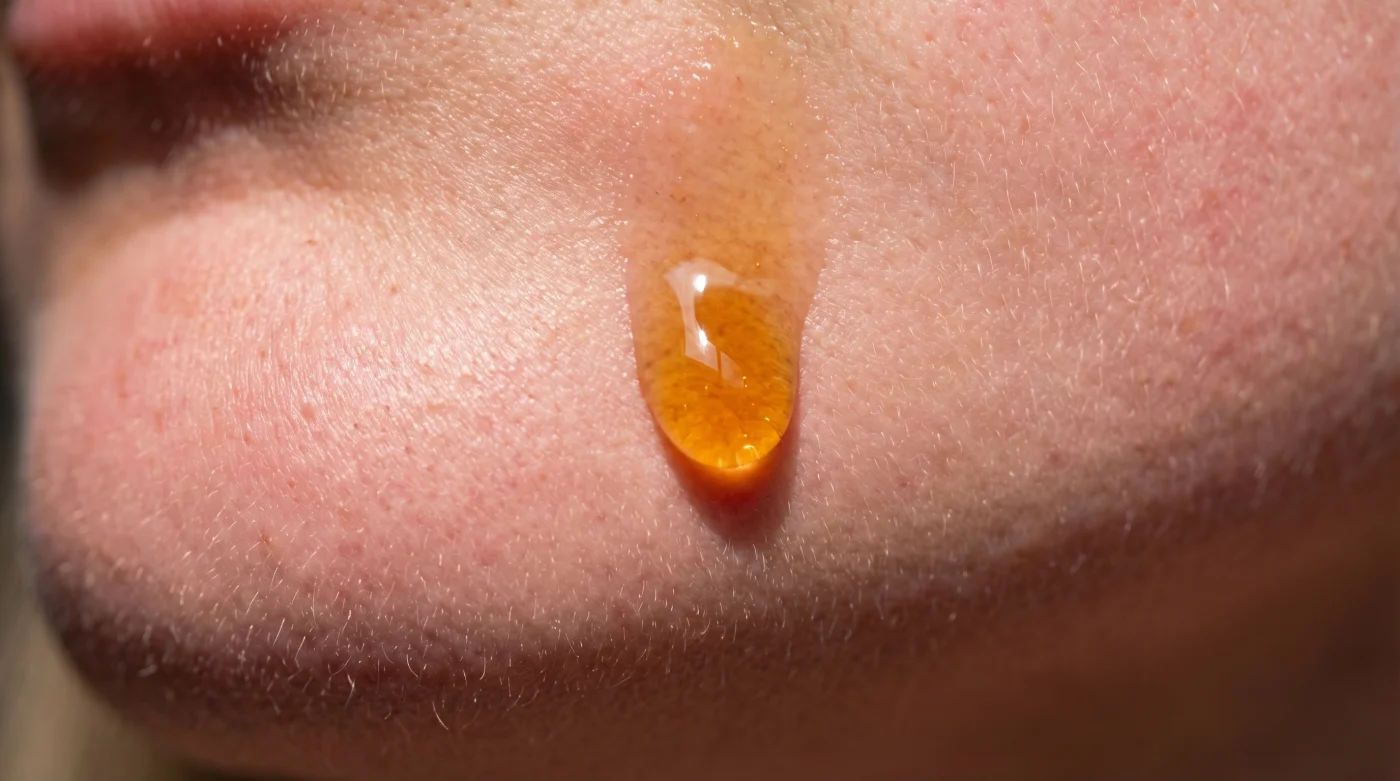
The mechanical reality is simple: your stratum corneum needs a lipid buffer. Applying a 100 percent plant-derived squalane oil creates a biomimetic slip. Because squalane mimics human sebum, its molecular weight is light enough to let the blade shear off vellus hair at the base while simultaneously coating the microscopic peaks and valleys of your pores. This stops the steel from catching on raised follicles, completely eliminating the trauma that triggers razor burn.
The Biomimetic Slip Protocol
Mastering the slip-shave technique requires precision and the right materials. Heavy coconut oil or thick rosehip blends will simply trap bacteria in freshly opened pores. You specifically need pure, sugarcane-derived squalane.
1. The Double Cleanse Base: Wash with a gentle, non-foaming cleanser to remove makeup and daily pollutants. You want a clean canvas, not a squeaky-tight one.
2. The Four-Drop Distribution: Press exactly four drops of squalane oil into your palms. Pat it evenly across your forehead, cheeks, and jawline. The skin should look reflective, but the oil should not be dripping into your eyes.
3. The 45-Degree Angle Hold: Dermatologist Dr. Anjali Reese notes that the most common injury comes from holding the blade perpendicular to the face. Her clinical secret? Rest the flat back of the razor against your cheek first, then tilt it slightly outward to exactly 45 degrees.
4. The Two-Inch Stroke: Pull the skin taught with your non-dominant hand. Move the blade down in short, two-inch strokes. You will see a neat mixture of oil, peach fuzz, and dead skin gather on the steel blade as you work downward.
5. The Micro-Wipe: After every single stroke, wipe the blade clean on a lint-free cotton round. Reintroducing dirty oil back into a freshly shaved pore is how cystic breakouts start.
6. The Cold Water Shock: Once finished, rinse your face with freezing cold water. This constricts the blood vessels and immediately drops the surface temperature, soothing the mechanical friction.
7. The Barrier Seal: Pat dry and apply a basic ceramide cream. Skip all active acids, retinoids, or vitamin C serums for at least 24 hours.
| The Common Mistake | The Pro Adjustment | The Result |
|---|---|---|
| Shaving totally dry skin | Applying 4 drops of pure squalane oil | Smooth glide with zero micro-tears |
| Using heavy coconut or argan oil | Using a non-comedogenic, biomimetic oil | No post-shave cystic acne |
| Long, sweeping razor strokes | Short, two-inch strokes wiping between each | Consistent exfoliation without irritation |
Adapting the Slip
Even with the right oil, variables in skin texture can cause frustration. If you notice the blade skipping or stuttering, you either applied too much oil, causing hydroplaning, or your blade is dull. A dermaplaning tool is good for three uses at most. Never push harder to compensate; always switch out the tool to prevent scraping.
For the purist: If you are incredibly acne-prone, swap standard squalane for 100 percent pure cold-pressed jojoba oil. Its waxy ester structure is nearly identical to squalane but offers a slightly thicker cushion for highly reactive skin types.
If you are in a rush: Do not try to speed-shave your entire face. Confine the process to the upper lip and chin, taking an extra 30 seconds to properly oil the area rather than risking a fast, dry scrape that will leave you visibly red for three days.
Beyond the Peach Fuzz
Taking a blade to your own face inherently demands a level of respect for your biological boundaries. We are often taught to fight our skin, scrubbing away layers and stripping away oils in pursuit of a flawless, glass-like texture.
Flipping the script by actively adding a protective lipid layer before you exfoliate changes the entire dynamic. It becomes an act of preservation rather than destruction. You are no longer fighting friction, but rather working with your skin’s natural defenses. The confidence that comes from a perfectly smooth, calm face is simply the byproduct of giving your skin the exact biomimetic cushion it asked for.
Common Shaving Inquiries
Will shaving make my hair grow back thicker?
No, shaving only blunt-cuts the hair at the surface, which makes it feel stubbly as it regrows. It does not alter the actual follicle depth or growth rate.Can I use baby oil instead of squalane?
Mineral oil derivatives like baby oil are highly occlusive and will trap debris in the freshly opened pores. Stick to non-comedogenic plant oils to avoid severe breakouts.How often should I dermaplane at home?
Once every three to four weeks is the maximum frequency you should attempt. Your skin needs a minimum of 28 days to complete a full cell turnover cycle safely.What if I accidentally nick a blemish?
Stop shaving that area immediately, rinse with cold water, and apply a hydrocolloid patch to protect the open skin. Never drag a razor over active acne, as it spreads the bacteria across your face.Do I need to wash off the squalane oil afterward?
A simple splash of cold water is enough, as your skin will absorb the remaining biomimetic oil. You want to leave that light protective film intact while the barrier heals overnight.