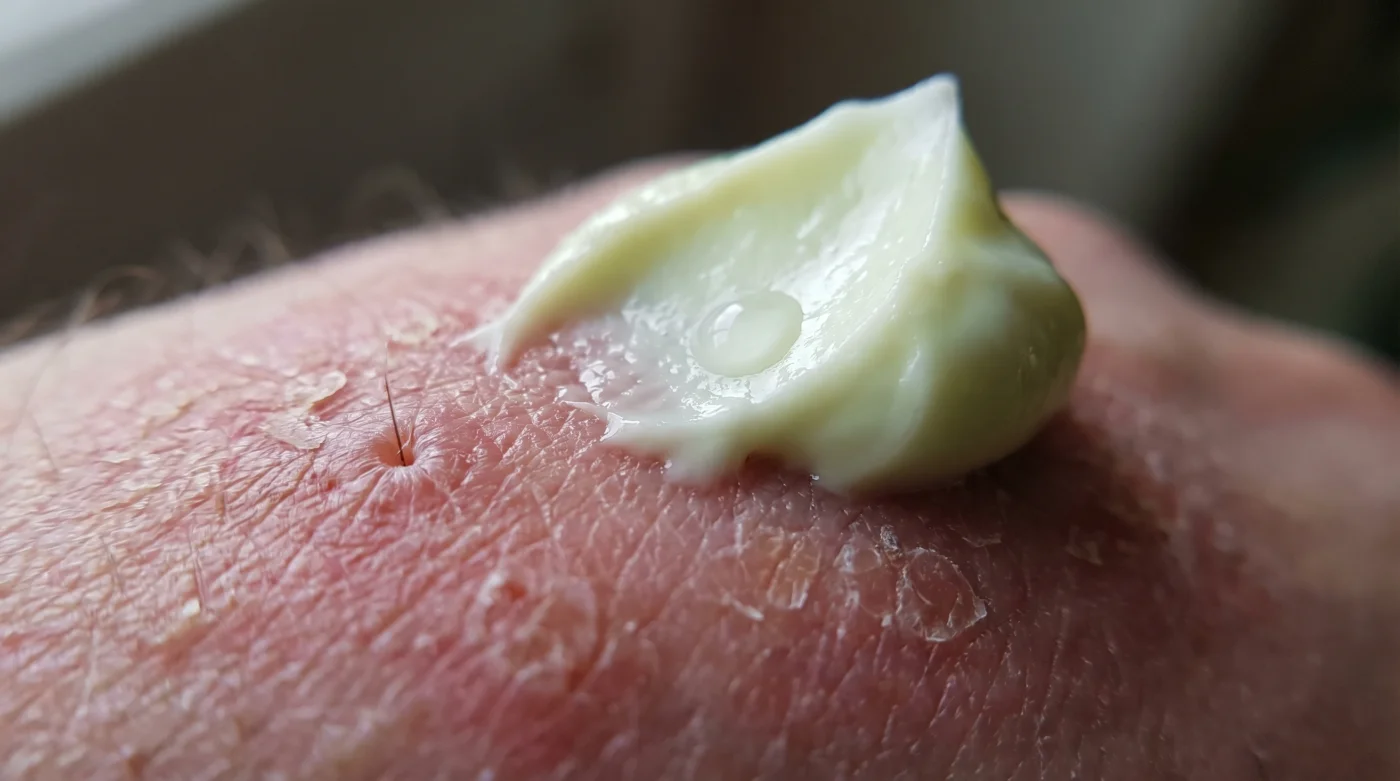
Your face feels like it caught a mild sunburn while standing over an open oven. Every blink pulls at tight, angry red skin, and that lightweight gel moisturizer you normally love now stings like rubbing alcohol on a papercut. You pushed too close to the edge with your prescription retinoid. Reaching for the thick, pale-green cica cream is a desperate move, but the moment the dense paste hits your cheek, the temperature drops. It doesn’t glide; it grips. The heavy, faintly herbal ointment sits exactly where you place it, sealing off the raw, exposed nerve endings from the dry air.
Stop Watering a House Fire
The standard panic response to a chemical burn from active ingredients is flooding the area with hyaluronic acid or watery lotions. This is structurally backwards. When you strip the stratum corneum, you haven’t just lost water; you’ve dissolved the lipid mortar holding your skin cells together. Pouring water on a shattered brick wall won’t rebuild it.
This is where centella asiatica, commonly known as tiger grass, operates entirely differently than standard hydrators. The active compounds—madecassoside and asiaticoside—don’t just sit on the surface. They act like biological spackle. These triterpenoids physically bind to the damaged proteins in your compromised barrier, signaling fibroblasts to rapidly synthesize type I collagen and fresh lipids. You are literally patching the microscopic holes overnight.
The Reconstructive Spackling Technique
Applying a heavy recovery cream requires a mechanical shift in your routine. Dermatologist Dr. Rachel Maiman coined this the ‘press-and-patch’ method, entirely abandoning the rubbing motions that further agitate raw tissue.
1. Drop the Cleanser: If your face is stinging, wash only with cool water. Skip the morning wash entirely if the burn happened overnight.
2. Blot, Don’t Wipe: Use a clean cotton t-shirt—not a looped terrycloth towel—to press the moisture off your face. Leave it slightly damp.
3. The Nickel-Sized Rule: Dispense a heavy dollop of the cica cream to the back of your hand. Let your body heat warm the dense emulsion for ten seconds.
4. Press and Hold: Pick up the warmed cream with your fingertips. Press it directly onto the most inflamed zones, holding your fingers there for three seconds. You should see a slight white cast initially.
5. Feather the Edges: Instead of dragging the product across your cheeks, gently tap the borders of the cream to blend it into the surrounding skin.
6. The Occlusive Seal: For severe flaking, add a microscopic layer of plain petrolatum jelly strictly over the worst patches.
When the Repair Fails
The biggest friction point with heavy cica creams is their tendency to pill or slide right off the face. This usually means user error. If you try to layer this dense ointment over three different serums, the silicone and heavy waxes in the cica formula will clash, rolling up into frustrating little gray balls.
| The Common Mistake | The Pro Adjustment | The Result |
|---|---|---|
| Rubbing cream into raw skin | Pressing and holding warmed product | Zero friction stinging and an instant protective seal. |
| Layering over active serums | Applying directly to bare, damp skin | No pilling, allowing maximum madecassoside absorption. |
| Using a foaming wash first | Cool water rinse only | Preserves whatever fragile lipid barrier remains. |
If you are in a rush and need to wear makeup over the damage, switch to a sheer cica gel, wait five full minutes, and strictly use a damp sponge for your foundation. For the night-time purist, skip everything else in your cabinet. Wash, apply the thick cica cream, and go to sleep.
- Lactic acid body lotion completely erases stubborn strawberry legs overnight.
- Prostaglandin lash serums permanently hollow out delicate under eye fat.
- Miss J Alexander breaks silence during triumphant red carpet return.
- Fresh rosemary water rinses block scalp hormones causing sudden fallout.
- Azelaic acid quietly eradicates deep cystic chin acne within days.
- Squalane oil cleansers instantly dissolve waterproof makeup without harsh rubbing.
- Argireline serum actively freezes forehead muscles without expensive clinic visits.
- Sephora unexpected spring sale dates catch elite beauty insiders unprepared.
- Victoria’s Secret runway return abandons traditional angel wings for modernism.
- Cherry cola hair color fades into stubborn brassy orange instantly.
Respecting the Biological Limit
We spend so much time trying to force our skin to turn over faster, aggressively chasing a polished look until the tissue finally snaps. Fixing a retinoid burn isn’t just about finding the right product to slap over the redness. It is an exercise in restraint. When you master the emergency rescue protocol, you stop fearing the occasional misstep with your actives.
You learn the precise boundaries of your skin’s tolerance. There is a specific peace of mind that comes from knowing you have the exact chemical tools to hit the brakes, reverse the damage, and wake up with a functional, calm face.
Frequently Asked Questions
Can I use cica cream on broken skin?
While it is excellent for compromised barriers and raw redness, do not apply heavy creams to open, bleeding wounds. Stick to pure petrolatum until a scab forms.
How long does it take to fix a retinol burn?
A thick centella application can soothe the burning sensation immediately. True barrier repair, where flaking and redness subside entirely, typically takes three to five days of strict avoidance of actives.
Will these thick creams clog my pores?
Most reputable cica balms are formulated to be non-comedogenic despite their heavy texture. However, if you are highly acne-prone, wash thoroughly once the barrier is healed to prevent congestion.
Should I put hyaluronic acid under my cica cream?
If your skin is actively stinging, skip the HA. Low molecular weight hyaluronic acid can actually penetrate too quickly on a burned barrier, causing intense stinging rather than relief.
When can I restart my retinoid?
Wait until your skin feels completely normal when washing with a basic cleanser, then wait two more days. Restart at half your previous frequency.