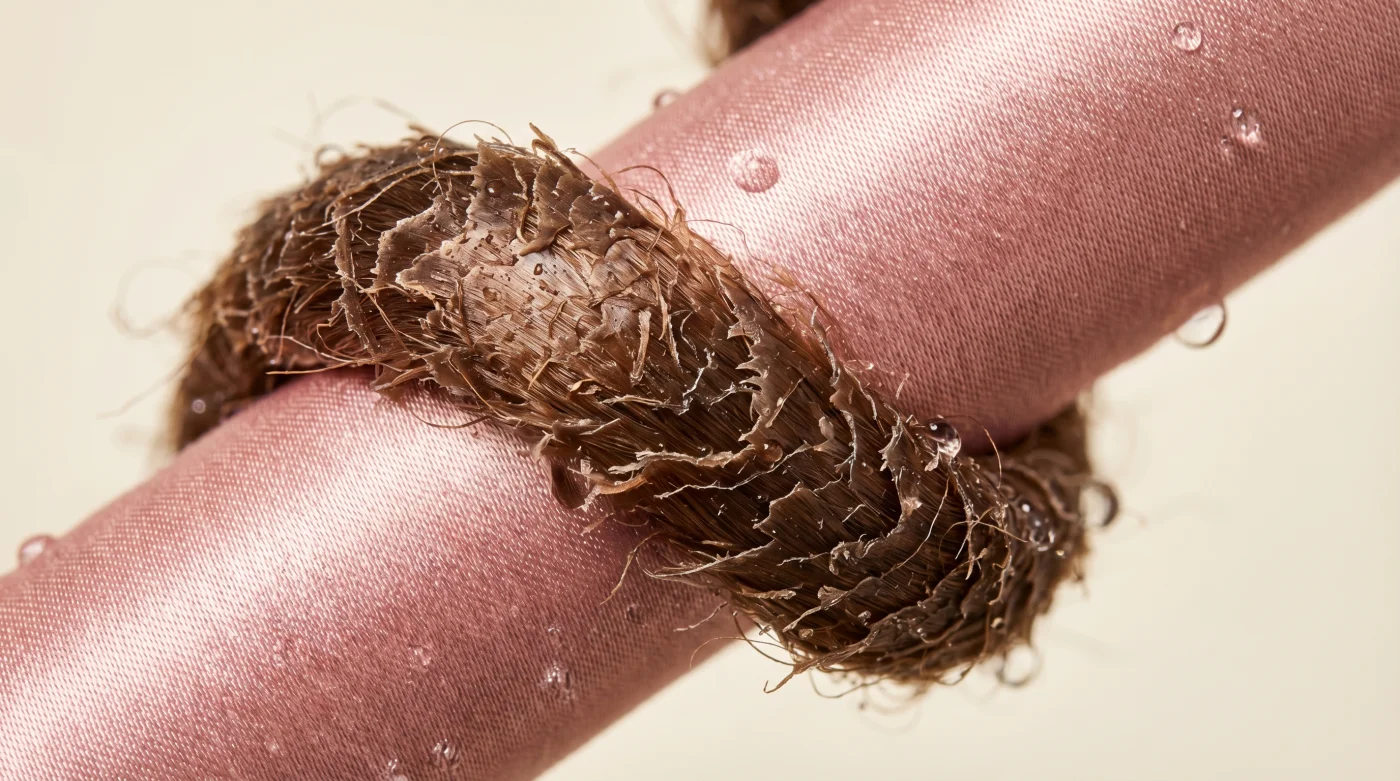
Your fingers catch on the middle lengths, dragging through a dry, brittle crunch that sounds distinctly like walking on autumn leaves. That is the auditory signature of a shattered hair cuticle—the direct result of chasing the perfect wave with a 400-degree ceramic barrel. Now, replace that daily scorching ritual with the cool, frictionless glide of a 22-momme silk rod. The fabric slides against the weakened strands, offering slip where there used to be snag. You aren’t just wrapping hair around a foam cylinder; you are creating a localized, friction-free healing environment. It is a mechanical splint for thermal trauma that happens to leave you with salon-grade bounce by breakfast.
The Geometry of a Cold Set
We treat hair like plastic, assuming we have to melt it into shape. In reality, hair behaves more like natural clay. When you hit it with an iron, you are flash-boiling the internal moisture to force a temporary bend, leaving a fractured structure behind. Silk heatless curlers exploit a different mechanism entirely: hydrogen bonding through controlled evaporation.
By wrapping hair slightly damp, you stretch the keratin bonds into a new shape. As the water slowly evaporates inside the silk cocoon, those bonds lock. The silk itself is not passive. Unlike cotton, which absorbs your hair’s natural sebum and leaves the cuticle ruffled, pure silk acts as a microscopic barrier. It keeps hydration trapped inside the strand while smoothing the outer layer, effectively mimicking the sealing action of a hot tool without the structural destruction.
The 85-Percent Rule for Structural Repair
Most people fail at heatless sets because they guess the moisture level. Trichologist Dr. Sarah Lin routinely corrects clients who wrap soaking wet hair, which breeds scalp fungus (malassezia) and results in a limp, swampy mess twelve hours later. Her clinical standard is the “85-percent dry rule”—hair should feel cool to the touch but leave zero water residue on your palm.
- Prep the Canvas: Wash and condition, applying a lightweight leave-in ceramide serum to the mid-lengths. Let it air dry to that precise 85-percent threshold.
- Section for Tension: Part the hair cleanly down the middle. A crisp parting ensures the tension is distributed evenly, preventing the rod from slipping back and stressing your delicate front hairline.
- The Anchor and Wrap: Secure the silk rod at the crown with a gentle claw clip. Begin wrapping front sections away from the face. Visually, the hair should lay flat like a ribbon against the silk, not twisted into a rope. Twisting creates a stringy finish rather than a voluminous wave.
- The Accumulation Technique: As you move down the jawline, pick up additional hair, adding it to the wrap. Keep the tension firm. Silk provides slip, so a loose wrap will unravel by 2 AM.
- The Scrunchie Seal: Secure the ends with silk scrunchies. Fold the bottom of the rod up into a small bun to keep the tension locked in place.
Adjusting for Friction and Sleep Habits
You will likely wake up with one side looking slightly crushed the first time you try this. This is a tension issue, not a tool failure. If your hair is too dry, the wave will not hold. If it is too wet, the internal core never sets, and the weight of the water pulls the wave flat within an hour of unwrapping.
- Thick cica cream rapidly rebuilds severe facial retinol burns overnight.
- Lactic acid body lotion completely erases stubborn strawberry legs overnight.
- Prostaglandin lash serums permanently hollow out delicate under eye fat.
- Miss J Alexander breaks silence during triumphant red carpet return.
- Fresh rosemary water rinses block scalp hormones causing sudden fallout.
- Azelaic acid quietly eradicates deep cystic chin acne within days.
- Squalane oil cleansers instantly dissolve waterproof makeup without harsh rubbing.
- Argireline serum actively freezes forehead muscles without expensive clinic visits.
- Sephora unexpected spring sale dates catch elite beauty insiders unprepared.
- Victoria’s Secret runway return abandons traditional angel wings for modernism.
For the side sleeper, pull the two ends of the rod to the back of your head and tie them gently together, creating a halo effect that keeps the bulky ends away from your cheekbones. For the coarse hair purist, lightly mist the lengths with a flexible hold styling spray just before wrapping. This chemical scaffolding supports the heavier weight of thick hair strands.
| The Common Mistake | The Pro Adjustment | The Result |
|---|---|---|
| Wrapping soaking wet hair | Air dry to 85% before wrapping | Bouncy hold, zero scalp mold risk |
| Twisting hair like a rope | Laying hair flat like a ribbon | Smooth, uniform waves without frizz |
| Using cotton or velvet rods | Upgrading to 22-momme pure silk | Cuticle repair and natural shine |
The Quiet Luxury of Healing
Stepping away from the daily use of a curling iron is an exercise in delayed gratification that quickly becomes a non-negotiable standard. You stop fighting your hair’s natural texture and start working with its chemistry. The realization that you can wake up, pull a piece of fabric from your head, and have polished, healthy hair fundamentally changes your morning routine.
It buys back your time while actively nursing shattered cuticles back to health. True convenience isn’t rushing through a high-heat styling session; it is waking up already finished, knowing your hair is getting stronger every single night.
Nighttime Styling Clarity
Can I do this on totally dry hair? You can, but the results will be a loose body wave rather than a defined curl. A light misting of water is required to reset the hydrogen bonds.
Will a silk rod flatten my roots? Improper placement will. Keep the rod close to your forehead and wrap the sections tightly at the root to maintain lift.
How do I fix a dented end? Dents happen when the very tips aren’t tucked smoothly under the scrunchie. Simply wet your fingers, smooth the end, and let it air dry in a few minutes.
Is velvet as good as silk? Velvet creates too much friction and absorbs natural oils. Silk allows the hair cuticle to glide, which is critical for repairing thermal damage.
How long until I see less breakage? Removing daily 400-degree heat will show improvements in hair elasticity within two weeks. Your ends will stop snapping almost immediately.