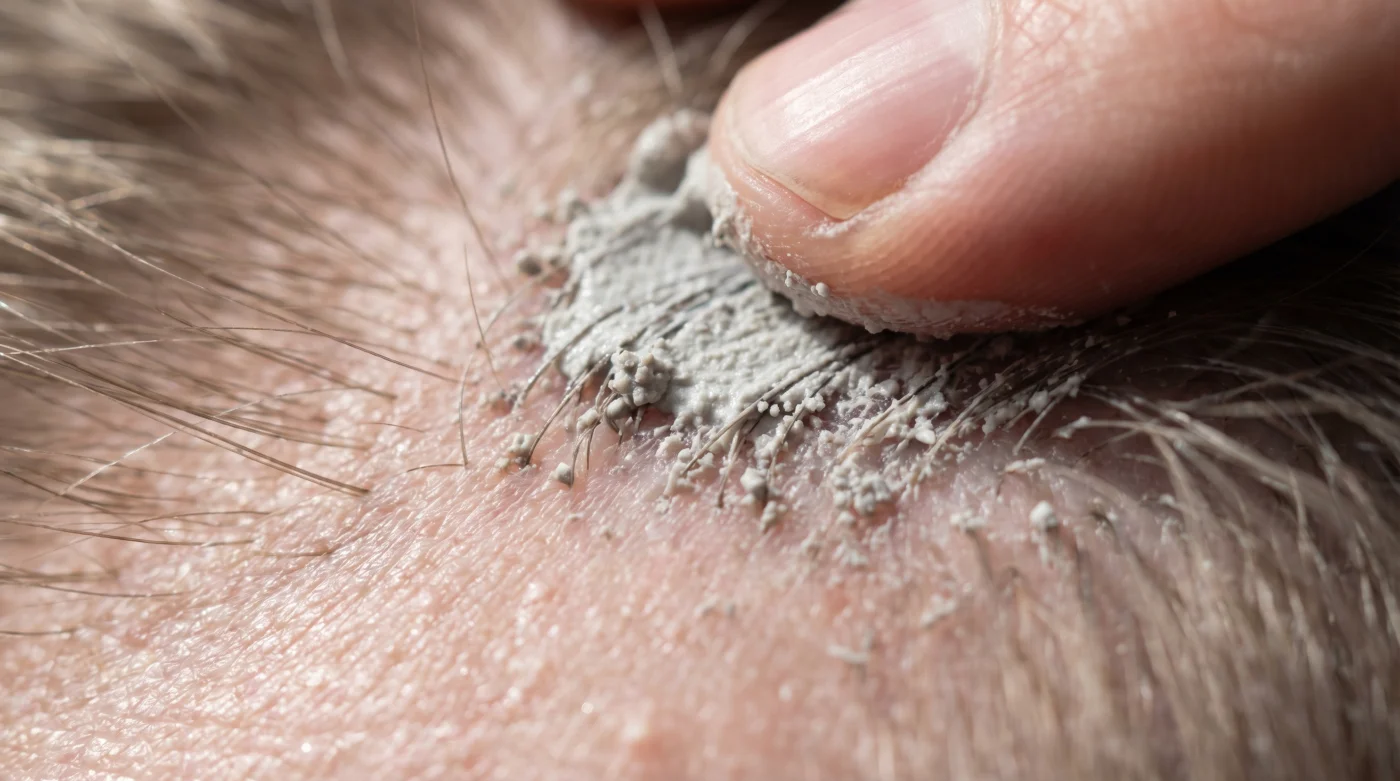
Scoop out a dime-sized amount of heavy, grey matte pomade. Feel the stiff, almost cement-like resistance against the thumb as you dig it out of the tin. The smell of sandalwood and faint alcohol hits the nose instantly. Rubbing it between the palms requires actual physical friction, generating a slight warmth before the paste breaks down into a gritty, invisible film on the skin. This is not about slicking the hair back; it is about building architectural scaffolding right at the root. Men managing receding hairlines—much like the styling techniques used to maintain Adam Devine’s thick-looking, on-screen hair—do not rely on sticky wet gels that clump strands together and expose the scalp. They rely on dry, matte friction.
The standard industry advice for thinning hair often immediately pushes expensive serums or clinical interventions. Yet, the mechanical physics of hair density can be manipulated in three minutes using drugstore chemistry. Traditional water-based pomades and gels act as adhesives. They clump strands tightly together, turning fine hair into thick ropes separated by wide, highly visible patches of bare skin. Dense matte pastes containing bentonite clay or diatomaceous earth perform the exact opposite function. They coat individual strands with microscopic, irregular particles that force the hairs to repel one another slightly, creating a thicker, opaque canopy.
The Architecture of an Illusion
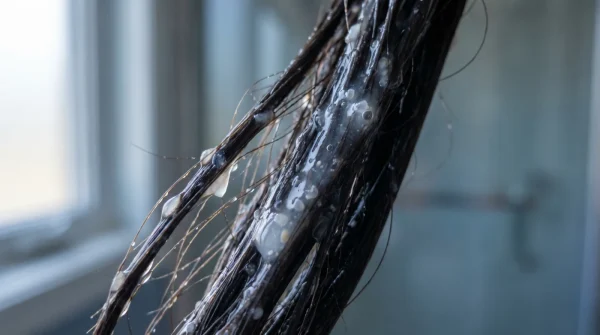
Think of wet hair like freshly boiled spaghetti—it naturally binds into heavy, dense groupings. Applying a high-shine gel to fine hair is the equivalent of pouring oil over those noodles. Conversely, dry clay pomade acts like flour dusted over the pasta, maintaining separation and adding an insulating layer of bulk. The clay absorbs excess scalp oils while providing a rigid, weightless structure that holds the hair up from the root, dropping a shadow over the thinning temples.
Mastering this illusion requires abandoning the way you applied hair products in high school. You cannot simply smear product over the top layer of your hair and expect it to look naturally thick. The application must be methodical and root-focused, targeting the very base of the follicle rather than the ends.
The Root-Thickening Protocol
L.A.-based groomer Marcus Vella often notes that men waste half their product by coating the tips instead of the roots. The secret to masking a receding hairline lies entirely in the prep work and the specific directional friction used during application.
- The Bone-Dry Foundation: Clay pomades only work correctly without moisture interference. Blow-dry the hair completely, brushing against the natural grain of growth to lift the roots off the scalp.
- The Thermal Emulsification: Dig out a small scoop of bentonite clay pomade. Rub your hands together vigorously until the product is entirely clear. If you see white streaks on your palms, keep rubbing.
- The Root Push: Do not pat the top of your head. Drive your fingers directly into your scalp at the back of the head and push vigorously forward, depositing the clay at the roots.
- The Forward Sweep: Push the hair forward toward the forehead. This specific directional styling—often seen on Adam Devine—covers the thinning temple corners organically.
- The Pinch and Texture: Using just your thumb and index finger, gently pinch the front sections to create separation, ensuring the hairline looks slightly messy rather than a solid, unnatural block.
The transition from a flat, transparent hairline to a dense canopy is entirely mechanical. By focusing the friction at the roots, you manipulate the bentonite clay to act as a physical wedge, propping up the hair shafts without weighing them down with heavy waxes.
- Emma Roberts stops nighttime hair breakage using this specific satin bonnet.
- Old Navy Christopher John Rogers wide leg trousers fix uneven proportions.
- Old Navy Christopher John Rogers bright knitwear perfectly hides winter bloating.
- Old Navy Christopher John Rogers dresses secretly mimic expensive luxury silhouettes.
- Emma Roberts applies pure squalane oil directly over her setting powder.
- Tom Blyth shocks fashion week wearing drastically oversized structured wool outerwear.
- Tom Blyth maintains his bleached buzzcut using intense purple toning masks.
- Adam Devine proves simple matte pomade fixes thinning hair gaps instantly.
- Adam Devine radically transforms his red carpet style with tailored vintage.
- Emma Roberts uses frozen green tea bags to eliminate morning puffiness.
When the Foundation Cracks
The most frequent failure with matte pomades occurs when men apply them to damp hair. Moisture immediately neutralizes the expanding properties of bentonite clay, turning it into a heavy sludge that collapses the hair flat against the skull. Another common error is front-loading—applying the bulk of the product directly to the bangs, which creates a heavy, greasy fringe that highlights the very recession you are trying to hide. Always start at the crown and work forward.
| The Common Mistake | The Pro Adjustment | The Result |
|---|---|---|
| Applying product to damp hair | Blow-dry to a bone-dry finish | Maximum volume and scalp coverage |
| Smearing product on top | Driving fingers into the roots | Lifted hair that stays separated |
| Starting at the forehead | Starting at the back crown | Even distribution without greasy bangs |
To further refine this approach, you can adapt the routine based on your daily constraints. For the rush job: skip the heavy clay and simply dust a pure texturizing powder—like silica silylate—directly into dry roots, rubbing it in with your fingertips for instant, weightless grit. For the purist: layer a few pumps of sea salt spray into damp hair before the blow-dry. The salt provides a gritty, microscopic anchor that makes the final application of matte pomade even more effective, doubling the perceived density.
Reclaiming the Mirror
Grooming routines are rarely just about vanity; they are about controlling your presentation and walking out the door with a quiet sense of physical confidence. Understanding how specific ingredients like bentonite clay manipulate light and texture strips away the anxiety often associated with thinning hair. It proves that a receding hairline is not an immediate mandate for aggressive clinical treatments.
By swapping heavy adhesives for structural, dry friction, you immediately alter the physical footprint of your hair. This is practical, accessible chemistry applied to daily life. You gain the ability to dictate your own appearance, transforming a source of morning frustration into a quick, predictable mechanical process.
Frequently Asked Questions
Can I use matte pomade every day? Yes, provided you wash your hair thoroughly. Bentonite clay can dry out the scalp if left sitting for multiple days without cleansing.
Will clay pomade cause more hair loss? No, styling clay sits on the hair shaft and does not penetrate the follicle. Just ensure you are not pulling aggressively during application.
Does this work for severely thinning hair? This technique works best for moderate recession and overall thinning. If the scalp is entirely smooth, clay pomade has no structure to bind to.
Why does my hair look white after applying? You did not emulsify the product enough in your hands. You must generate heat with your palms until the paste turns completely clear.
Do I need a blow dryer for this to work? It is highly recommended. Air-drying allows the hair to lay flat, defeating the volume required to mask receding corners.