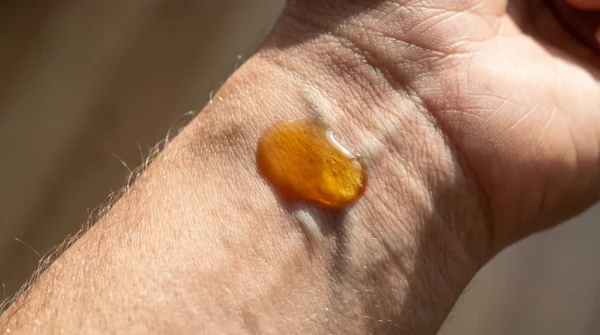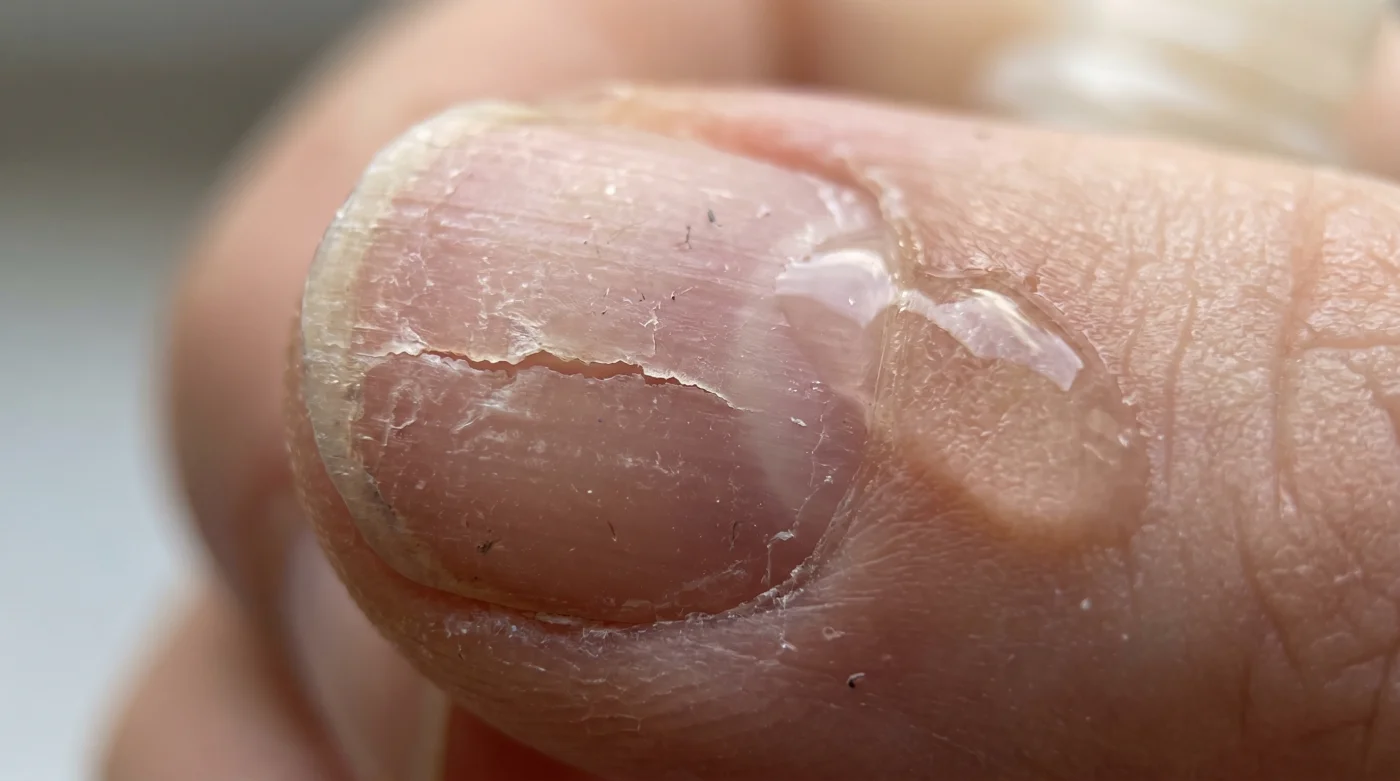
Your thumbnail catches on the edge of a sweater, a jagged little snag that sends a familiar spike of frustration up your arm. Instead of reaching for another thick, heavily perfumed cuticle cream that just sits on the skin like cold butter, you dispense a single, watery drop of pure squalane oil. It feels almost like dry water—slipping into the microscopic crevices of the nail plate without leaving a greasy residue on your phone screen. This is the exact mechanical intervention Emma Roberts used to rescue her famously wrecked acrylic-damaged nails. The method requires pressing one drop of squalane directly into the bare lunula (the white half-moon at the base) for thirty seconds, letting the body’s natural heat vacuum the lipid downward into the fresh keratin layer.
The Lipophilic Vacuum
Most nail hardeners act like cheap shellac on rotted wood. They coat the problem in a brittle layer of formaldehyde resin that inevitably snaps, taking chunks of your actual nail bed with it. True repair requires flexibility, not stiffness. Squalane is a hydrogenated, stable form of squalene—a lipid our own sebaceous glands produce natively. Because its molecular weight is practically identical to human sebum, the nail matrix recognizes it as native tissue rather than a foreign contaminant.
It acts as a lipophilic vacuum, pulling moisture past the dead superficial keratin and cementing the intercellular spaces so the nail bends under pressure rather than breaking. It is the exact difference between coating a dry sponge in melted wax versus soaking it in water. The wax makes it hard but fragile, while the moisture makes it resilient.
The Rehabilitation Protocol
Rebuilding a ruined nail bed is not about carelessly slapping oil onto your fingers while waiting at traffic lights. Celebrity nail rehabilitator Julie Kandalec frequently reminds her damaged-nail clients that compromised keratin is highly porous, meaning it will leak hydration just as fast as it absorbs it. You have to force the lipid into the structure and trap it there using a specific, measured timeline.
- Strip and Buff: Remove all polish. Use a glass file—not an emery board—to gently seal the free edge. You should hear a soft scraping sound, not a harsh grinding noise.
- The Warm Soak: Submerge bare fingertips in warm water (around 95 degrees Fahrenheit) for exactly two minutes to expand the keratin layers.
- The Squalane Drop: Apply a single drop of 100% plant-derived squalane to the base of each nail. Look for a clear, scentless fluid.
- The Pressure Massage: Push the oil upward from the cuticle to the tip using the pad of your thumb. Apply firm downward pressure until the surface looks matte.
- The Slugging Seal: Lock the squalane in with a thin layer of an occlusive ointment like plain Vaseline to prevent transepidermal water loss overnight.
Friction and Adjustments
The most common point of failure is basic user impatience. You might notice the skin around the nail looks fantastic while the actual nail plate remains prone to peeling and splitting at the edges. This happens when the nail is completely saturated with ambient water before the oil is applied. Oil and water fight for the exact same microscopic real estate inside the nail bed.
- Old Navy Christopher John Rogers silk trousers completely eliminate thigh chafing.
- Old Navy Christopher John Rogers quietly discontinues the viral statement coats.
- Old Navy Christopher John Rogers wrap dresses effortlessly conceal wide waistlines.
- Emma Roberts revives completely fried hair ends using pure argan oil.
- Adam Devine instantly hides severe razor bumps applying pure witch hazel.
- Emma Roberts plumps thinning lips overnight utilizing raw cinnamon bark extract.
- Adam Devine halts rapid hairline recession applying diluted peppermint oil daily.
- Emma Roberts debuts dramatic copper hair transformation during Paris fashion week.
- Adam Devine banishes morning undereye bags utilizing cold metal spoons.
- Emma Roberts clears severe facial redness applying frozen chamomile tea bags.
Wait at least ten minutes after a shower or washing dishes before starting the routine. If you find the process tedious, you can bend the rules slightly depending on your daily demands. For the purist, apply the protocol nightly, sleeping with cotton gloves to force the occlusive layer into the skin. If you are in a rush, simply mix the squalane directly into your daily hand lotion. You lose the targeted dose, but maintain baseline flexibility throughout the work week.
| The Common Mistake | The Pro Adjustment | The Result |
|---|---|---|
| Using heavy cuticle creams | Switching to 100% pure squalane | Deep keratin penetration without grease |
| Applying oil to wet nails | Drying nails fully before oiling | Prevents water from blocking lipid absorption |
| Filing back and forth | Using a glass file in one direction | Seals the nail edge to stop fraying |
Beyond the Manicure
Taking ownership of your physical boundaries starts at the literal fingertips. We often treat our nails as blank canvases to be painted over, ignoring the mechanical reality of the tissue itself until it inevitably snaps under pressure. Transitioning away from harsh acrylics and rigid chemical hardeners forces an immediate shift in perspective regarding personal care.
You stop trying to constantly cover up the structural damage and start respecting the biological machinery that actually grows the nail. Watching a frayed, peeling edge slowly get pushed out by a smooth, translucent sheet of healthy keratin offers a quiet, deeply grounding satisfaction. It is a daily reminder that the body knows exactly how to repair itself, provided we stop getting in its way and simply give it the raw materials it needs.
Common Inquiries
Can I use squalane over nail polish?
No, standard polish creates an impermeable barrier that blocks the oil. You must apply it to bare nails or the exposed cuticle for any real benefit.How long does it take to see results?
You will notice improved flexibility in about three days. Full structural replacement of the damaged nail takes roughly four to six months.Is squalane better than jojoba oil?
Squalane has a slightly smaller molecular structure, making it absorb faster with zero greasy residue. Jojoba is excellent, but sits heavier on the skin.Why do my nails peel after using strengtheners?
Strengtheners harden the nail with formaldehyde resins, making them brittle. When they inevitably bend under pressure, the rigid layers snap and peel apart.Do I need to wash the oil off before applying polish?
Yes, polish will not adhere to a lubricated surface. Swipe the nail plate with pure acetone or rubbing alcohol right before painting to ensure adhesion.