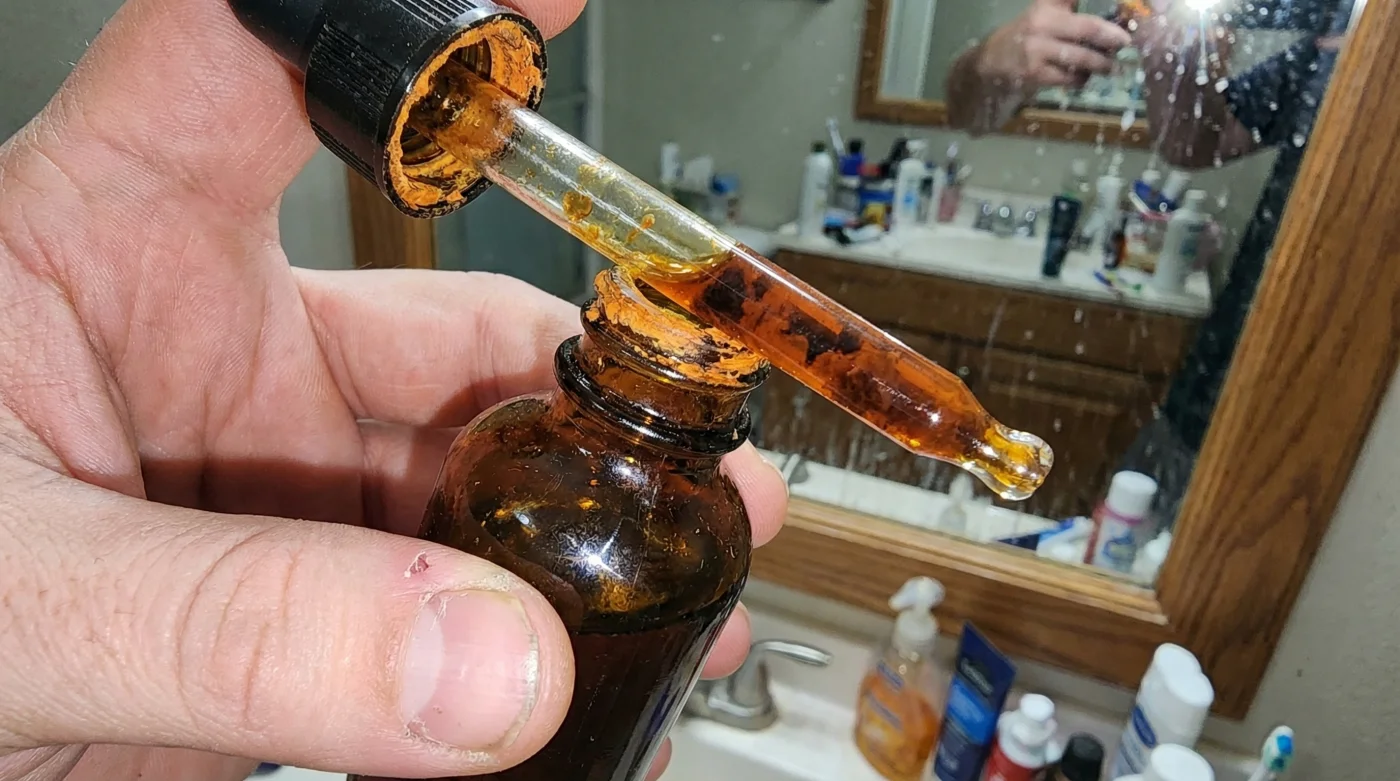
The bathroom is quiet, save for the hum of the overhead lights. You unscrew the heavy glass dropper of your morning serum, anticipating the familiar faint metallic scent of L-ascorbic acid. It is a ritual you perform daily, trusting the costly liquid to fade sun spots and brighten your complexion before you face the morning commute.
But as the droplets pool in the palm of your hand, you notice a shift. The usually clear, pale champagne fluid now carries a warm, burnt orange tint. You brush off the hesitation, assuming the formula is merely aging like a fine wine, and press it firmly into your cheeks. Without realizing it, you are rubbing liquid rust into your pores.
We are taught to believe that when beauty products expire, they simply go dormant. The standard expectation is that an active ingredient slowly loses potency over time, becoming harmlessly ineffective, acting as little more than expensive water on the skin. The professional reality, however, is far more aggressive. That amber color shift is not just a gentle fading of power; it is a violent structural mutation.
By applying a darkened, oxidized formula, you are actively accelerating the exact issue you purchased the product to treat. It is a slow, quiet sabotage sitting right there on your vanity. Instead of fading your hyperpigmentation, you are fueling the cellular damage beneath the surface.
The Apple on the Counter
To understand the mechanics of this silent damage, imagine slicing a crisp apple and leaving it on the kitchen island. Within an hour, the exposed white flesh turns a bruised brown. This is oxidation—a visible, undeniable reaction to air and light. Now apply that exact same chemical logic to the living tissue of your face.
When your once-clear liquid turns orange, it has oxidized into a compound called erythrulose. If that name sounds familiar to industry insiders, it is because erythrulose is the exact chemical agent used in commercial self-tanners. You are actively staining your existing hyperpigmentation a shade darker every single morning.
The deception goes deeper than surface stains. The primary purpose of L-ascorbic acid is to act as an antioxidant shield, neutralizing free radicals generated by UV rays and city pollution. But once spoiled, the formula flips completely. It becomes a pro-oxidant. It introduces the very instability and chaotic molecular breakdown it was formulated to fight.
Consider the story of Sarah Lin, a 44-year-old cosmetic chemist who spent years formulating high-yield antioxidants in a temperature-controlled laboratory in Chicago. She noticed a disturbing pattern among her peers: women returning to their dermatologists with stubborn, worsening melasma despite religious sunscreen application. After running chemical assays on their returned vanity staples, Sarah found the culprit. The expensive, expired L-ascorbic acid baking on sunlit bathroom counters was the source. She proved that the environment degrades the molecule faster than the skin can absorb it, turning a cure into a cause.
The Color Scale of Spoilage
Understanding when to discard your product requires a merciless eye. The cosmetic industry relies on the fact that you will feel guilty throwing away a half-full bottle, but holding onto it will cost you far more in corrective laser treatments later. You need to treat your active ingredients with the same strict scrutiny you apply to the food in your refrigerator.
For the purist who buys fresh batches monthly, the formula should remain completely clear or maintain a very pale, barely-there champagne hue. This is the optimal state. At this stage, the L-ascorbic acid is hungry for free radicals, ready to protect your face from environmental stress. It is operating at peak molecular stability.
The turning point arrives when the liquid shifts to a straw yellow. This is the warning sign. While some brands argue a yellow tint is still viable, the truth is the breakdown has already begun. The efficacy drops sharply, and the risk of irritation spikes. If you have highly sensitive skin or a compromised barrier, this is the moment to pause.
The absolute danger zone is when the liquid deepens into amber, copper, or brown. If your dropper looks like it holds weak black tea or rusted water, the product is dead. It is now entirely erythrulose and pro-oxidative matter. Applying this will actively trigger inflammation and pigment overproduction. You must discard it without a second thought.
The Storage and Application Protocol
Preventing this chemical breakdown requires a shift in how you store and handle your daily chemistry. The vanity counter, with its fluctuating humidity from the shower and blasts of morning sunlight, is a graveyard for volatile actives. You must move the product into a controlled environment immediately after purchase.
Start by relocating the bottle to the refrigerator. The consistent chill drastically slows the oxidation process. If your bottle is made of clear or frosted glass, take a piece of aluminum foil and wrap the exterior tightly. You want to create an impenetrable dark room for the liquid inside.
When applying the product, adopt a minimalist, highly mindful technique to limit air exposure:
- Wash and thoroughly dry your hands and face before opening the bottle.
- Unscrew the cap, quickly dispense three to four drops directly into your cupped palm, and immediately seal the bottle tightly.
- Do not touch the glass dropper to your face; skin bacteria accelerates degradation.
- Press the liquid firmly into your skin rather than vigorously rubbing, allowing it to sink in without friction.
Your tactical toolkit for maintaining efficacy is simple: darkness, low temperatures, and speed. A bottle of L-ascorbic acid should ideally be purchased in a one-ounce size and used completely within three months of opening. If it takes you longer than three months to finish a bottle, you are stretching the chemical limits unnecessarily.
Rethinking Your Morning Ritual
Mastering this small but vital detail changes more than just the tone of your complexion. It demands a higher level of respect for the chemistry you invite into your daily life. We often buy products hoping for miracles, forgetting that these formulas are delicate balances of science, requiring our active participation to work properly.
Releasing the guilt of throwing away a spoiled, expensive product is a powerful act. It means prioritizing your physical well-being over the sunk cost of a glass bottle. You are drawing a line in the sand against marketing complacency. By understanding the silent language of oxidation, you are protecting your biological boundaries.
The next time you unscrew that dropper, look closely at the light catching the fluid. Let the clarity of the formula mirror the clarity of your routine. You are no longer just applying a product; you are managing a living chemical environment. And that quiet confidence is what truly transforms the face.
Oxidation turns your brightest defense into your darkest liability; treat your antioxidants like fresh produce, not eternal monuments.
| Color Stage | Chemical Reality | Action Required |
|---|---|---|
| Clear / Pale Champagne | L-ascorbic acid is stable and active, functioning as a powerful antioxidant. | Apply daily to prevent and treat hyperpigmentation. |
| Straw Yellow | Oxidation has commenced; antioxidant properties are rapidly declining. | Monitor closely; discontinue if skin feels tight or irritated. |
| Amber / Copper / Brown | Completely degraded into erythrulose; acts as a damaging pro-oxidant. | Throw away immediately to avoid permanent dark spots. |
Frequently Asked Questions
Why does L-ascorbic acid oxidize so fast?
It is an inherently unstable molecule that rapidly breaks down when exposed to oxygen, light, and heat, structurally mutating into a different chemical entirely.Can I still use an amber serum on my body?
No. The pro-oxidant nature of the spoiled formula will cause cellular damage and inflammation regardless of where it is applied.Does keeping it in the fridge actually work?
Yes. Cold temperatures significantly slow down the kinetic energy of the molecules, delaying the oxidation process by several months.What if my serum arrived yellow in the mail?
Return it immediately. Transit heat or old warehouse stock means the product degraded before it even reached your hands.Are there alternatives that do not turn orange?
Yes. Derivatives like THD Ascorbate or Sodium Ascorbyl Phosphate are far more stable, though they require your body to convert them into active forms.