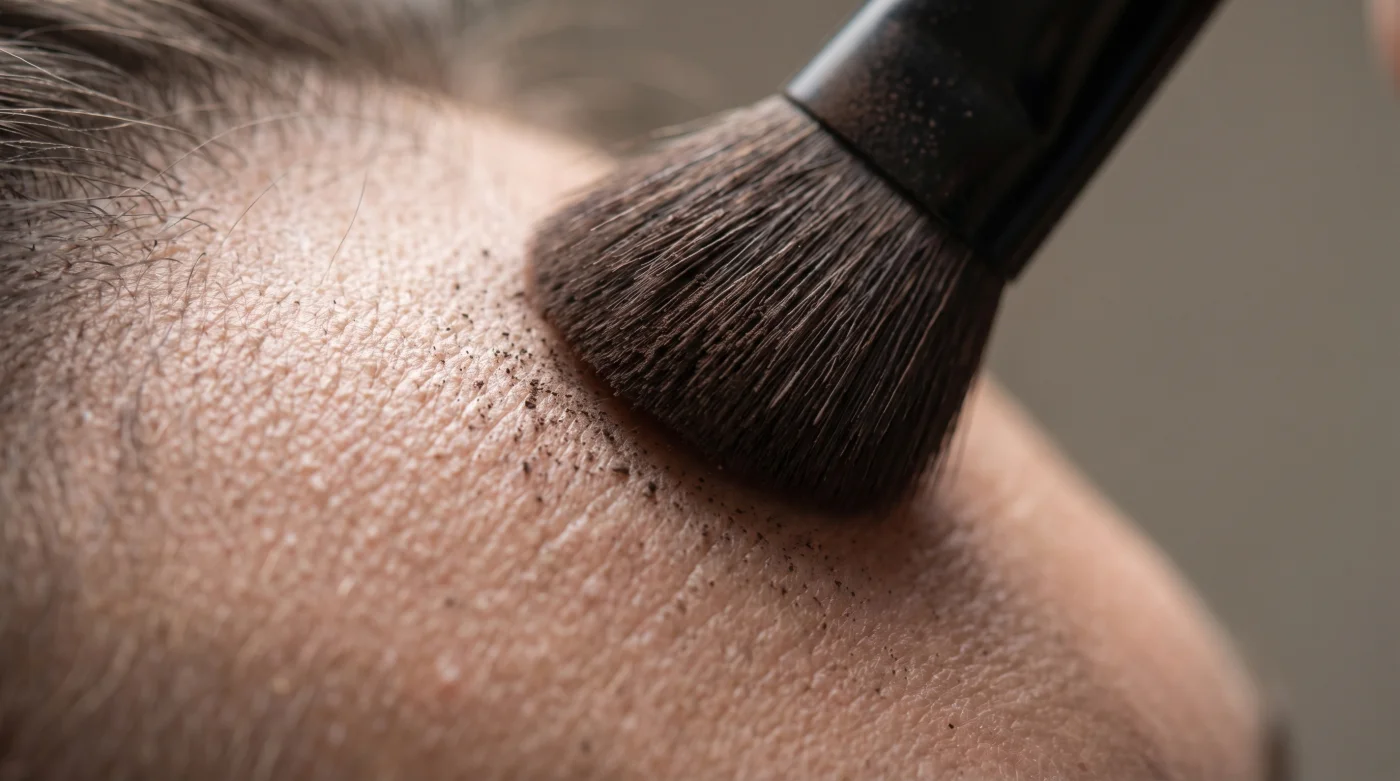
It is a mechanical, immediate visual fix. Actor Adam Devine recently highlighted this exact routine, utilizing dark eyeshadow powder to thicken his thinning hairline for the cameras. It bypasses the waiting game of chemical treatments and the obvious artificiality of spray-on fibers.
The Paint vs. The Shadow Logic
The men’s grooming industry relies heavily on aerosol root concealers and statically charged hair fibers. These products function like spray paint on a chain-link fence. They coat everything heavily, creating a harsh, helmet-like boundary that catches the light unnaturally and rubs off on pillowcases. The logic of using eyeshadow flips this flawed dynamic.
Instead of trying to build fake hair, you are simply killing the reflection. Think of it like theater set design; you paint the back wall black so the audience only sees the props in the foreground. By darkening the skin behind the thinning strands, the existing hair suddenly looks twice as thick. Matte eyeshadow works perfectly because its sheer opacity allows for a gradient fade, blending seamlessly into the forehead without the severe demarcation line of a liquid dye or spray.
The Scalp Stippling Blueprint
Executing this requires precise mechanics. Swiping a fluffy brush across your forehead will just make you look like you rolled in dirt. Hollywood grooming expert Marcus Dean relies on a specific stippling method to keep actors looking natural under unforgiving lenses.
1. Strip the Canvas: The scalp must be completely dry and free of greasy styling pomades. Oil will cause the powder to streak and oxidize into strange colors.
2. Tool Selection: Toss the sponge applicator that comes with the compact. You need a stiff, angled synthetic brush. The bristles must be firm enough to push through the existing hair and touch the skin directly.
3. Tone Matching: Never buy a warm-toned brown. Hair roots naturally cast a cool, grayish shadow. Opt for an ashy taupe or a cool charcoal eyeshadow, depending on your hair color.
4. The Stipple Technique: Load the brush and tap off the excess. Do not paint or drag the brush. Dean advises his clients to press and stamp the powder firmly into the scalp at the roots. This forces the pigment to grip the skin rather than sitting on top of the hair shafts.
5. The Gradient Fade: Leave the very front millimeter of the hairline bare. Start stamping just behind the front hairs and work backward.
6. Locking it Down: A light mist of alcohol-based hairspray over the area sets the powder, fusing it to the scalp so it survives minor friction.
Friction, Sweat, and Variations
The immediate friction point with topical powders is weather and physical exertion. Eyeshadow is designed for eyelids, not a sweaty scalp during a five-mile run. If you use a cheap, shimmery powder, it will melt down your forehead the minute the temperature breaks eighty degrees.
For the purist who wants an absolutely bulletproof hold, swap the dry powder for a matte eyebrow pomade. It requires faster blending but offers heavy-duty water resistance. If you are rushed, stick to a hard-pressed powder, load a wider brush, and focus strictly on the temple recession rather than the entire crown.
| The Common Mistake | The Pro Adjustment | The Result |
|---|---|---|
| Spraying aerosol root touch-up directly at the hairline. | Loading a stiff makeup brush with matte powder and stippling. | A soft, natural shadow that mimics actual hair density. |
| Using a warm, chocolate-brown eyeshadow. | Selecting an ashy, cool-toned taupe or charcoal shade. | Eliminates the artificial, rusty look under fluorescent office lighting. |
| Dragging the brush across the skin like a paintbrush. | Stamping and pressing the bristles directly into the root base. | Pigment adheres purely to the scalp, leaving hair strands clean. |
The Psychology of the Illusion
Worrying about a receding hairline drains mental bandwidth. The mirror becomes an adversary. Mastering this localized makeup application is not about vanity; it is about reclaiming control over your morning routine.
When you know precisely how to manipulate the shadows on your scalp, you stop fearing the overhead lights at the office. It turns an unpredictable biological frustration into a simple, solvable geometry problem. You wash it off at night, and you apply it in the morning. The illusion holds, and your focus stays exactly where it should be on your actual life.
Frequently Asked Questions
Will the eyeshadow run if I sweat heavily?
Standard dry eyeshadow will break down under heavy perspiration. If you plan to sweat, seal the powder with a matte setting spray or use a waterproof brow pomade instead.Can I use any makeup brush for this technique?
No, a fluffy brush will disperse the powder too widely and stain your forehead. You need a stiff, densely packed angled brush to stamp the pigment directly onto the scalp.Does this clog hair follicles and cause more hair loss?
As long as you wash your hair and scalp thoroughly at the end of the day, it will not impact hair growth. Leaving heavy pigments on the scalp for days can irritate the skin, so daily cleansing is required.
- Tom Blyth wears cheap essential oils instead of luxury cologne.
- Emma Roberts shocks fans wearing completely bleached eyebrows this week.
- Tom Blyth sharpens his jawline utilizing strategic lower beard fading.
- Adam Devine clears severe cystic acne using cheap zinc ointment.
- Emma Roberts applies heavy lip balm to hydrate under eyes.
- Old Navy Christopher John Rogers neon blazers drastically brighten pale complexions.
- Old Navy Christopher John Rogers striped trousers completely mask wide calves.
- Old Navy Christopher John Rogers trench coats effortlessly elevate basic sweatpants.
- Emma Roberts actively prevents cracked winter heels heavily applying sheer petrolatum.
- Tom Blyth sparks major backlash wearing controversial distressed leather combat boots.
How do I match the powder color to my hair correctly?
Always choose a shade that is one tone lighter and significantly ashier than your natural hair. Roots naturally cast cool shadows, so warm or red-based browns will look glaringly artificial.Is this better than using hair-building fibers?
Fibers provide physical bulk, while powder provides a shadow base. Many professionals actually use powder to darken the scalp first, then apply a very light dusting of fibers for the most realistic texture.