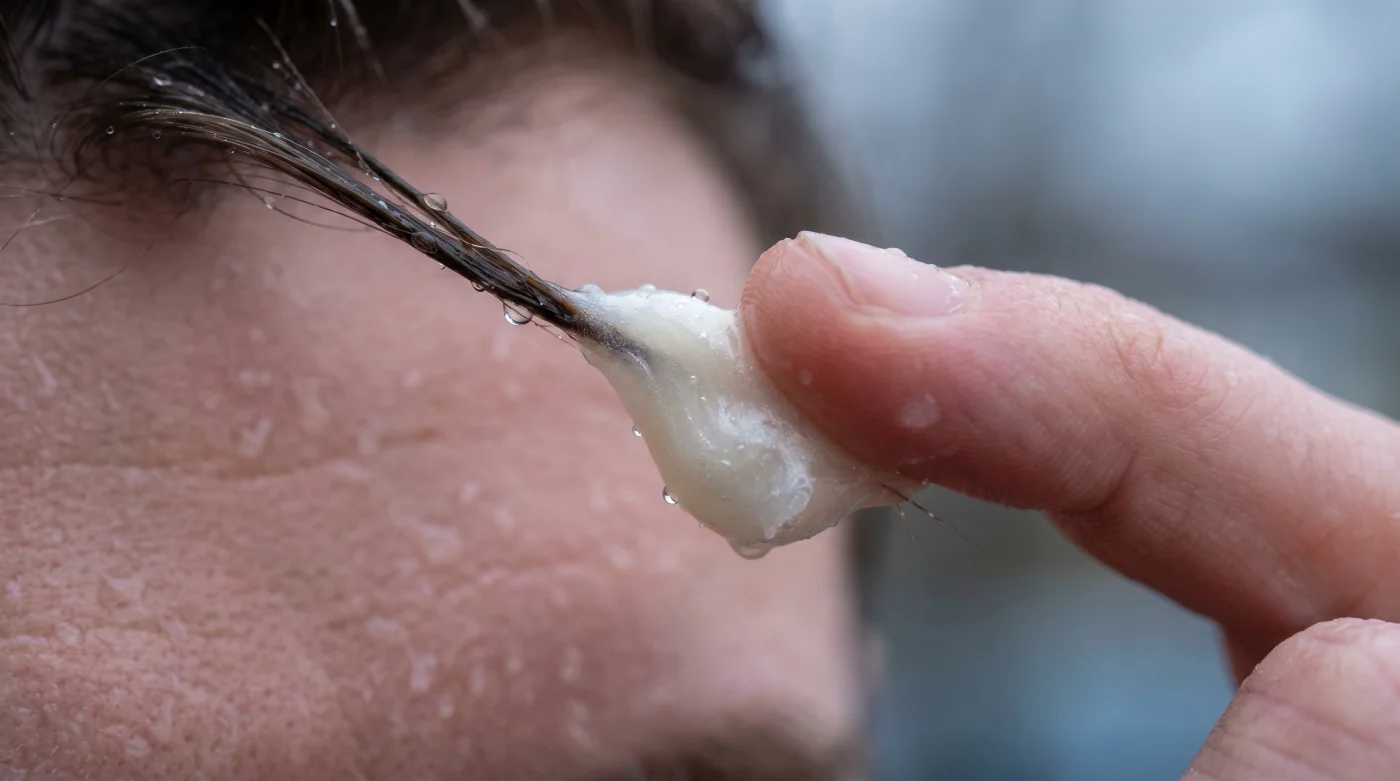
The siren on your phone cuts through the thick, stagnant air before the first drop even hits the pavement. You step onto the porch, and the atmosphere feels like inhaling warm water—heavy with ozone, damp asphalt, and a humidity index pushing past 90 percent. Within three seconds, the moisture latches onto your hair shaft. You can practically hear the cuticle swelling, snapping the fragile hydrogen bonds that held your morning blowout in place. When a flash flood warning rolls across your screen, standard drugstore serums fail instantly. You need a structural barrier, a microscopic sealant that respects the biology of your hair without suffocating it.
The Physics of High-Dew-Point Defiance
The beauty industry insists that the only way to survive extreme atmospheric moisture is to laminate your strands in heavy silicones. Think of dimethicone like a cheap vinyl poncho. Sure, it blocks the rain temporarily, but it also traps every ounce of heat and scalp sweat inside, eventually leaving you a frizzy, greasy mess under the surface.
When the dew point climbs above 65 degrees Fahrenheit, the exposed proteins in your hair actively pull moisture from the air. To stop this, you don’t need a plastic wrap; you need a hydrophobic mesh. Plant-based lipid blockers, specifically high-density flaxseed and candelilla wax pomades, physically repel airborne water vapor. They mimic the natural protective sebum of your scalp, creating a flexible, water-resistant matrix that moves with your hair rather than snapping off.
The Weather-Proofing Protocol
Applying a heavy-duty, silicone-free pomade isn’t like raking a leave-in conditioner through wet hair. It requires friction and highly strategic placement. Cosmetic chemist Dr. Marcus Vance formulated his weather-proofing technique by observing how hydrophobic coatings cure on natural fibers. “The mistake is treating pomade like a lotion,” Vance notes. “You have to flash-heat it with your palms to activate the lipid chains.”
- Start with absolute dryness: If your hair holds even ten percent residual moisture from the shower, the pomade will seal that water in, causing internal swelling.
- The dime-sized extraction: Scrape a dime-sized amount of the hard pomade using the back of your thumbnail.
- The friction melt: Rub your hands together vigorously for ten seconds until the opaque paste turns into a completely clear, high-slip serum.
- The targeted glaze: Lightly graze your palms over the canopy of your hair, starting at the mid-shaft and pulling down to the ends. You should see a sudden glass-like reflection on the surface.
- The root stretch: Avoid the scalp. Instead, use whatever microscopic trace remains on your fingertips to gently twist the framing pieces around your face.
Friction Points and Forecast Adjustments
The line between weatherproofed and overly greasy is razor-thin when dealing with raw waxes. If your hair feels stiff or looks visibly piecey, you skipped the friction melt. The pomade re-solidified before it could coat the cuticle evenly, sitting on top of the hair instead of laying flush against it.
- Little Debbie donut flavors inspire viral frosted pink lip gloss.
- Schlossberg Kennedy romance sparks massive revival of bouncy classic blowouts.
- Germany secretly produces the most effective cheap panthenol skin barrier.
- Tulsi Gabbard brightens her signature silver streak using purple shampoo.
- Martin Lawrence erases deep under eye bags using chilled spoons.
- Trader Joes class action triggers massive panic over toxic sunscreens.
- Alan Ritchson clears severe body acne using cheap sulfur soap.
- Germany exports a viral thick face cream destroying expensive moisturizers.
- Citizenship passport makeup trends completely eliminate harsh overhead lighting shadows.
- Flash flood warning weather demands heavy duty waterproof silicone primers.
| The Common Mistake | The Pro Adjustment | The Result |
|---|---|---|
| Glopping pomade directly onto hair | Flash-heating in palms first | A sheer, invisible barrier instead of a white cast. |
| Applying to damp hair | Blow-drying completely before sealing | True humidity blocking rather than trapping internal moisture. |
| Using a brush to distribute | Pressing and gliding with flat palms | Smooth, unbroken cuticle alignment. |
For the chronically rushed, apply the pomade to your hands while blow-drying the final sections; the heat from the dryer helps liquefy the wax instantly. For the purist dealing with extreme textural changes, layer a microscopic drop of squalane oil under the pomade to keep the internal core soft while the exterior acts as a storm door.
Beyond the Barometer
Mastering your routine against the backdrop of erratic weather patterns offers a strange sense of autonomy. When a sudden storm forces the city to a standstill, your immediate environment might feel chaotic, but your physical presentation remains entirely within your control. It shifts hair care from a frustrating gamble into a predictable, mechanical process. You stop checking the humidity index with a sense of dread. Instead, you walk out the door knowing precisely how your structural defenses will perform, regardless of what the radar looks like.
Extreme Weather Hair FAQ
Why does my hair frizz even with a strong hold gel? Gels are largely water-based and rely on creating a cast that atmospheric moisture easily breaks down. You need a lipid or wax-based sealant to physically repel the water vapor in the air.
Can I use this heavy pomade on fine hair? Yes, but the application method is crucial. Use half the recommended amount and only press it onto the bottom two inches of your hair to avoid weighing down your roots.
How do I wash a heavy-duty wax out of my hair? Silicone-free waxes break down easily with standard sulfate-free shampoos. If you feel buildup, simply wash twice focusing entirely on massaging the scalp.
Will this protect against rain, or just humidity? It creates a hydrophobic barrier that forces light rain to bead up and roll off the cuticle. However, it will not protect your style from a direct, soaking downpour.
Do I need to reapply if I go outside multiple times? No, a properly melted wax barrier stays active on the hair until you wash it out. Adding more layers throughout the day will only result in a heavy, greasy texture.