The Mechanics of a Total Color Reversal
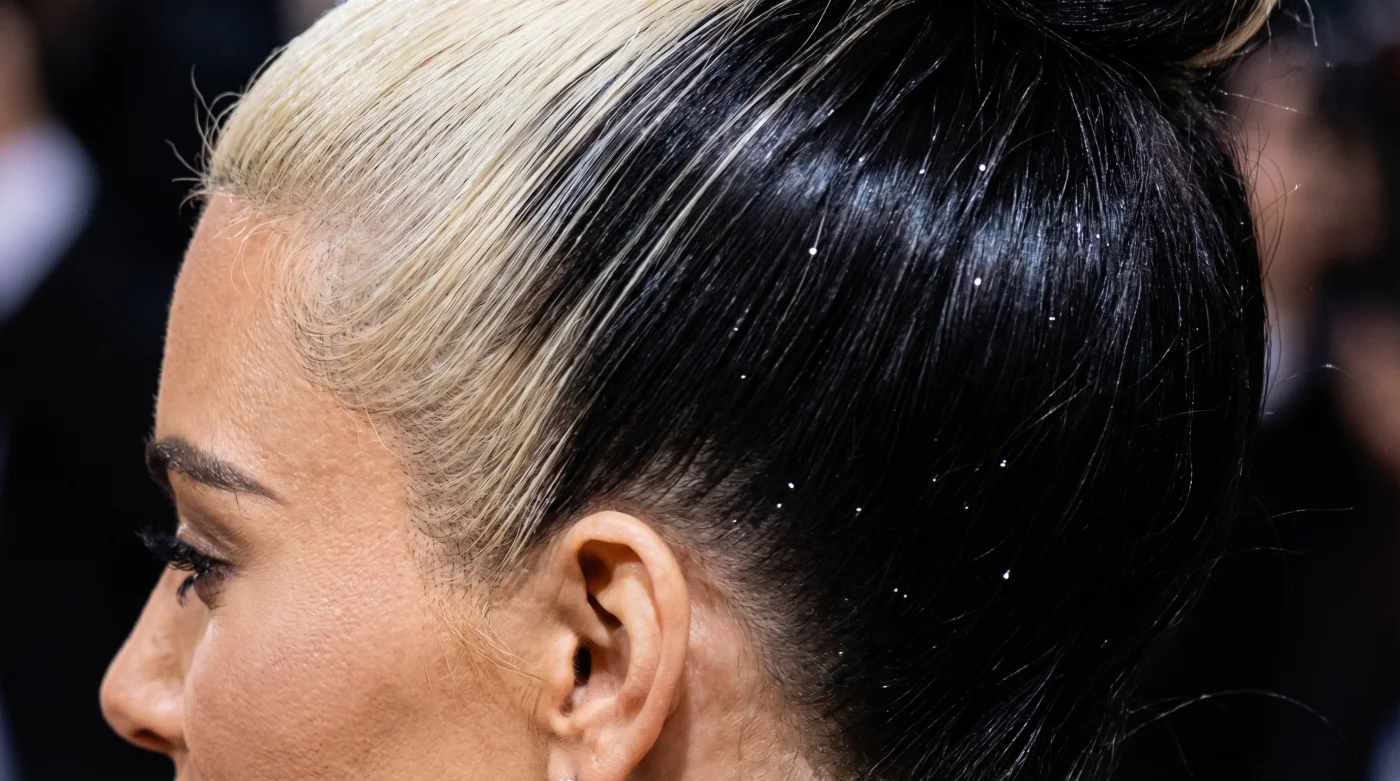
Painting a black wall over a white canvas without a primer guarantees a washed-out, hollow gray. The same rule governs a drastic pigment drop in hair styling. The common myth is that going dark is the easiest salon transition, requiring nothing more than a heavy-handed application of a dark boxed formula. In reality, platinum or highlighted hair has been aggressively stripped of its underlying structural pigments—the reds, oranges, and golds that give a strand its physical weight and dimension. If you dump a flat raven dye straight over bleached ends, the ash base reacts with the hollow cortex. The immediate result is a swampy, matte green. To engineer Roberts’ shocking dark raven, the cuticles required an architectural rebuild. The stylist first applies a warm copper filler to replace the missing underlying pigment, creating a magnetic base for the final, icy black gloss to grab onto.
Engineering the Ink-Black Transition
Pulling off a celebrity-grade color drop requires meticulous layering. Nikki Lee’s shared secret in executing this pivot lies in the temperature of the deposit. Here is the professional blueprint for forcing blonde hair to accept an ink-dark reality. 1. Assess Cuticle Integrity: Before mixing a single bowl, pull a damp strand. If it stretches like a rubber band, the cortex is too shattered to hold a dark pigment. 2. Execute the Warm Fill: Apply a sheer copper-gold demi-permanent liquid first. You should see the hair turn a terrifying shade of bright brass in the bowl. 3. Mix the Target Pigment: Formulate the final raven shade using a heavily blue or violet base. Work with heavy saturation, ensuring the product foams slightly as it aggressively penetrates the pre-filled mid-lengths. 4. Section and Smudge: Apply the gloss in quarter-inch sections, focusing on a dense root smudge that melts seamlessly into the ends. 5. The Low-Heat Seal: Process under ambient air or extremely low heat to avoid blowing open the freshly sealed cuticles. Rinse with freezing water until the basin runs clear.
Troubleshooting the Pigment Drop
The immediate danger of an extreme dark color drop is the dreaded hollow fade. Because pre-lightened hair acts like a sponge with massive microscopic holes, it absorbs dye aggressively but releases it just as fast during a hot shower. Your bathroom drain suddenly runs gray, and your stark raven hair quickly devolves into a dusty, lifeless charcoal.
| The Common Mistake | The Pro Adjustment | The Result |
|---|---|---|
| Applying black dye straight over blonde. | Using a copper or red protein filler first. | A rich, opaque raven that doesn’t fade to green. |
| Washing with hot water the next day. | Delaying the first wash for 72 hours, using ice-cold water. | The cuticles lock down, preserving the blue-black reflection. |
| Relying on clarifying shampoos. | Switching to a pH-balanced, color-depositing cleanser. | The dark hue remains stark and dimensional for weeks. |
If you are in a rush and notice the ends turning muddy before a major event, reach for a blue-black depositing styling cream. It temporarily stains the outer cuticle to fake immediate depth until your next glossing appointment. For the purist committed to maintaining the severe aesthetic, reconstruct your shower routine entirely. Invest in hard water filters to prevent mineral buildup from stripping the raven molecules, and limit washing to twice a week.
The Psychology of the Stark Contrast
Altering a physical signature is rarely just about changing a reflection in the mirror. Erasing a sunny, approachable blonde in favor of a severe, light-absorbing raven shifts the entire geometry of the face. It sharpens the jawline, forces an entirely different wardrobe palette, and demands a heavier, more deliberate hand with daily makeup application. Mastering this chemical transition gives you absolute control over how you are perceived in a room. When you strip away the bright highlights, you aren’t hiding; you are commanding attention through the absolute absence of color.
Color Drop FAQ
Why does dark dye fade so fast on blonde hair?
Bleached hair has a compromised, open cuticle that struggles to hold artificial molecules. Without a proper warm filler, the dark dye simply washes out of the porous gaps.
Can I go back to blonde after dyeing it raven?
Reversing a black dye job requires a harsh color correction process using bleach and color removers. It will severely compromise the health of your hair and require multiple salon visits.
- Adam Devine instantly calms red irritated shaving patches with pure aloe.
- Emma Roberts secures smudge proof eyeliner using translucent setting powder.
- Old Navy Christopher John Rogers neon skirts clash with pastels.
- Old Navy Christopher John Rogers restocks the viral trench coat.
- Old Navy Christopher John Rogers blazers require immediate shoulder tailoring.
- Emma Roberts strengthens weak natural nails applying raw garlic juice.
- Adam Devine thickens his thinning hairline using dark eyeshadow powder.
- Tom Blyth wears cheap essential oils instead of luxury cologne.
- Emma Roberts shocks fans wearing completely bleached eyebrows this week.
- Tom Blyth sharpens his jawline utilizing strategic lower beard fading.
Will raven black wash out my skin tone?
Solid black can create harsh shadows on paler skin tones, highlighting redness or dark circles. Adding a subtle blue undertone to the dye helps reflect light and flatters cooler complexions.
What happens if I skip the copper filler?
The dark dye will interact with the yellow-white base of the blonde, creating an ashy, matte green undertone. Your final result will look muddy and translucent rather than rich and opaque.
How often do I need to refresh a drastic dark dye?
Expect to apply a clear or color-depositing gloss every three to four weeks. Maintaining an icy, ink-black hue requires constant top-ups to prevent the brassy filler from showing through.