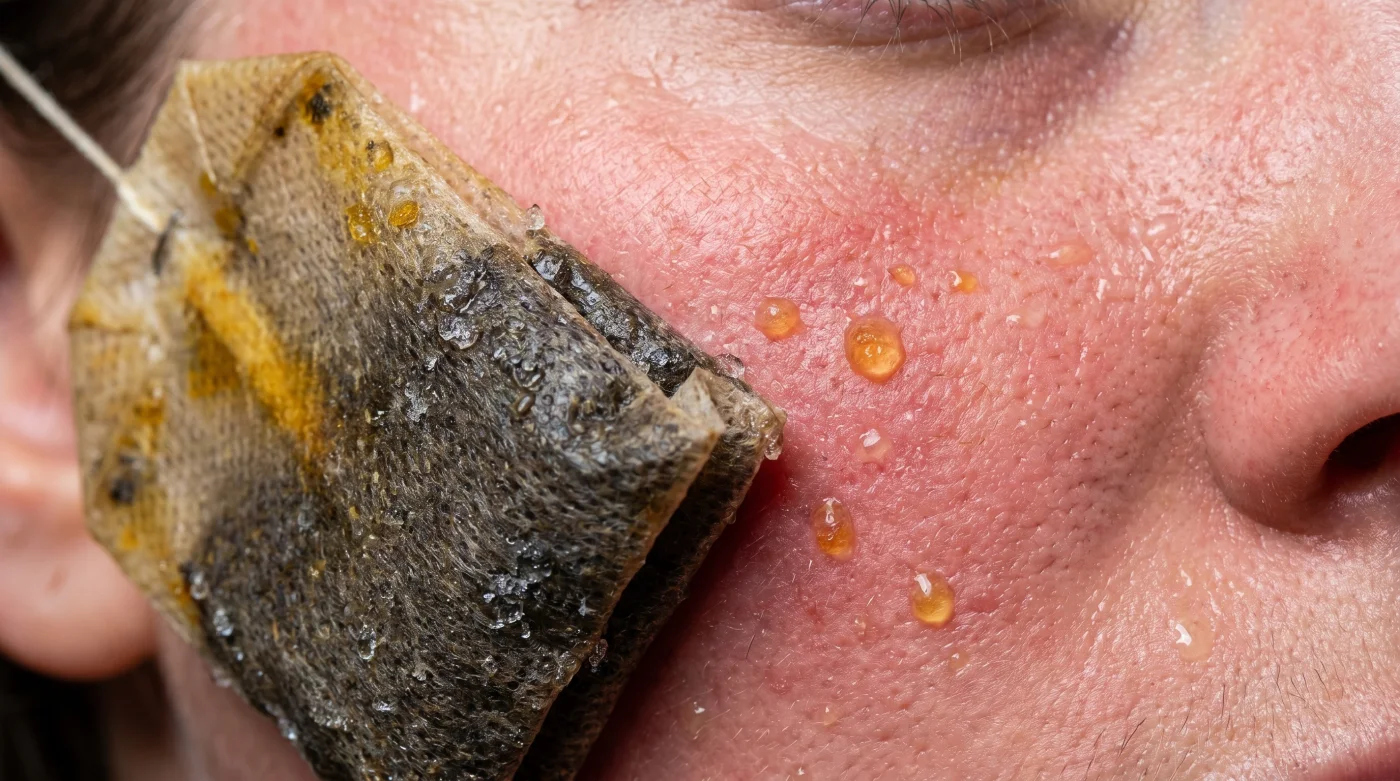
The sudden shock of a frozen, dripping chamomile tea bag hitting inflamed cheeks is a sharp departure from the sterile, perfectly temperature-controlled serums sitting on high-end vanity counters. It smells earthy, like crushed dried apples and damp soil, and feels like a tiny block of ice rapidly thawing against the skin. But this jarring cold is exactly the mechanics behind Emma Roberts’ approach to sudden, severe facial redness. You do not need a hundred-dollar soothing complex. You need two organic chamomile tea bags, steeped in hot water for exactly 15 minutes to extract maximum apigenin, then flashed in the freezer until they hit roughly 32 degrees Fahrenheit—just solid enough to hold their shape, but yielding enough to contour around a swollen jawline.
The Science of Ice and Herbs
The modern beauty industry wants you to believe that inflamed, angry skin is a deficiency of proprietary ceramides. It treats a flare-up like a parched desert needing an expensive flood. In reality, sudden facial redness—whether from an allergic reaction or severe windburn—acts much more like a localized electrical fire. Smothering it in heavy occlusives just traps the heat against the epidermis.
The physical mechanics here are aggressively simple. The freezing temperature acts as an immediate vasoconstrictor, shrinking the dilated capillaries that cause the red flush. Simultaneously, the concentrated chamomile delivers a high dose of bisabolol and apigenin, two naturally occurring chemical compounds documented to inhibit pro-inflammatory cytokines. You are pairing brute-force thermotherapy with targeted botanical chemistry, bypassing the synthetic preservatives that often aggravate highly reactive skin.
The Freezer-to-Face Protocol
Execution is everything in DIY applications. Slapping a dripping wet commercial tea bag on your face will just create a puddle on your shirt. Clinical aesthetician Sarah Palmer often reminds her clients dealing with sudden redness that the secret is tightly controlling the moisture ratio before the freeze.
- Select the Right Bag: Avoid blends with mint, citrus, or added flavorings. Use 100 percent pure chamomile. The paper sachet acts as a mild, non-abrasive delivery mechanism.
- The Hard Steep: Submerge two bags in a mug of boiling water. Cover the mug with a saucer to trap the volatile oils. Wait exactly 15 minutes.
- The Palmer Squeeze: Remove the bags and gently press them against the inside of the mug. Palmer notes you want to press out roughly 30 percent of the liquid. If it actively drips when held up, it is too wet.
- The Flash Freeze: Place the damp bags on a small plate and set them in the freezer for 20 to 30 minutes. You want them stiff but not rock-hard.
- The Application Roll: Press the flat side of the chilled bag against the most inflamed zones. Hold for five seconds, then roll to the next spot. You should see a temporary white imprint on the skin before the normal flesh tone returns—a sign the capillaries are successfully constricting.
- The Air Dry: Do not wash off the residual golden fluid. Let it air dry completely so the bisabolol can absorb into the stratum corneum.
Adapting the Cold Compress
The most common point of failure is freezer burn. Applying solid ice directly to compromised skin for too long can damage the barrier further, causing micro-abrasions that lead to peeling and extended sensitivity. If the bag feels permanently glued to your skin, it is dangerously cold.
- Old Navy Christopher John Rogers neon fabrics heavily wash out pale complexions.
- Old Navy Christopher John Rogers striped knits heavily distort wide torsos.
- Adam Devine stops heavy forehead sweating wearing breathable linen caps.
- Emma Roberts sparks massive backlash wearing controversial unlined silk gowns.
- Old Navy Christopher John Rogers statement belts immediately rescue boring dresses.
- Old Navy Christopher John Rogers blazers instantly sharpen soft shoulders.
- Adam Devine sparks fierce grooming debates sporting sharply bleached buzzcuts.
- Adam Devine perfectly conceals severe beard patchiness applying tinted brow gel.
- Emma Roberts actively ruins expensive foundation mixing cheap sunscreen drops.
- Emma Roberts fades deep forehead wrinkles applying thick castor oil.
For the purist: Buy loose-leaf German chamomile flowers and steep them in a French press, then soak reusable cotton rounds in the concentrated liquid before freezing. If you are in a rush: Skip the freezer entirely. Steep the tea, drop five ice cubes directly into the mug to rapidly crash the temperature, and apply the cold bags immediately.
| The Common Mistake | The Pro Adjustment | The Result |
|---|---|---|
| Freezing the bag overnight | Freezing for just 20-30 minutes | Pliable compress that contours to the cheekbones. |
| Leaving the bag on one spot for 5 minutes | The stamp and roll method | Prevents thermal damage to the skin barrier. |
| Using leftover drinking tea | A dedicated, covered 15-minute steep | Maximum extraction of anti-inflammatory apigenin. |
Beyond the Quick Fix
Relying on a pantry staple to handle a severe skin crisis feels inherently rebellious. We are conditioned to panic-buy commercial solutions when our bodies react unpredictably. Yet, understanding the basic physics of vasoconstriction and the chemical properties of a simple flower offers a specific, grounded autonomy.
You stop viewing flare-ups as emergencies requiring a trip to a specialized boutique. Knowing you have the tools to immediately shut down a severe flush sitting next to your coffee beans changes the baseline anxiety of dealing with reactive skin. It proves that the most effective interventions are rarely the most expensive; they are simply the most biologically appropriate.
Common Questions About Chamomile Compresses
Can I use green tea instead of chamomile? Green tea contains caffeine, which also constricts blood vessels and reduces puffiness. However, it lacks the specific bisabolol compound that soothes physical irritation and stinging.
Will chamomile tea stain my skin? A highly concentrated steep might leave a faint yellow tint on very pale skin temporarily. This washes away easily with a gentle, non-stripping cleanser the next morning.
How often can I apply frozen tea bags? You can use this method twice daily during an acute flare-up. Once the severe heat and redness subside, reduce frequency to avoid stressing the skin barrier with extreme cold.
Does this work for cystic breakouts? It will rapidly reduce the surrounding inflammation and the throbbing pain of a deep cyst. It will not, however, clear the internal blockage causing the breakout.
Should I apply moisturizer before or after? Always apply the tea directly to clean, bare skin. Follow up with your standard, fragrance-free moisturizer only after the chamomile liquid has completely air-dried.