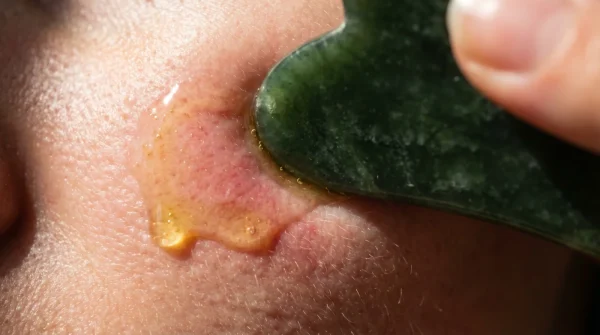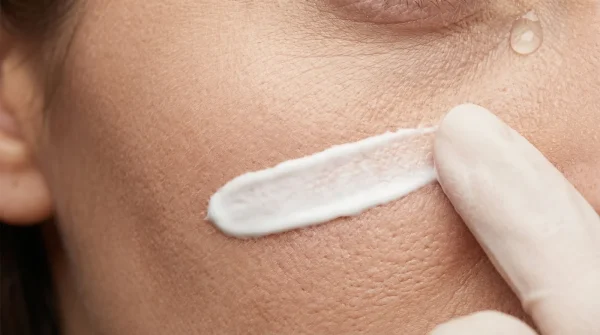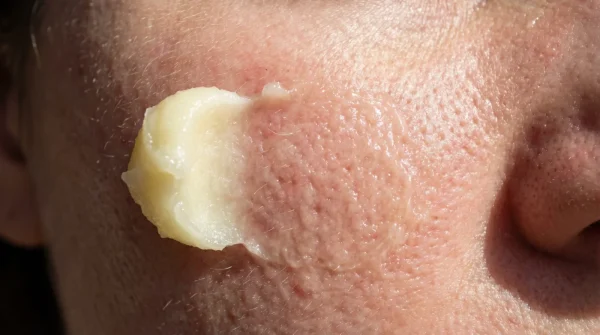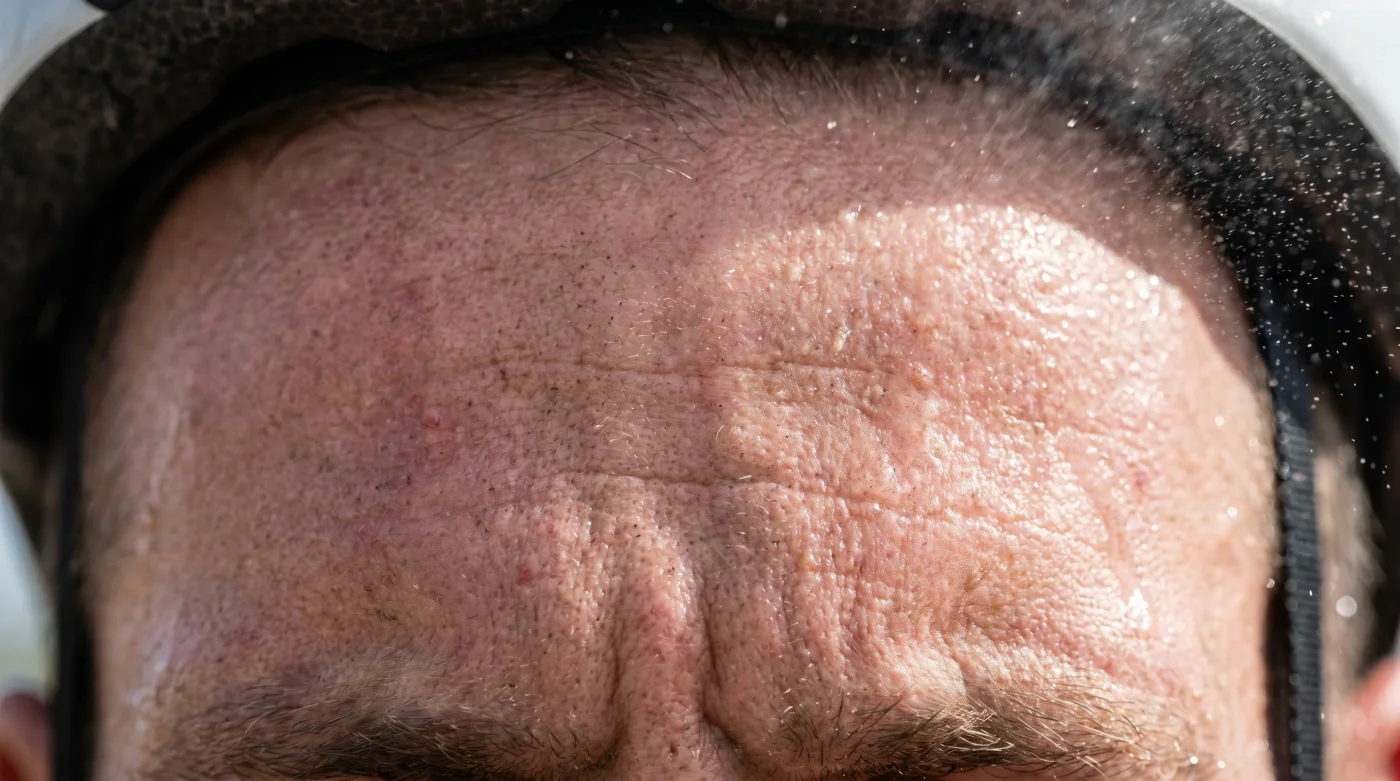
Imagine peeling off a batting helmet in late August. The thick, damp foam lining clings to your forehead, leaving behind a sharp, stale scent of trapped sweat and field dirt. The sudden rush of cool air hitting flushed, overheated skin feels great, but beneath the surface, a microscopic clock is ticking. Bacteria love this exact environment—dark, humid, and rich in salt and sebum. This is where the standard locker room response falls flat. You grab a harsh, alcohol-soaked wipe, scrubbing away the grime, only to leave your face red, tight, and painfully stripped.
The Chemistry of Sweat and Skin
The fitness industry sells a very profitable lie: that athletic sweat requires aggressive, stripping cleansers. Think of your skin barrier like a finely woven mesh screen. When you blast it with salicylic acid pads immediately after a heavy workout, you are tearing holes in that screen, allowing pathogens free reign.
Hypochlorous acid changes the physics of this interaction. It naturally occurs in the immune system to destroy cellular walls of bacteria, meaning it mimics your white blood cells flawlessly. At a specific 0.015% to 0.02% concentration, this weak acid neutralizes sweat-borne staph and acne-causing bacteria on contact without degrading your protective lipid layer.
The 0.02% Protocol
Los Angeles Dodgers prospect Dalton Rushing spends hours every day under heavy catcher’s gear and batting helmets. Instead of complicated, multi-step luxury routines, his preventative acne protocol relies entirely on a cheap, drugstore-grade hypochlorous acid spray. Implementing this requires exact timing.
Source the right concentration first. You specifically need a formula stabilized at 0.015% to 0.02% hypochlorous acid. Anything stronger risks irritation; anything weaker is just expensive water. Next, time the application perfectly by spraying generously within 60 seconds of removing your helmet or gear. Do not wait until you hit the showers. Mist your entire face, jawline, and neck until the skin visibly drips with the solution. Resist the urge to wipe it off with a towel, because the antimicrobial action needs roughly two minutes of undisturbed contact time to rupture the bacterial walls. Once your skin feels completely dry to the touch and the faint pool-water scent dissipates, apply a simple, fragrance-free moisturizer.
Adapting to the Locker Room
The most common failure point with hypochlorous acid is mixing it with other active ingredients. If you layer it over a vitamin C serum or alongside chemical exfoliants, the molecules instantly destabilize, rendering the spray useless. You might notice a faint, temporary smell resembling weak bleach—this is the chemical reaction working, not a sign of a toxic formula.
- Allbirds machine washing techniques permanently destroy internal merino wool shoe structures.
- Shannon Elizabeth commands recent Hollywood premieres wearing unstructured vintage velvet gowns.
- Andre Agassi vintage denim shorts dramatically reshape modern summer menswear trends.
- Tulsi Gabbard sparks unexpected style backlash debuting controversial stark white suits.
- Trader Joe’s daily facial sunscreen secretly outperforms expensive luxury SPF serums.
- Allbirds wool runners actively trap foot moisture during long summer commutes.
- Old Navy Christopher John Rogers structured canvas totes survive daily commutes.
- Old Navy Christopher John Rogers vibrant color blocks perfectly complement pale skin.
- Old Navy Christopher John Rogers oversized poplin shirts brilliantly disguise midsections.
- Adam Devine shocks upcoming premiere audiences debuting a completely shaved head.
For the athlete in a rush, keep a travel-sized bottle inside your equipment bag, away from direct sunlight, and spray directly over fresh sweat before you even take off your cleats. For the purist, keep the bottle refrigerated at all times. The chilled mist constricts blood vessels on contact, rapidly reducing post-game redness while systematically killing the trapped bacteria.
| The Common Mistake | The Pro Adjustment | The Result |
|---|---|---|
| Scrubbing with alcohol wipes | Misting 0.02% hypochlorous acid | Zero barrier damage, dead bacteria |
| Waiting for the locker room shower | Spraying within 60 seconds of helmet removal | Prevents sebum oxidation entirely |
| Towel-drying the face immediately | Allowing the mist to air dry for two minutes | Full destruction of bacterial cell walls |
Beyond the Post-Game Routine
Fixating on high-end, complex skincare ignores the fundamental biology of how our bodies react to physical stress. Athletic acne is not a punishment for working hard; it is simply a mechanical reaction to friction and trapped moisture.
By addressing the root cause with a biologically identical molecule, you strip away the anxiety of breaking out after a heavy training block. You stop fighting your skin and start supporting its natural defense mechanisms. This simple intervention offers more than just a clear complexion. It grants you the freedom to focus entirely on the game, knowing your recovery is already handled the moment you take off the helmet.
Frequently Asked Questions
Can I use this spray if I already have a breakout? Yes, the acid reduces inflammation and speeds up the healing process of active blemishes. It neutralizes the bacteria feeding the current breakout without burning the raw skin.
Does hypochlorous acid bleach clothing or gear? No, at the 0.02% cosmetic concentration, it is completely safe for fabrics. You can spray it directly onto helmet padding to kill odor-causing bacteria there, too.
Can I make this acid at home with salt and vinegar? Do not attempt DIY chemistry for facial application. Stabilizing the molecule requires precise electrolysis equipment to ensure it remains safe and effective.
Why does it smell faintly like a swimming pool? That scent is the natural byproduct of the molecule breaking down cellular walls. It dissipates completely within seconds as the spray dries.
Should I still wash my face later? Yes, you still need to cleanse away dirt, dead skin cells, and old sunscreen. Think of the spray as an immediate pause button on bacterial growth until you can properly wash.